




















ICC Unveils Major Changes to ODI World Cup Format for 2027: Here's What's New and Why It Matters
The International Cricket Council (ICC) has announced a completely revamped format for the 2027 ICC Men's ODI World Cup. From expanding the tournament to 14 teams to introducing the new Super Series and Super 7 stages, the changes aim to make every match more competitive and increase the excitement throughout the tournament.

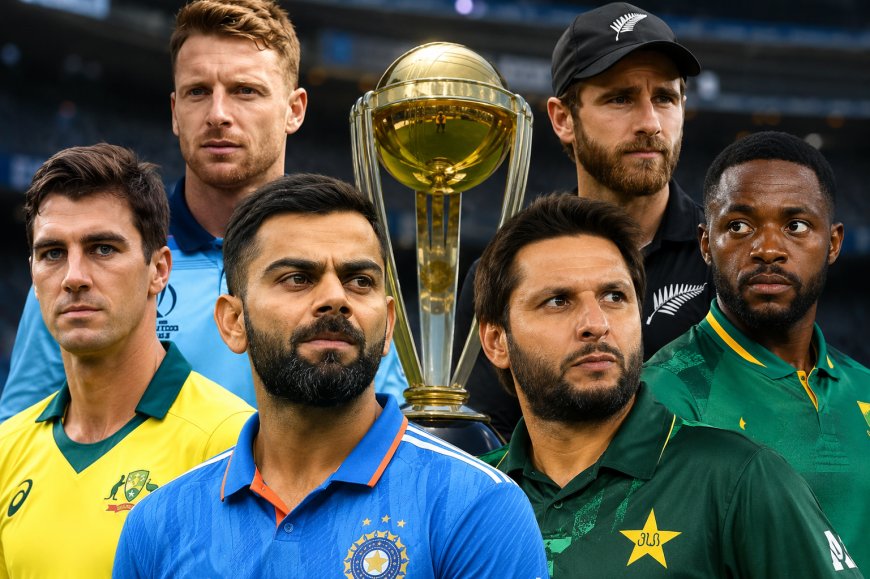
The International Cricket Council (ICC) has officially announced a significant overhaul of the format for the 2027 ICC Men's Cricket World Cup, introducing one of the biggest structural changes in the tournament's modern history. The revamped format expands the competition from 10 to 14 teams and introduces two entirely new stages—the Super Series and the Super 7—designed to make the tournament more competitive, reduce meaningless matches, and provide more opportunities for emerging cricket nations. The announcement has generated widespread discussion across the cricketing world, with fans, former players, analysts, and broadcasters debating whether the new format will improve the balance between competitiveness and entertainment. The 2027 World Cup will be jointly hosted by South Africa, Zimbabwe, and Namibia, and the revised structure is expected to reshape how teams qualify, progress, and compete for cricket's biggest 50-over prize.
One of the most notable changes is the expansion of the tournament to 14 participating teams. The previous two editions of the ODI World Cup, held in 2019 and 2023, featured only 10 teams competing in a single round-robin league, where every team played every other team once before the top four advanced directly to the semi-finals. While that format ensured high-quality contests, it also limited opportunities for Associate Nations and smaller Full Members to compete on the world's biggest stage. By increasing the number of teams to 14, the ICC aims to make the World Cup more inclusive while promoting the global growth of cricket. The additional places are expected to give emerging teams a greater chance to participate and gain valuable experience against the world's strongest cricketing nations.
Another major innovation is the introduction of the Super Series, a qualifying phase that will determine which teams advance to the main group stage. Under the new format, the three lowest-ranked qualified teams will first compete in the Super Series. Each of these teams will play against the other two in a mini-league. Only the top-performing team from this stage will qualify for the main tournament, while the remaining two teams will be eliminated. This change is intended to ensure that every team entering the main competition has already demonstrated competitive form while also increasing the importance of every qualifying match. Unlike previous editions, where all qualified teams entered directly into the main event, the Super Series adds another layer of competition before the tournament reaches its primary phase.
Following the Super Series, the tournament will move into its main group stage, featuring 12 teams. These teams will be divided into two groups of six teams each. Every team will play the other five teams in its group once, making each group-stage fixture highly significant. The ICC believes this structure will maintain the excitement throughout the competition by ensuring that teams cannot afford early slip-ups. Compared to the single league format used in the last two World Cups, the two-group system also creates greater variety in fixtures while allowing more teams to remain in contention during the early stages of the tournament.
Perhaps the most talked-about addition is the introduction of the Super 7 stage, which replaces the direct progression to the semi-finals. After the completion of the group stage, the top three teams from each group will automatically qualify for the Super 7. In addition, the better-performing fourth-placed team across both groups will also qualify, making a total of seven teams in this stage. Teams entering the Super 7 will carry forward certain results from the group stage, adding further importance to every earlier match. During this phase, teams will compete to secure one of the four semi-final positions. According to the ICC, this format is expected to eliminate "dead rubber" matches by ensuring that every game continues to influence qualification scenarios until the final rounds of the tournament.
The semi-final structure has also been modified under the new format. Instead of the traditional knockout qualification from a league table, the Super 7 standings will determine the semi-final matchups. The team finishing first in the Super 7 table will face the fourth-placed team, while the second and third-placed teams will compete in the other semi-final. The winners of those two matches will then advance to the World Cup final. ICC officials believe this system rewards consistent performances throughout the tournament while maintaining the excitement associated with knockout cricket. Every match leading into the semi-finals is expected to carry significant importance, reducing the likelihood of teams qualifying comfortably with games still remaining.
The ICC has stated that one of the primary objectives behind these changes is to create a tournament where every match has meaningful consequences. Under previous formats, some teams had already secured qualification or were eliminated before completing all their league matches, resulting in fixtures with little competitive significance. The new system aims to ensure that qualification battles remain alive until the closing stages of the tournament. Additionally, the revised format increases the total number of matches to 57, creating more opportunities for broadcasters, sponsors, fans, and participating teams while expanding the tournament's global reach.
Another interesting outcome of the new format is the increased possibility of high-profile rivalries, such as India vs Pakistan, occurring more than once during the same tournament. Depending on how teams progress through the group stage and the Super 7, marquee clashes could potentially take place two or even three times in a single World Cup. While this is expected to generate enormous commercial interest and television viewership, some former players have expressed concerns that repeated meetings between the same teams could reduce the uniqueness of such iconic encounters. Nevertheless, broadcasters and tournament organizers are likely to welcome the possibility of additional blockbuster fixtures.
The announcement has received mixed reactions from the cricket community. Supporters argue that the expanded format will promote cricket's development by giving emerging nations greater exposure against elite teams while making the competition more dynamic. They also believe that the Super Series and Super 7 will ensure that no team can rely solely on a strong start, as every stage of the tournament will carry significant weight. Critics, however, have questioned whether the additional rounds could make the tournament more complicated for casual viewers and potentially increase player workload during an already crowded international calendar. Others have raised concerns about scheduling, travel logistics, and maintaining competitive balance across multiple stages.
Despite the debate, the ICC remains confident that the revised format represents an important step in the evolution of the ODI World Cup. As cricket continues to expand into new regions and attract new audiences, administrators believe that the tournament must adapt to accommodate more teams without compromising quality. The 2027 edition will therefore serve as a major test of this new structure. If successful, it could influence the design of future ICC events and further strengthen the global appeal of the 50-over format. With more teams, more matches, higher stakes, and multiple qualification phases, the 2027 ICC Men's Cricket World Cup promises to be one of the most competitive and unpredictable editions in the tournament's history.
What's Your Reaction?
 Like
0
Like
0
 Dislike
0
Dislike
0
 Love
0
Love
0
 Funny
0
Funny
0
 Angry
0
Angry
0
 Sad
0
Sad
0
 Wow
0
Wow
0