

































Stock Market Today: Sensex Jumps Over 400 Points, Then Slips; Why Are Sensex and Nifty Volatile?
Indian stock markets witnessed a volatile start on Monday, October 12, 2026. The Sensex surged more than 400 points in early trade before losing its gains, while the Nifty 50 also slipped after opening in positive territory. Investors were assessing RBI measures to support the rupee, elevated crude oil prices, mixed global market signals and upcoming inflation data.


Stock Market Today: Sensex and Nifty Reverse Early Gains as Investors Remain Cautious
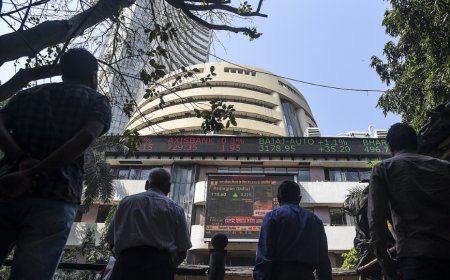
The Indian stock market witnessed sharp fluctuations on Monday, October 12, 2026, as the benchmark indices began the trading session with strong gains but soon lost momentum. The BSE Sensex initially climbed more than 400 points, while the Nifty 50 also opened higher. However, the early rally proved short-lived, and both indices slipped towards negative territory within minutes.
The sudden reversal caught investors' attention and raised questions about the factors influencing market sentiment. According to market reports, investors were assessing the Reserve Bank of India's recent measures to support the rupee, elevated crude oil prices, mixed signals from international markets and upcoming inflation data.
Sensex Jumps More Than 400 Points Before Reversing
The Sensex opened at approximately 72,771, compared with its previous close of around 72,472. It subsequently climbed above 72,880 and touched a reported intraday high of approximately 72,884 before reversing sharply.
During the initial trading minutes, the index slipped back towards the 72,400 level and briefly entered negative territory.
The Nifty 50 followed a similar pattern. After opening at around 22,593, the index moved towards 22,651 before losing momentum and falling towards 22,500.
The rapid movement reflected uncertainty among market participants. While the previous session's recovery and positive opening signals supported buying, selling pressure soon emerged in several heavyweight stocks.
Why Did the Stock Market Lose Its Early Gains?
Several factors contributed to the cautious mood in the market.
1. Investors remain cautious despite the previous recovery
Indian benchmark indices had rebounded strongly on Friday, October 9, after an extended period of losses. The recovery provided some support at Monday's opening, but investors remained cautious about whether the improvement could be sustained.
2. RBI measures and the rupee remain in focus
The Reserve Bank of India introduced measures over the weekend aimed at supporting the rupee and reducing pressure in the foreign-exchange market.
The rupee strengthened during early trading on Monday. However, investors continued to evaluate the broader impact of the RBI's measures on currency stability, liquidity and financial markets.
3. Crude oil prices remain elevated
Brent crude traded near $103.50 per barrel during early trading, despite recording a decline. Oil prices remain an important factor for India because the country imports a substantial share of its crude oil requirements.
Expensive oil can increase import costs, put pressure on the rupee and contribute to inflation. These factors can influence corporate costs and investor expectations.
4. Mixed signals from global markets
Asian markets showed mixed trends, leaving investors without a clear directional signal. Uncertainty surrounding international economic conditions and geopolitical developments also contributed to a cautious approach towards equities.
Reliance and Trent Among Early Gainers
Several major stocks recorded gains during the initial phase of Monday's trading session.
Shares of Bharat Electronics (BEL), Mahindra & Mahindra, Tata Steel, Trent, Reliance Industries and Eternal were among the stocks that attracted buying interest.
Selected mid-cap stocks, including Suzlon Energy, TI India, KEI Industries and MCX, also advanced during early trading. Some small-cap stocks recorded stronger percentage gains.
However, the early performance of these shares did not necessarily indicate that their gains would hold throughout the session. Individual stocks continued to respond to company-specific developments and changing market sentiment.
Tech Mahindra, Bharti Airtel and ITC Face Selling Pressure
While several stocks opened higher, others came under pressure.
Tech Mahindra, Bharti Airtel and ITC were among the notable large-cap laggards in the early session. State Bank of India also recorded a decline.
Selected mid-cap stocks, including Glenmark Pharmaceuticals, Colgate-Palmolive India, Yes Bank and Nykaa, also traded lower.
The divergence between gainers and losers showed that the market's movement was not uniform across sectors. Even as some stocks attracted buyers, selling pressure in other heavyweight companies weighed on the benchmark indices.
What Should Investors Watch Next?
Investors are expected to monitor several developments that could influence the market's direction in the coming sessions.
Inflation data: Upcoming domestic inflation figures may provide clues about price pressures and the future direction of monetary policy.
Rupee movement: The currency's response to the RBI's measures will remain important for companies that rely on imports and for foreign investors.
Crude oil prices: A sustained decline in oil prices could offer some relief to import costs, while renewed increases could create additional pressure.
Corporate earnings: Quarterly financial results may influence individual stocks and sector performance as companies report their latest business figures.
Foreign investor activity: Changes in foreign portfolio investment flows can affect market liquidity and sentiment, particularly during periods of global uncertainty.
Conclusion
The Indian stock market's performance on October 12 highlighted the uncertainty facing investors. The Sensex and Nifty began the session with gains but quickly surrendered much of their early momentum as selling pressure emerged.
RBI measures to support the rupee, elevated crude oil prices, mixed global signals and upcoming economic data remained important factors shaping sentiment.
For investors, the key question is whether the initial recovery can develop into a sustained upward trend or whether continued uncertainty will keep the market volatile. The answer will depend on incoming economic data, corporate earnings, currency movements and broader global developments.
Disclaimer: This article is for informational purposes only and does not constitute investment advice. Investors should assess their financial circumstances and consult a qualified financial adviser before making investment decisions.
What's Your Reaction?
 Like
0
 Dislike
0
 Love
0
 Funny
0
 Angry
0
 Sad
0
 Wow
0