















Rahul Gandhi Gets Relief in Rafale Defamation Case, Supreme Court Stays Trial
Rahul Gandhi has received relief from the Supreme Court in a defamation case linked to the Rafale controversy. The court has reportedly stayed the trial proceedings in the matter. The focus is now on the court's order, the legal implications, and the next steps in the case.

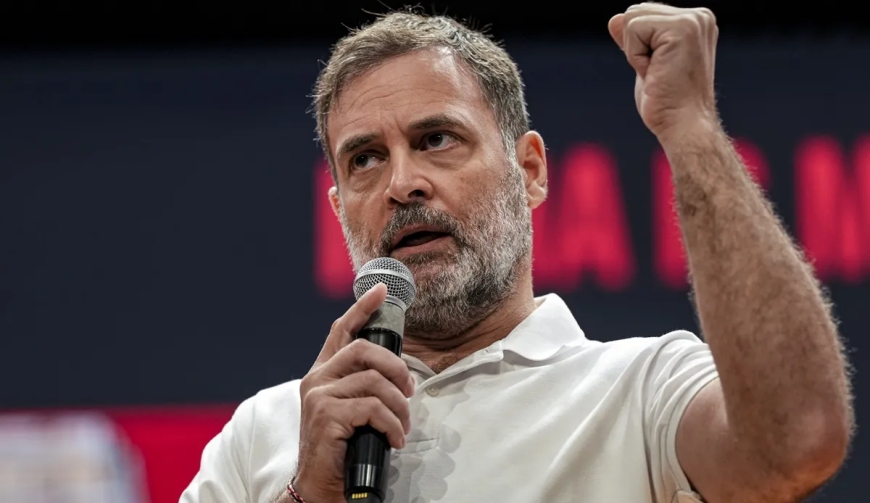
Congress leader Rahul Gandhi has reportedly received relief from the Supreme Court in a defamation case linked to the Rafale controversy. The apex court has stayed the trial proceedings in the matter, bringing renewed attention to the legal dispute associated with statements concerning the Rafale fighter jet deal.
The development has drawn attention in both political and legal circles. Rahul Gandhi has repeatedly criticised the central government over the Rafale deal, raising questions about various aspects of the agreement. Some of his remarks became the subject of political controversy and subsequent legal proceedings.
With the Supreme Court reportedly putting the trial on hold, attention has now shifted to the court's observations, the scope of its order, and the future course of the case.
What Is the Rafale Defamation Case Against Rahul Gandhi?
The Rafale defamation case is connected to statements made by Rahul Gandhi concerning the Rafale fighter jet deal. The agreement between India and France for the procurement of fighter aircraft became a major political issue, prompting extensive debate over the deal's terms, pricing, and transparency.
Rahul Gandhi repeatedly questioned the central government's handling of the agreement and criticised its approach to the deal. Some of his statements attracted objections and became associated with legal disputes involving allegations of defamation.
Defamation cases generally involve questions about whether particular statements violate applicable legal provisions and whether the claims made by the parties are supported by the available evidence.
Courts examine the relevant facts, arguments, and applicable laws before deciding such matters. The legal proceedings in Rahul Gandhi's case must similarly be understood in the context of the specific allegations and judicial orders involved.
Why Has the Supreme Court Stayed the Trial?
The Supreme Court's reported decision to stay the trial proceedings is being viewed as an important legal development for Rahul Gandhi.
However, the precise grounds for the stay, the court's observations, and the conditions attached to the order must be established by examining the official judicial document.
A stay on trial proceedings generally means that the relevant proceedings may not continue while the court's order remains in effect, subject to the specific directions issued by the court.
Importantly, a stay does not automatically mean that the case has been dismissed, that all allegations have been withdrawn, or that a final judgment has been delivered.
The actual legal effect of the Supreme Court's order will depend on its wording, the scope of the directions issued, and any subsequent developments in the proceedings.
What Does This Relief Mean for Rahul Gandhi?
The reported relief is significant for Rahul Gandhi from a legal perspective. A court-ordered stay can temporarily suspend proceedings in a case and provide the affected individual with relief while the relevant legal issues are considered.
However, the implications of the order must be understood carefully. A temporary stay is not necessarily equivalent to a final decision in favour of the person concerned.
The future of the case will depend on the Supreme Court's directions, the arguments presented by the parties, and any further hearings.
The development may also attract political reactions from the Congress party and other political organisations. Comments from legal experts and further judicial observations could help explain the implications of the order.
For now, the most important consideration is to distinguish the immediate relief granted by the court from the final outcome of the legal dispute.
Why Has the Rafale Controversy Remained in the Headlines?
The Rafale fighter jet deal has been one of the prominent defence-related political controversies in India in recent years.
The agreement attracted considerable public and political attention, particularly over questions concerning pricing, procurement procedures, and government accountability.
Opposition parties raised questions about various aspects of the agreement, while the central government defended the deal and its handling of the procurement process.
Statements made during the political debate occasionally became subjects of separate controversies and legal disputes. As a result, developments involving individuals associated with the Rafale controversy have continued to attract public interest.
The latest reported development in Rahul Gandhi's defamation case has once again brought attention to the legal issues connected with statements about the deal.
It is important to note, however, that the broader political debate over the Rafale agreement and a specific defamation case are distinct matters. Each must be assessed on the basis of its own facts, evidence, and legal proceedings.
What Happens Next in the Case?
Following the reported stay, attention will focus on the Supreme Court's detailed order and any directions concerning future proceedings.
The terms of the order will determine its precise effect on the trial before the lower court and whether any additional steps are required from the parties involved.
Further hearings, legal arguments, and judicial observations may provide greater clarity about the issues under consideration.
The next stage of the case will depend on the court's directions and the applicable legal process. Until a final decision is delivered, the stay should not be interpreted as a definitive conclusion to the entire dispute.
Readers should look for updates based on official court documents and verified reports to understand how the matter develops.
What's Your Reaction?
 Like
0
 Dislike
0
 Love
0
 Funny
0
 Angry
0
 Sad
0
 Wow
0