
























Nepal Flash Flood 2026: Landslide-Created Temporary Dam May Have Triggered Budhi Gandaki River Flood
A sudden flash flood struck Nepal’s Budhi Gandaki River in Gorkha district on October 11, 2026, sweeping away houses and bridges and damaging hydropower infrastructure. Scientists from the International Centre for Integrated Mountain Development (ICIMOD) believe a landslide near Chumchet may have temporarily blocked the river before the natural barrier collapsed, releasing a powerful surge of water, mud and debris downstream. Rescue operations and evacuations are underway.

Nepal Flash Flood: How a Landslide-Created Temporary Dam Triggered a Sudden Flood in the Budhi Gandaki River
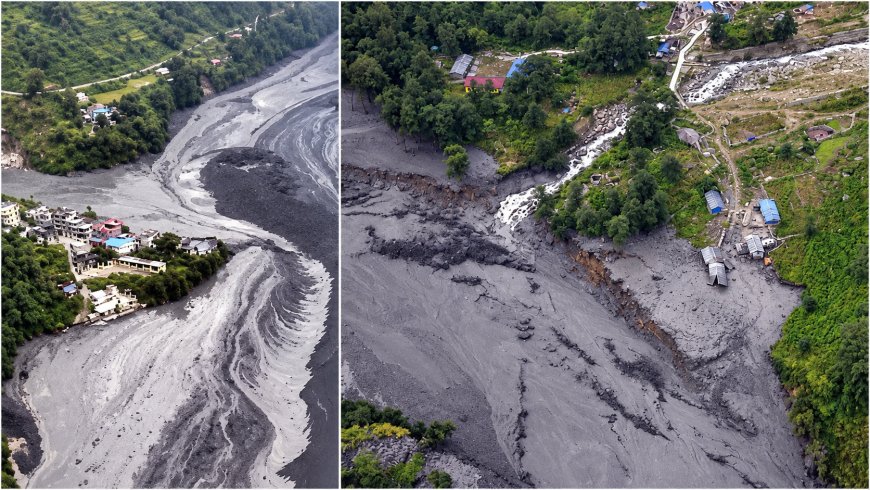
A devastating flash flood struck Nepal's Budhi Gandaki River system early on October 11, 2026, after a possible landslide-induced river blockage collapsed, sending a sudden surge of water, mud and debris downstream. The disaster affected settlements in Gorkha district, damaging houses, bridges, transport links and hydropower infrastructure.
Scientists from the International Centre for Integrated Mountain Development (ICIMOD) have identified the failure of a temporary river blockage created by a landslide near Chumchet as a likely cause of the flooding. The assessment is preliminary, and authorities are continuing to investigate the exact sequence of events.
The incident has renewed concerns about the dangers posed by unstable mountain slopes and rivers in the Himalayan region.
What Caused the Sudden Flood in Nepal?
According to ICIMOD's preliminary assessment, a landslide near Chumchet in Gorkha district may have blocked the flow of a river or tributary feeding the Budhi Gandaki system.
When large quantities of soil, rocks and debris slide into a river channel, they can create a temporary natural barrier. Water continues to accumulate behind this blockage, sometimes forming a temporary lake.
Unlike an engineered dam, a landslide-created barrier is often unstable. Water pressure can gradually weaken the obstruction until it suddenly gives way.
When that happens, the water stored upstream can rush downstream in a powerful surge, carrying mud, rocks, sediment and other debris. This phenomenon can cause a flash flood with little time for people living along the riverbanks to react.
Scientists believe a similar process may have triggered the October 11 flooding in Nepal. However, the precise location and mechanics of the blockage are still subject to further assessment.
Floodwaters Swept Away Houses and Bridges
The sudden rise in the Budhi Gandaki River caused extensive damage in several riverside areas of Gorkha district.
Preliminary reports indicated that houses were swept away, bridges were damaged or destroyed, and infrastructure along the river corridor suffered significant losses.
The flood also affected the construction site of the 341-megawatt Budhi Gandaki hydropower project at Salleri. The full extent of the damage remained under assessment as rescue and recovery operations continued.
Authorities issued warnings to communities along the Budhi Gandaki, Trishuli and Narayani river systems as water levels fluctuated.
Residents in vulnerable areas were urged to move to higher ground, while emergency teams worked to locate missing people and assist those displaced by the flooding.
What Do Scientists Say About the Disaster?
ICIMOD, an intergovernmental organisation that studies sustainable development and environmental challenges in the Hindu Kush Himalaya, has highlighted the role of cascading natural hazards in the disaster.
A cascading hazard occurs when one natural event triggers another, increasing the overall impact. In this case, a landslide may have blocked a river, and the subsequent collapse of that blockage may have generated a destructive flood.
Scientists have emphasised that understanding the interaction between unstable slopes, river dynamics and settlements is essential for reducing future risks.
The organisation has also stressed the importance of monitoring mountain slopes and river systems together, particularly in steep Himalayan catchments where hazards can develop rapidly and affect communities far downstream.
Why Are Himalayan Rivers Vulnerable to Flash Floods?
The Himalayas are geologically active mountains with steep slopes, deep valleys and rivers that carry enormous quantities of water and sediment.
Several factors can contribute to sudden flooding in the region:
1. Landslides: Soil and rocks can fall into river channels, temporarily blocking the flow of water.
2. Sudden release of stored water: If a natural blockage collapses, accumulated water can rush downstream in a short period.
3. Heavy rainfall: Intense rainfall can saturate slopes, trigger landslides and rapidly increase river discharge.
4. Ice and snow avalanches: Large quantities of ice or snow entering a lake or river can displace water and produce a sudden surge.
5. Sediment and debris: Mud, rocks and fallen trees can increase the destructive force of floodwaters and damage bridges, roads and buildings.
Not every flash flood has the same cause. Determining the mechanism behind each event requires evidence from field investigations, satellite imagery, hydrological observations and other scientific assessments.
Nepal's Previous Budhi Gandaki Flood in 2024
The Budhi Gandaki region has experienced another major flood-generating event in the past.
In April 2024, a large ice avalanche from the Manaslu Glacier fell into Birendra Tal, causing water to surge out of the lake and enter the Budhi Gandaki River system.
A detailed ICIMOD-led assessment found that the flood resulted from the displacement of lake water following the ice avalanche, rather than a conventional glacial lake outburst flood.
The 2024 event and the October 2026 disaster illustrate how different mountain processes can produce sudden and destructive flooding in the same river system.
What Is Being Done to Protect People?
Following the latest flooding, Nepalese authorities initiated search-and-rescue operations, evacuations and relocation efforts in affected areas.
Officials also issued alerts for communities downstream as river levels fluctuated. Rescue personnel worked to reach isolated settlements and assess damage to bridges, roads and other essential infrastructure.
Experts say improved early-warning systems, satellite monitoring, hazard mapping and emergency evacuation plans can help reduce the impact of future disasters.
Monitoring is especially important where a landslide may have blocked a river upstream, as water can accumulate behind the obstruction without immediately producing a major flood downstream.
However, early warning alone is not sufficient. Communities also need reliable communication systems, accessible evacuation routes and infrastructure designed to withstand local hazards.
Conclusion
The flash flood in Nepal's Budhi Gandaki River system highlights the serious risks facing communities in the Himalayas. Scientists believe a landslide-created temporary river blockage near Chumchet may have collapsed, releasing a powerful surge of water and debris downstream.
The disaster damaged homes, bridges and hydropower infrastructure, prompting evacuations and rescue operations across affected areas.
Although the precise cause remains subject to further investigation, the incident underscores the importance of monitoring unstable mountain slopes and river systems together. Better early-warning systems, scientific assessments and disaster preparedness will be essential to protecting vulnerable communities from similar events in the future.
What's Your Reaction?
 Like
0
 Dislike
0
 Love
0
 Funny
0
 Angry
0
 Sad
0
 Wow
0