



































India Clears Path for Self-Driving Technology as Government Removes Key Licensing Hurdles
The Indian government has removed licensing requirements for critical automotive radar and vehicle communication technologies, paving the way for advanced safety systems and future self-driving vehicle capabilities in the country.

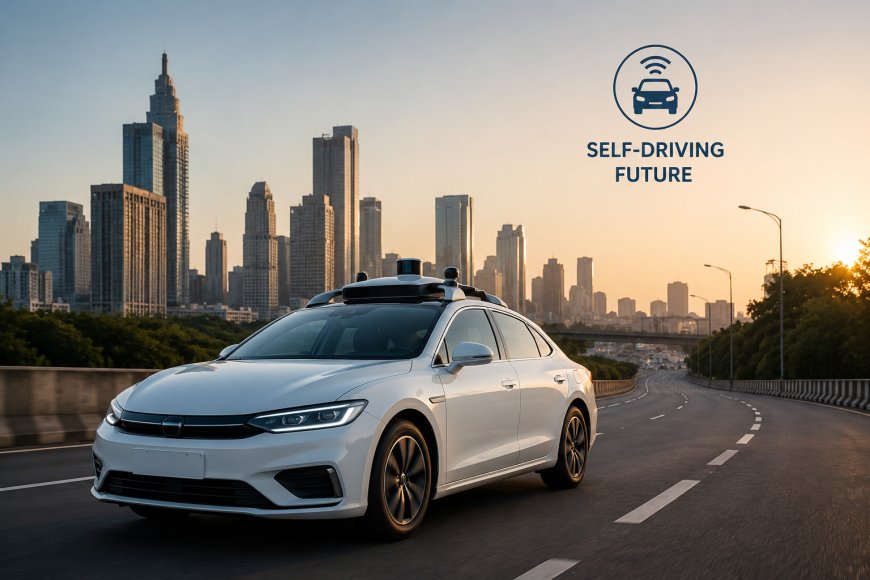
India may still be years away from seeing fully autonomous vehicles on its roads, but a recent government decision is being viewed as a significant step toward that future. The government has removed licensing requirements for certain wireless technologies used in modern vehicles, making it easier for automakers to introduce advanced safety and driver-assistance systems in the country.
Under the new policy, automotive radar operating in the 77-81 GHz frequency band and Vehicle-to-Everything (V2X) communication systems using the 5.9 GHz spectrum will no longer require individual spectrum licenses. These technologies are widely used across global automotive markets to help vehicles detect obstacles, communicate with surrounding infrastructure, and enhance overall road safety.
Industry experts say the move could accelerate the adoption of Advanced Driver Assistance Systems (ADAS) in India. These systems include features such as automatic emergency braking, adaptive cruise control, lane-keeping assistance, and blind-spot monitoring. While these technologies do not make a vehicle fully autonomous, they represent important building blocks for the development of self-driving capabilities.
The policy change is expected to reduce regulatory barriers for manufacturers and align India more closely with international automotive standards. Global and domestic automakers will now be able to deploy advanced safety technologies with fewer administrative hurdles, potentially bringing smarter and safer vehicles to Indian consumers faster.
However, experts caution that the decision does not mean self-driving cars will immediately appear on Indian roads. Fully autonomous vehicles still require a comprehensive legal framework, sophisticated road infrastructure, robust digital connectivity, and extensive safety testing before they can be deployed at scale.
The move comes at a time when India continues to face one of the world's highest rates of road accident fatalities. Policymakers hope that wider adoption of intelligent vehicle technologies will help improve road safety and reduce traffic-related deaths in the years ahead.
While fully autonomous mobility remains a long-term goal, the government's latest decision signals a clear intent to support next-generation transportation technologies. For India's automotive industry, it marks an important milestone on the road toward a smarter, safer, and increasingly connected future.
What's Your Reaction?
 Like
0
Like
0
 Dislike
0
Dislike
0
 Love
0
Love
0
 Funny
0
Funny
0
 Angry
0
Angry
0
 Sad
0
Sad
0
 Wow
0
Wow
0