



















Not Fighting for Results, But for Issues: Sonam Wangchuk Has Gone on Hunger Strike Five Times, Challenging Those in Power Every Time
Renowned education reformer and climate activist Sonam Wangchuk has once again made headlines with his hunger strike. This is not his first protest—it is the fifth major fast in his public life. From environmental conservation and climate justice to constitutional safeguards for Ladakh, Wangchuk has consistently taken on governments through peaceful, issue-based movements. Here's a detailed look at the five major hunger strikes that shaped his activism.

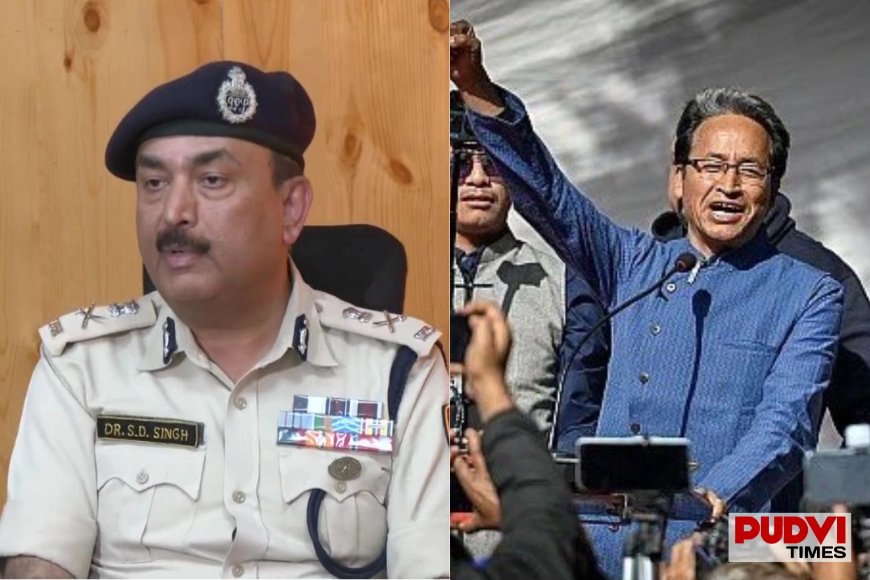
When discussions turn to peaceful activism, environmental conservation, and the rights of indigenous communities in India, Sonam Wangchuk is among the first names that comes to mind. Known internationally as an engineer, innovator, education reformer, and climate advocate, Wangchuk has built a reputation not only through technological innovations but also through sustained public movements aimed at protecting Ladakh's fragile ecosystem and cultural identity.
Over the years, hunger strikes have become one of Wangchuk's most powerful methods of peaceful protest. Rather than seeking political power or electoral gains, his campaigns have focused on long-term issues such as environmental sustainability, constitutional safeguards, local governance, climate resilience, and the protection of Ladakh's unique social and ecological landscape.
His activism has often sparked nationwide debates, receiving support from environmentalists, civil society groups, and citizens concerned about sustainable development, while also prompting responses from governments at different levels.
The First Major Protest: Education and Local Development
Sonam Wangchuk first gained national attention through his work in education reform. Believing that conventional education failed to address the realities of students living in remote Himalayan regions, he advocated for a system that reflected local culture, geography, and practical needs.
His early campaigns emphasized quality education, rural empowerment, and community participation. During this phase, Wangchuk used peaceful demonstrations and symbolic protests to encourage policymakers to rethink educational priorities in mountainous regions.
His efforts eventually inspired innovative educational models that earned recognition both in India and internationally.
The Second Hunger Strike: Saving the Himalayas
As climate change accelerated, Wangchuk increasingly shifted his focus toward environmental protection. He repeatedly warned that the Himalayan ecosystem was among the most vulnerable regions in the world, facing rapidly melting glaciers, declining water resources, and unsustainable infrastructure development.
Through public campaigns and hunger strikes, he argued that protecting the Himalayas was not merely a regional concern but a national and global responsibility.
According to Wangchuk, damage to Himalayan ecosystems would eventually impact water security, agriculture, biodiversity, and climate stability across South Asia.
His message resonated widely, drawing attention from scientists, environmental organizations, and young climate activists.
The Third Hunger Strike: Constitutional Safeguards for Ladakh
Following the reorganization of Jammu and Kashmir in 2019, Ladakh became a Union Territory. While many initially welcomed the administrative change, concerns gradually emerged regarding land rights, employment opportunities, cultural preservation, and political representation.
Wangchuk became one of the strongest voices demanding constitutional safeguards for Ladakh, particularly under the Sixth Schedule of the Indian Constitution, which provides protections for tribal communities in certain regions.
He argued that constitutional protection would help preserve Ladakh's indigenous identity, prevent unchecked commercial exploitation, and ensure that local communities remained central to decisions affecting their land and resources.
This hunger strike attracted national attention and brought Ladakh's constitutional demands into mainstream political discourse.
The Fourth Hunger Strike: Climate Justice and Sustainable Development
Wangchuk later expanded his campaign beyond Ladakh, framing it as a broader movement for climate justice.
He consistently emphasized that economic development should not come at the cost of environmental destruction. Instead, governments should adopt development models that balance infrastructure growth with ecological preservation.
He also encouraged young people to become active participants in climate action, urging policymakers to involve local communities before approving major development projects in ecologically sensitive Himalayan regions.
This campaign gained significant momentum on social media, where thousands of supporters amplified his message and helped generate public discussion on sustainable development.
The Fifth Hunger Strike: Renewed Demand for Ladakh's Rights
Sonam Wangchuk is once again in the spotlight with another hunger strike centered on Ladakh's future.
His latest demands include stronger constitutional safeguards, greater political representation, protection of local employment opportunities, conservation of fragile ecosystems, and sustainable governance.
According to Wangchuk, Ladakh is not merely a tourist destination but one of India's most strategically and environmentally important regions. He believes that unchecked commercialization and poorly planned development could permanently damage its ecological balance and cultural heritage.
Throughout his campaign, Wangchuk has repeatedly stated that his movement is not directed against any particular political party or government. Instead, he describes it as an effort to encourage policy reforms that ensure both development and environmental sustainability.
How Have Governments Responded?
Over the years, Wangchuk's movements have led to several rounds of dialogue between government representatives and Ladakh-based organizations. While discussions have taken place and development initiatives have been announced, many activists argue that key constitutional demands remain unresolved.
Government authorities have maintained that infrastructure, connectivity, employment generation, and regional development continue to receive priority, while emphasizing that consultations with stakeholders remain an ongoing process.
Supporters of Wangchuk, however, argue that meaningful constitutional safeguards are essential to protecting Ladakh's unique identity and ecological future.
Why Is Wangchuk's Strategy Different?
Unlike many modern protest movements that quickly become politically polarized, Sonam Wangchuk has largely positioned his campaigns around issues rather than electoral politics.
His methods rely on peaceful resistance, public dialogue, scientific reasoning, and non-violent civil action. By combining grassroots activism with widespread public engagement through social media and public outreach, he has succeeded in bringing Ladakh's concerns to national and international audiences.
His ability to communicate complex environmental and constitutional issues in accessible language has also made him one of India's most recognizable climate advocates.
Conclusion
Sonam Wangchuk's five hunger strikes represent more than a series of protests—they reflect a sustained campaign focused on environmental protection, constitutional rights, sustainable development, and the future of Ladakh.
Supporters view him as a principled activist seeking long-term solutions for one of India's most ecologically sensitive regions, while governments have emphasized ongoing development efforts and policy engagement. As debates over Ladakh's future continue, Wangchuk's movements have undoubtedly ensured that issues such as climate resilience, indigenous rights, and sustainable governance remain part of India's national conversation.
What's Your Reaction?
 Like
0
Like
0
 Dislike
0
Dislike
0
 Love
0
Love
0
 Funny
0
Funny
0
 Angry
0
Angry
0
 Sad
0
Sad
0
 Wow
0
Wow
0