
























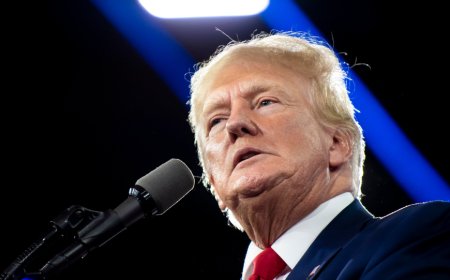








Trump Administration Bans New Chinese Humanoid Robots Over National Security Concerns
The Trump administration has announced a ban on the import of new Chinese-made humanoid and quadruped robots into the United States, citing cybersecurity risks, supply chain security, and concerns over protecting America's growing AI infrastructure. The restrictions also extend to certain Chinese-made connected power inverters.

The United States has taken another major step in its ongoing technology rivalry with China by announcing a ban on the import of new Chinese-made humanoid robots, quadruped robots, and certain connected power inverters. Introduced by the Trump administration through the U.S. Federal Communications Commission (FCC), the decision is aimed at protecting national security, reducing cybersecurity risks, safeguarding critical infrastructure, and strengthening America's domestic artificial intelligence (AI) and robotics industries. Officials say the move reflects a broader strategy to reduce dependence on Chinese technology in sectors considered vital to the country's future.
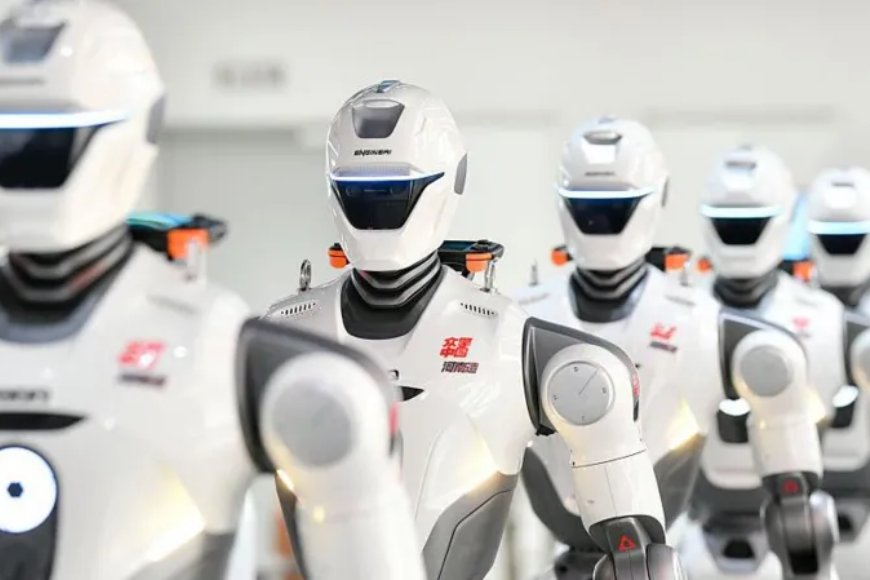
According to U.S. authorities, modern humanoid robots have evolved far beyond simple industrial machines. These advanced robots are equipped with high-resolution cameras, microphones, AI-powered software, internet connectivity, sophisticated sensors, and autonomous navigation capabilities, enabling them to collect, process, and transmit vast amounts of data. The administration argues that if such technology is produced by companies linked to foreign adversaries, it could potentially be used for surveillance, cyber espionage, or interference with sensitive infrastructure, creating significant national security concerns.
The new restrictions specifically apply to future imports of advanced robotic systems manufactured in China. The ban covers humanoid robots designed to perform human-like tasks, quadruped robots that can move across different terrains, other autonomous mobile robotic platforms, and certain internet-connected power inverters used in renewable energy projects, battery storage facilities, AI data centres, and critical infrastructure. Products that are already operating or previously authorised in the United States are generally not immediately affected, although regulators have indicated they may review existing approvals if future security concerns arise.
Humanoid robots have become one of the fastest-growing segments of the global artificial intelligence industry. Unlike conventional industrial robots that operate within factories performing repetitive tasks, humanoid robots are designed to function in environments built for humans. They are capable of walking, climbing stairs, lifting objects, interacting with people, communicating using advanced AI systems, and carrying out tasks in warehouses, hospitals, retail stores, logistics centres, hotels, and even private homes. Industry experts believe these machines will play a major role in the future workforce, making control over robotics technology increasingly important for global economies.
The Trump administration has described the ban as part of a larger effort to strengthen domestic manufacturing and secure America's technological leadership. Officials argue that excessive reliance on foreign-made robotics could weaken the country's long-term competitiveness and expose critical industries to supply-chain vulnerabilities. In recent years, Washington has prioritised expanding domestic production of semiconductors, artificial intelligence systems, robotics, batteries, and advanced manufacturing technologies, viewing these sectors as essential to both economic growth and national security.
Several leading Chinese robotics companies are expected to be directly affected by the new restrictions, particularly Unitree Robotics, one of China's most prominent humanoid robot manufacturers. The company has gained international recognition for developing comparatively affordable humanoid robots capable of performing complex movements and autonomous tasks. U.S. officials have expressed concerns that some Chinese technology firms could have links to China's broader industrial or defence ecosystem, although Beijing has consistently rejected such allegations and insists its companies operate independently under international business practices.
China has strongly criticised the U.S. decision, arguing that the restrictions unfairly target Chinese technology companies and disrupt normal international trade. Chinese officials have urged Washington to resolve technological disagreements through dialogue rather than imposing unilateral restrictions. The latest measures are expected to add further tension to an already strained U.S.-China relationship, which has seen disputes over semiconductors, artificial intelligence, telecommunications equipment, electric vehicles, and advanced manufacturing technologies in recent years.
The announcement has generated mixed reactions across the technology industry. Many cybersecurity specialists have welcomed the decision, arguing that connected robotic systems could become critical components of future infrastructure and therefore require strict security oversight. However, some industry experts believe the restrictions could reduce competition, increase costs for American businesses, and slow the adoption of rapidly advancing robotics technologies. Others point out that Chinese manufacturers currently dominate several areas of humanoid robot production, making it difficult for American companies to replace imported products in the short term.
The humanoid robot ban is part of a broader U.S. strategy aimed at reducing technological dependence on China. Over the past several years, Washington has introduced a series of measures targeting Chinese telecommunications equipment, semiconductor exports, artificial intelligence hardware, drones, and other advanced technologies. Officials argue that protecting emerging technologies before they become deeply integrated into national infrastructure is essential for ensuring long-term economic resilience and national security. The inclusion of robotics in this strategy highlights the growing importance of AI-powered machines in future industries.
Looking ahead, the FCC has confirmed that the restrictions apply to new products entering the U.S. market while regulators continue assessing future risks associated with connected robotics. Companies may still seek regulatory waivers in specific circumstances, particularly if manufacturing is relocated outside restricted jurisdictions or if products satisfy future security standards. Industry observers expect additional guidance regarding implementation timelines, compliance requirements, and possible exemptions in the coming months.
The latest decision marks another significant milestone in the intensifying technological competition between the United States and China. As artificial intelligence, robotics, automation, and smart infrastructure become increasingly central to manufacturing, healthcare, logistics, defence, and everyday life, governments around the world are placing greater emphasis on securing supply chains and protecting critical technologies. Whether these restrictions ultimately strengthen America's domestic robotics industry or further deepen global technology divisions remains uncertain, but they clearly demonstrate that advanced robotics is now viewed as both an economic opportunity and a strategic national security priority in the rapidly evolving AI era.
What's Your Reaction?
Like
0
Dislike
0
Love
0
Funny
0
Angry
0
Sad
0
Wow
0