
































25 Years of the International Space Center: A Legacy of Global Space Exploration
The International Space Center marks 25 years of pioneering space exploration, scientific breakthroughs, and international collaboration. Discover its milestones, missions, and achievements in advancing human understanding of space.

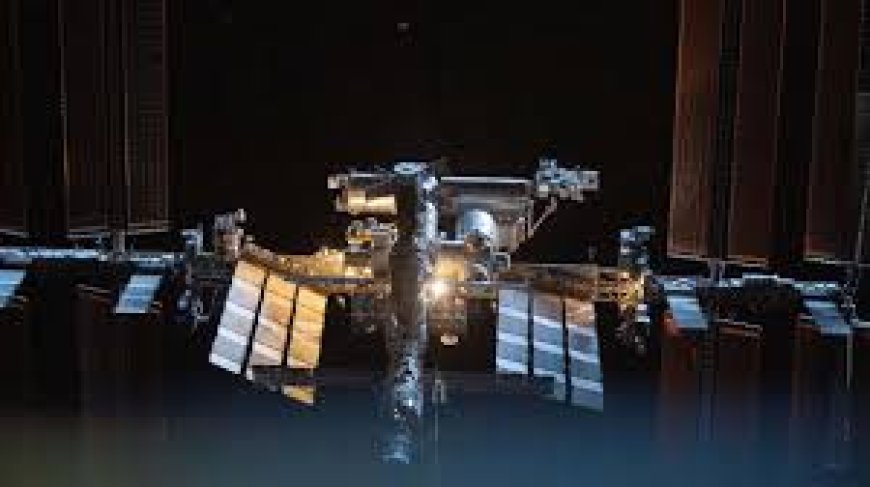
Cape Canaveral / Houston / Moscow — This year marks the 25th anniversary of the International Space Center (ISC), a global hub for collaborative space research and manned missions. Since its inception, the ISC has become a cornerstone for international cooperation, scientific advancement, and human spaceflight.
Origins and Mission
The ISC was officially established in 2000 as a joint initiative between space agencies from multiple countries, including NASA (USA), Roscosmos (Russia), ESA (Europe), JAXA (Japan), and CSA (Canada). Its mission was to provide a shared platform for astronauts, scientists, and engineers to conduct research in microgravity and advance our understanding of space systems and Earth sciences.
The center has since become a symbol of peaceful international cooperation, bringing together nations with shared scientific and technological interests, fostering innovation in space exploration, and inspiring a new generation of astronauts and researchers.
Key Milestones in 25 Years
First Crew Launch (2001): The ISC hosted its first multinational crew, conducting experiments in biology, physics, and materials science.
Breakthrough Research: The ISC contributed to breakthroughs such as advanced plant growth studies, protein crystallization for pharmaceuticals, and fluid dynamics in microgravity.
International Collaboration: Over the years, more than 100 countries have participated in ISC-led projects, demonstrating the power of global collaboration.
Technology Innovations: Development of robotic arms, autonomous spacecraft docking systems, and advanced life support modules stemmed from research conducted at ISC.
Outreach & Education: The ISC has launched educational programs, live experiments, and virtual simulations, inspiring millions of students worldwide to pursue STEM fields.
Impact on Science and Society
The ISC’s experiments have had profound implications both in space and on Earth:
-
Medical Advances: Microgravity studies have advanced understanding of bone density, muscle atrophy, and cardiovascular health.
-
Materials Science: Innovations in alloys, semiconductors, and nanomaterials have stemmed from zero-gravity experiments.
-
Earth Observation: ISC-based satellites and sensors have improved climate monitoring, disaster response, and environmental management.
As the ISC celebrates its 25th anniversary, plans are underway for:
-
Next-generation space habitats for long-duration missions to the Moon and Mars.
-
Expanded international cooperation, including emerging space nations.
-
Advanced AI and robotics research for autonomous spacecraft and lunar surface operations.
The ISC’s ongoing commitment to peaceful exploration, sustainability, and global collaboration ensures that its legacy will continue for decades, inspiring humanity’s journey deeper into the cosmos.
From its modest beginnings to becoming a global icon of space research, the International Space Center has exemplified how scientific curiosity and international collaboration can overcome borders. As it marks 25 years, the ISC not only celebrates past achievements but also paves the way for future generations to reach for the stars.
What's Your Reaction?
 Like
0
Like
0
 Dislike
0
Dislike
0
 Love
0
Love
0
 Funny
0
Funny
0
 Angry
0
Angry
0
 Sad
0
Sad
0
 Wow
0
Wow
0