

































China’s AI Semiconductor Initiative: Boosting Domestic Chip Production and Tech Leadership
China unveils a high‑priority AI semiconductor initiative to expand domestic production, reduce reliance on foreign chips, and strengthen technological self‑reliance in artificial intelligence. The plan comes amid tech competition with the U.S. and global supply chain shifts.

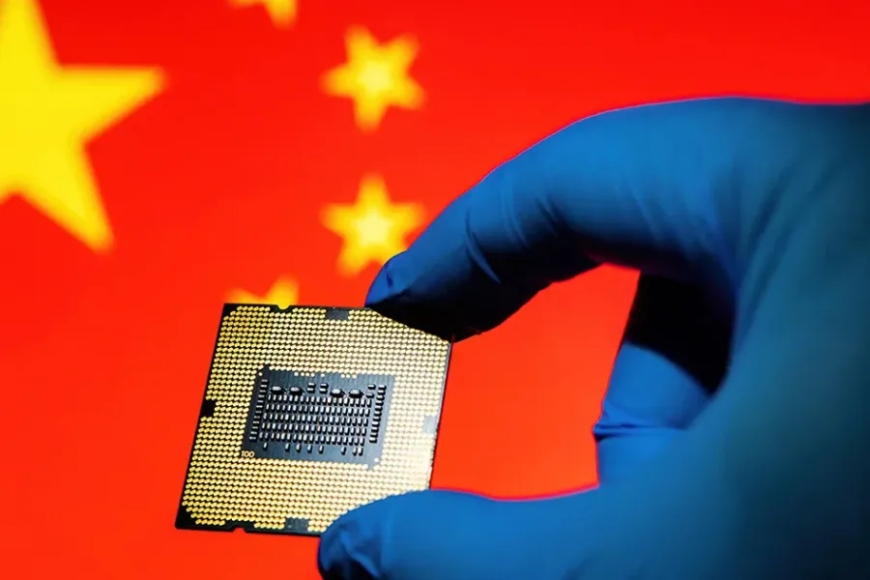
—including China is intensifying its push to become a global leader in artificial intelligence (AI) semiconductors, unveiling a high‑priority initiative aimed at dramatically expanding domestic chip production and reducing reliance on foreign technology. Analysts say the move signals Beijing’s determination to close the technological gap with the United States and other advanced economies amid ongoing export controls and geopolitical competition.
Tripling AI Chip Output by 2026
According to media reports, China is targeting a significant surge in AI chip manufacturing, with plans to triple production capacity by 2026. New fabrication plants—including facilities dedicated to advanced processors—are expected to come online within the next year, potentially surpassing current outputs at some of the country’s leading semiconductor manufacturers.
Industry executives involved in the strategy suggest that multiple new fabs and expanded capacity at existing sites will be key to scaling production. China’s Semiconductor Manufacturing International Corporation (SMIC) is reportedly preparing to double its 7‑nanometer production line, a node increasingly important in AI compute workloads.
Reducing Foreign Dependence and Policy Support
Beijing has also tightened policies to hasten the transition to indigenous chips. New government guidance has banned the use of foreign AI chips in state‑funded data center projects, forcing a shift toward domestically produced processors for infrastructure that receives public support.
In addition, Chinese firms such as Baidu are rolling out homegrown AI processors—including the M100 and M300 chips designed for inference and training tasks—aligning with national goals of technological self‑sufficiency. These developments are part of a broader strategy to create powerful, low‑cost AI computing platforms that can support large‑scale models and applications without reliance on Western technology.
A Broader Technological Ecosystem Push
China’s AI chip initiative is just one aspect of a larger tech policy thrust that spans AI research, semiconductor design, and industrial integration. Government programs and investment funds continue to channel resources into key technologies, with long‑term targets set to expand domestic capabilities across the semiconductor stack. Analysts note that China’s national AI and semiconductor investment funds have been instrumental in accelerating research, development, and manufacturing capacity.
Global Implications of China’s Strategy
Beijing’s initiative comes amid a broader technology competition with the United States and allied partners. With U.S. export controls limiting access to the most advanced chipmaking tools and processors, China’s push toward self‑reliance reflects both strategic necessity and economic ambition. Policy observers argue that China’s success or challenges in this area will have lasting impacts on the global semiconductor supply chain and AI innovation landscape.
Experts also warn that while expanding production is crucial, closing the gap in cutting‑edge lithography and packaging technologies—particularly extreme ultraviolet (EUV) lithography—remains difficult due to decades of Western dominance in these specialized areas.
Tech Sector Reaction and Future Outlook
China’s tech industry has largely welcomed the initiative, with local chip designers and AI firms projecting stronger market opportunities and increased investment flows. Some companies are lining up for equity listings in markets like Hong Kong as global investors take note of the sector’s growth potential.
As China presses forward, its semiconductor strategy is expected to evolve further, with domestic output growth, policy support, and technological innovation shaping the trajectory of AI and chip development over the next several years.
What's Your Reaction?
 Like
0
Like
0
 Dislike
0
Dislike
0
 Love
0
Love
0
 Funny
0
Funny
0
 Angry
0
Angry
0
 Sad
0
Sad
0
 Wow
0
Wow
0