























Elon Musk Questions Whether Mukesh Ambani Is the ‘Real Boss of India’ Amid Starlink Licence Row
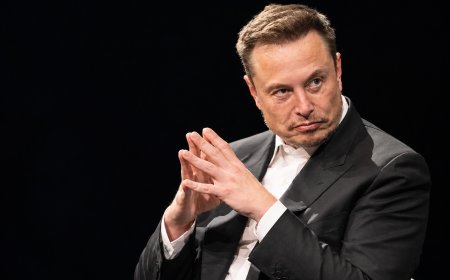
Elon Musk has intensified his dispute with the Indian government over delays in approving commercial operations for his satellite internet service, Starlink. After accusing unnamed business groups of blocking its entry into India, Musk asked on X whether Reliance Industries chairman Mukesh Ambani was the “real boss of India.” The government rejected allegations of discrimination, saying all licensed satellite operators must complete mandatory security assessments. Congress leader Rahul Gandhi also joined the exchange with a pointed response to Musk.

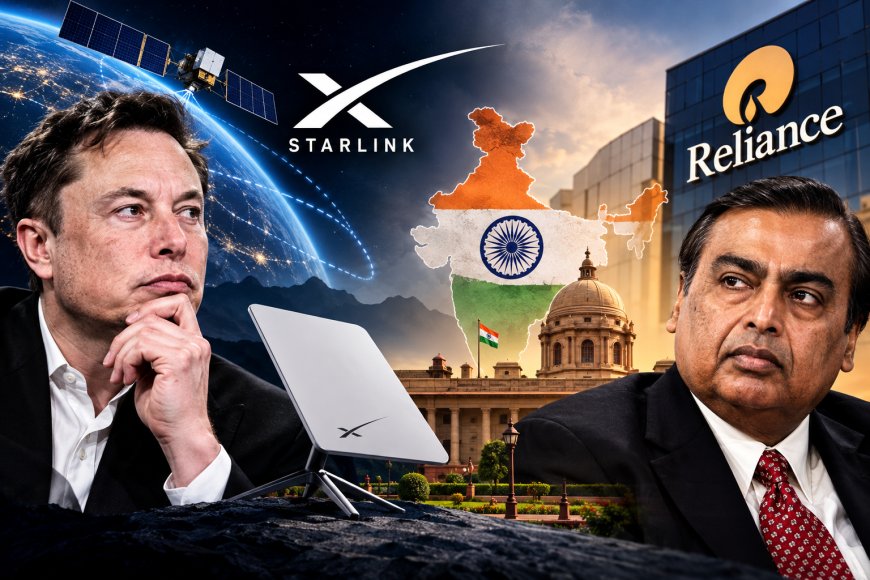
The dispute over Starlink's entry into India has escalated into a public exchange involving Elon Musk, the Indian government, Reliance Industries chairman Mukesh Ambani, and Congress leader Rahul Gandhi. At the center of the controversy is a key question: why has Starlink not yet received all the approvals required to begin commercial satellite internet services in India?
On October 8, 2026, Musk took to X to question the delay, arguing that Starlink had spent years complying with Indian laws and regulatory requirements. He then directly referred to Ambani, asking whether the billionaire industrialist was the “real boss of India.” The remarks came after the government rejected Musk's earlier allegation that powerful business interests were preventing Starlink from entering the Indian market.
Why Is Elon Musk Angry Over Starlink's India Launch?
Starlink, operated by SpaceX, uses a network of satellites in low Earth orbit to deliver internet connectivity. Unlike conventional broadband services that depend on extensive ground infrastructure, satellite internet can potentially connect remote villages, mountainous regions, islands, and other areas where terrestrial networks are difficult or expensive to deploy.
Musk has argued that Starlink could improve connectivity for people who have limited or no access to reliable internet. He has also claimed that the company's entry into India is being obstructed by influential business interests seeking to protect their market positions.
In an earlier post, Musk accused unnamed “oligarchs” of attempting to maintain a monopolistic hold over the Indian market. He did not initially identify a specific company in that allegation. His subsequent reference to Ambani brought the competition between Starlink and India's established telecom businesses into sharper focus.
However, Musk's allegations are claims made by him and should not be treated as established evidence that a company or individual has improperly influenced the licensing process.
How Did the Indian Government Respond?
The Ministry of Communications rejected the suggestion that India's satellite communications approval process was unfair or discriminatory.
The government said its regulatory framework applies to all satellite communications providers and that companies must demonstrate compliance with the required security conditions before they can begin commercial operations. It described the allegation that the process was being selectively applied as baseless and misconceived.
Minister of State for Communications Chandra Sekhar Pemmasani also clarified that the outstanding issue involved security clearance from the Ministry of Home Affairs and was not specific to Starlink.
According to the minister, the Department of Telecommunications had issued licenses and provisional spectrum-related approvals to satellite operators, but the required security clearance remained pending.
The government's position is that regulatory approval cannot be treated as complete until the relevant security requirements have been satisfied. This means that receiving an initial license does not automatically grant permission to launch commercial services.
Starlink, Jio Satcom, and Eutelsat OneWeb: What Is the Competition About?
India's satellite internet market has attracted several major players, including Musk's Starlink, Reliance's Jio Satcom, and Bharti-backed Eutelsat OneWeb.
These companies have different commercial strategies, but they share an interest in providing satellite connectivity to consumers, businesses, and institutions. Satellite services could complement traditional mobile and fixed broadband networks, particularly in areas where conventional infrastructure is limited.
Reliance Jio has built a major position in India's telecommunications market by expanding mobile connectivity and offering competitively priced data services. Its satellite communications venture could give it another route to serve customers who are difficult to reach through conventional networks.
Eutelsat OneWeb, backed by Bharti interests, is also developing satellite connectivity capabilities. Starlink's global satellite network gives it a different technological and operational position in the market.
The presence of competing providers makes fair regulation especially important. At the same time, companies entering the sector must comply with national security requirements, spectrum rules, and other applicable laws. The government says all three licensed operators are undergoing the necessary security assessments.
Rahul Gandhi Joins the Musk–Ambani Controversy
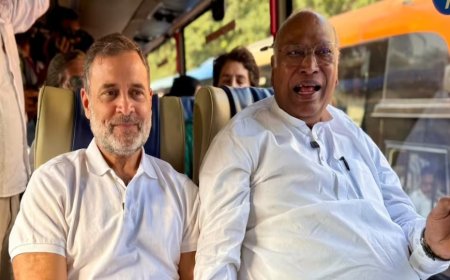
The dispute took a political turn when Congress leader and leader of the opposition in the Lok Sabha, Rahul Gandhi, responded to Musk's comments.
Gandhi wrote, X: “Welcome to India, Elon. Wait till you discover the other guy.”
His remark added another layer to the controversy, suggesting that the questions surrounding corporate influence and government decision-making extended beyond the immediate Starlink dispute.
Musk subsequently thanked Gandhi and responded that the situation was “troubling.” Their exchange attracted attention because it brought an international technology entrepreneur and a senior Indian opposition leader into a debate over regulation, competition, and political influence.
Neither the exchange nor Musk's public allegations, however, establishes that Ambani or another business leader caused Starlink's approval delays.
Why Does the Starlink Issue Matter for Indian Consumers?
The outcome of the dispute could have implications for India's broader digital connectivity ambitions.
Satellite internet has the potential to provide an alternative in remote and underserved areas, including locations where installing fiber-optic cables or building mobile towers is challenging. It may also offer backup connectivity for businesses, emergency services, and organizations operating in difficult terrain.
If Starlink receives the remaining approvals, Indian consumers could eventually have another option in the satellite internet market. Actual availability, pricing, coverage, and service conditions would depend on the company's commercial rollout and the applicable regulatory framework.
Competition among satellite internet providers could encourage investment and expand consumer choice. However, satellite services also face challenges involving equipment costs, spectrum access, capacity, service pricing, and compliance with local regulations.
The government's security review is therefore central to the question of when commercial services can begin.
What Happens Next?
The immediate focus remains on the completion of security assessments and the remaining regulatory requirements. The government has maintained that all licensed satellite operators are subject to the same broad framework, while Musk continues to question the delay in Starlink's launch.
The dispute also highlights a wider challenge facing governments worldwide: balancing the entry of global technology companies with national security, fair competition, and domestic regulatory oversight.
For Starlink, approval would open the door to a potentially significant market. For India's telecom industry, its arrival could introduce a new competitor in a sector already shaped by large, established players.
For consumers, the key issue is whether the regulatory process will ultimately enable additional connectivity options while maintaining the safeguards required by Indian law.
Until the necessary approvals are completed, Starlink's commercial launch in India remains uncertain. Musk's remarks have intensified public scrutiny, but the government's position is that the outstanding clearances—not the identity of a competing business leader—will determine when the service can begin operations.
What's Your Reaction?
 Like
0
 Dislike
0
 Love
0
 Funny
0
 Angry
0
 Sad
0
 Wow
0