































Iran Escalates Gulf Tensions with Strikes on US Bases After Qeshm Island Attack
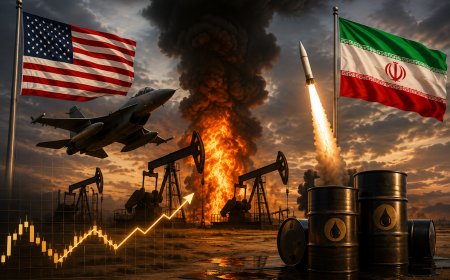
Tensions between Iran and the United States have escalated sharply after Iran launched missile and drone attacks targeting US military facilities in Kuwait and Bahrain. Tehran said the strikes were retaliation for American attacks on military infrastructure and communication facilities near Qeshm Island, warning that the “era of hit and run is over.” The latest exchange has raised concerns about a wider conflict in the Gulf region.

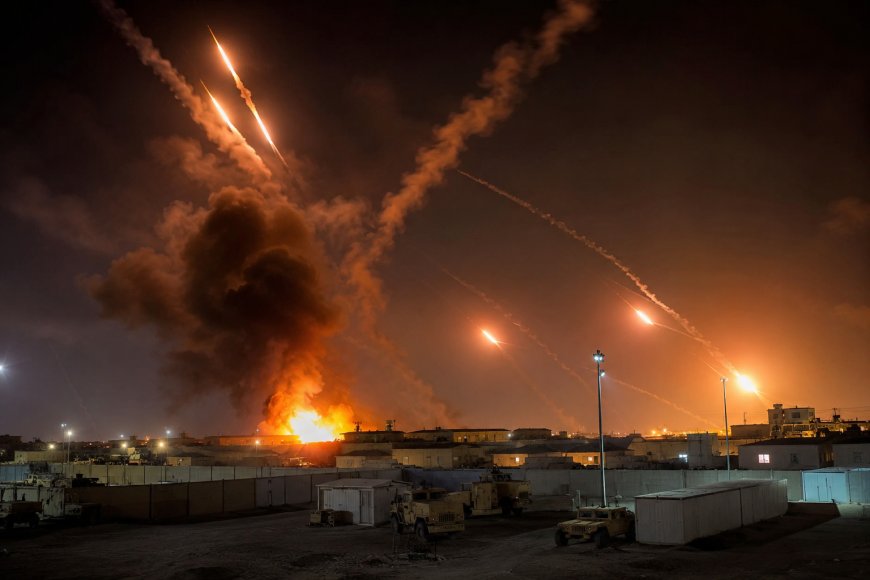
The fragile situation in the Middle East has deteriorated further after Iran launched a series of missile and drone attacks targeting US military positions in Kuwait and Bahrain. Iranian officials described the operation as a direct response to recent American strikes on military-linked infrastructure near Qeshm Island, a strategically important Iranian island located near the Strait of Hormuz. Iranian military commanders declared that the “era of hit and run is over,” signaling a tougher stance against future attacks.
According to Iran’s Islamic Revolutionary Guard Corps (IRGC), the attacks were carried out after US forces allegedly targeted a communications tower and other military-related assets south of Qeshm Island. Tehran also claimed that an Iranian oil tanker near the Strait of Hormuz had been damaged during the escalation. Iranian officials warned that any additional attacks on Iranian territory would be met with a decisive response.
The United States Central Command (CENTCOM) confirmed that Iran launched missiles and drones toward regional targets, including areas linked to US military operations. However, American and allied defense systems reportedly intercepted or neutralized most of the incoming threats before they reached their intended targets. Kuwait and Bahrain also activated their air defense networks as the attacks unfolded.
In response, the US military carried out what it described as "self-defense strikes" against Iranian military facilities on Qeshm Island. American officials said the operation targeted command-and-control infrastructure, drone facilities, and other sites considered a threat to regional security and maritime traffic in the Strait of Hormuz.
The latest confrontation comes amid stalled ceasefire and diplomatic negotiations between Washington and Tehran. While both sides have publicly expressed interest in reducing tensions, repeated military exchanges have undermined efforts to reach a lasting agreement. Analysts warn that continued attacks could further destabilize the Gulf region, disrupt global shipping routes, and increase volatility in energy markets. Oil prices have already reacted to the renewed hostilities due to concerns about the security of the Strait of Hormuz, one of the world's most important energy transit corridors.
With both nations exchanging accusations and military actions, international observers fear that the latest escalation could trigger a broader regional conflict involving multiple countries and strategic waterways. Diplomatic efforts are continuing, but the path toward de-escalation remains uncertain as military tensions continue to rise.
What's Your Reaction?
 Like
0
Like
0
 Dislike
0
Dislike
0
 Love
0
Love
0
 Funny
0
Funny
0
 Angry
0
Angry
0
 Sad
0
Sad
0
 Wow
0
Wow
0