

































Microsoft-OpenAI Deal Gets Major Overhaul as Revenue Sharing Limit Set at $38 Billion
OpenAI and Microsoft have reportedly agreed to place a $38 billion cap on revenue-sharing payments as both companies restructure their long-term AI partnership. The move is being seen as a strategic step to balance rising AI infrastructure costs, future investments, and growing global competition in the artificial intelligence sector.

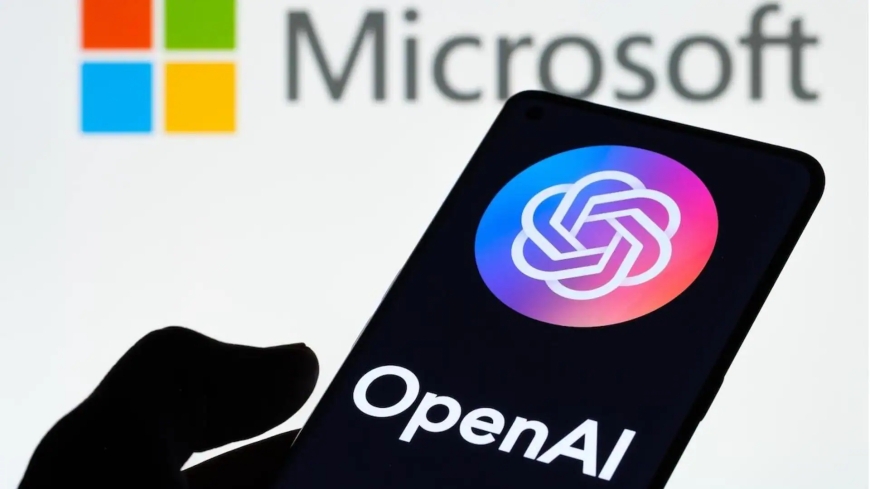
In a major development within the global artificial intelligence industry, OpenAI and Microsoft have reportedly agreed to cap revenue-sharing payments at $38 billion as part of ongoing restructuring talks between the two firms.
The revised agreement signals a new phase in one of the most influential partnerships in the AI sector. Microsoft has invested heavily in OpenAI over the past few years, supporting the development of advanced generative AI technologies and integrating them across its cloud and software ecosystem.
According to reports, the restructuring aims to provide greater financial flexibility for OpenAI while helping Microsoft manage long-term AI infrastructure expenses. The rapid growth of artificial intelligence services has significantly increased operational costs, especially in cloud computing and AI chip deployment.
Industry analysts believe the move reflects the changing economics of the AI boom. Companies are now focusing not only on innovation but also on sustainable financial models as competition intensifies among major tech players worldwide.
The agreement comes at a time when AI companies are racing to expand enterprise services, improve large language models, and strengthen data-center capabilities. OpenAI’s technologies continue to power several Microsoft products, including productivity tools and cloud-based AI services.
Experts suggest the capped revenue-sharing structure could also help OpenAI attract future investments and maintain strategic independence while continuing collaboration with Microsoft on advanced AI research.
The partnership between the two companies has played a central role in accelerating mainstream adoption of generative AI technologies globally. Their collaboration has influenced industries ranging from education and healthcare to finance and software development.
As AI adoption continues to grow rapidly, market observers expect more restructuring and investment adjustments across the technology sector. The OpenAI-Microsoft deal could become a model for future large-scale AI partnerships balancing innovation, profitability, and infrastructure expansion.
What's Your Reaction?
 Like
0
Like
0
 Dislike
0
Dislike
0
 Love
0
Love
0
 Funny
0
Funny
0
 Angry
0
Angry
0
 Sad
0
Sad
0
 Wow
0
Wow
0