


























Parliament Monsoon Session LIVE: Paper Leak Prevention Bill Tabled in Lok Sabha, Heated Debate Begins Amid Opposition Uproar
The Monsoon Session of Parliament witnessed high drama as the government introduced the Paper Leak Prevention Bill in the Lok Sabha. While the ruling NDA termed it a historic step to safeguard the future of students, opposition parties created an uproar, demanding accountability over recent examination paper leaks. The House soon turned into a battleground of sharp political exchanges.

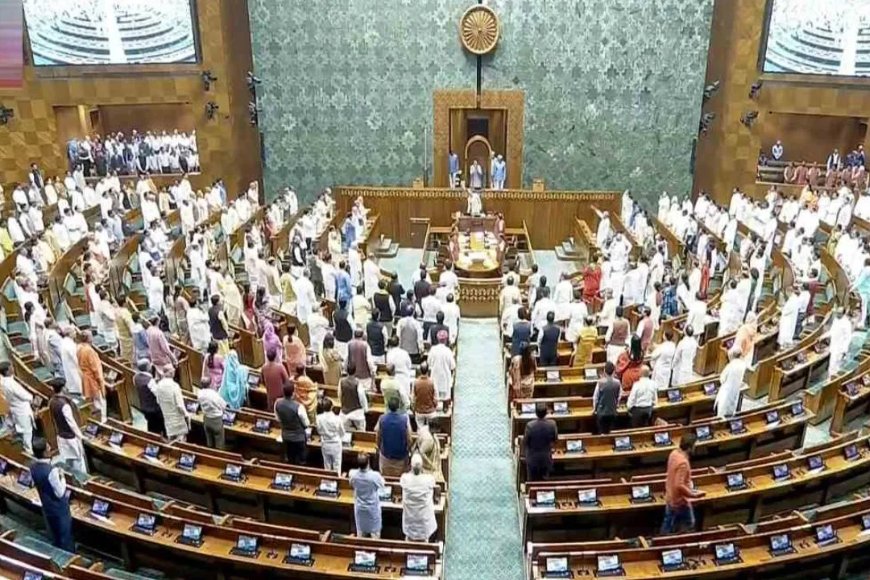
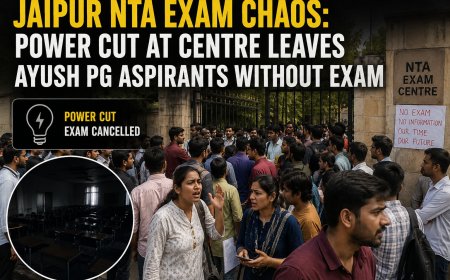
The Monsoon Session of Parliament witnessed one of its most intense and politically charged debates as the Central Government formally introduced the Paper Leak Prevention Bill in the Lok Sabha. The proposed legislation, aimed at curbing examination paper leaks and strengthening the credibility of India's recruitment and educational examination system, immediately became the centre of attention inside the House. The introduction of the bill came amid continuous sloganeering by opposition MPs, who demanded accountability for the recent paper leak controversies before any new legislation was considered. Despite repeated disruptions, the government moved ahead with tabling the bill, describing it as a historic and comprehensive reform designed to safeguard the future of millions of students and restore public confidence in the country's examination process. The legislation has been introduced against the backdrop of several high-profile paper leak incidents involving competitive recruitment examinations and entrance tests, which triggered widespread protests by students, parents, educators and political parties across the country. The repeated cancellation and postponement of examinations have raised serious concerns about transparency, fairness and administrative efficiency, making the issue one of the biggest political and social debates in recent months.
Presenting the bill before the Lok Sabha, the government maintained that examination fraud has evolved into a sophisticated and organised criminal enterprise involving middlemen, technology experts, coaching operators and well-connected syndicates that manipulate examination systems for financial gain. According to ministers, the existing legal framework has proved inadequate in tackling such highly organised networks, making a dedicated law essential to ensure strict punishment for offenders and greater protection for deserving candidates. The government asserted that honest students, who dedicate years of hard work and preparation for competitive examinations, should never become victims of criminal conspiracies designed to compromise merit and fairness. Through the proposed legislation, the Centre aims to establish a robust legal mechanism empowering investigating agencies to take swift action against those involved in leaking question papers, manipulating digital examination systems or facilitating unfair practices in any form. Government representatives repeatedly described the bill as a decisive step towards protecting the integrity of India's public examination system and ensuring that recruitment and admission processes remain transparent, credible and free from organised criminal influence.
The Paper Leak Prevention Bill contains several stringent provisions intended to act as a strong deterrent against examination fraud. Among its key features are strict punishment for individuals directly involved in leaking examination papers, severe penalties for organised criminal syndicates operating paper leak rackets, enhanced powers for investigating agencies to conduct swift and effective inquiries, improved security standards for institutions responsible for conducting examinations, greater use of digital monitoring systems and technological safeguards to protect confidential examination material, stronger accountability mechanisms for examination authorities and institutions, and provisions aimed at ensuring the faster prosecution of organised examination fraud cases. According to the government, these measures collectively represent one of the strongest legal responses ever proposed to tackle examination-related crimes. Ministers argued that merely relying on administrative guidelines was no longer sufficient and that a comprehensive statutory framework was necessary to dismantle criminal networks that have repeatedly undermined the aspirations of students across the country. The government expressed confidence that the proposed law would significantly reduce the incidence of paper leaks while rebuilding public trust in India's competitive examination system.
However, the introduction of the bill also triggered sharp criticism from opposition parties, resulting in heated exchanges inside the Lok Sabha. Opposition members argued that bringing a new law would not automatically resolve the problem unless the government accepted responsibility for the repeated examination failures witnessed over recent years. Several MPs questioned how multiple national-level examinations had suffered from irregularities despite the existence of security protocols and monitoring mechanisms. They demanded answers regarding the accountability of officials responsible for conducting examinations and alleged that successive paper leak incidents reflected systemic administrative failures rather than merely criminal conspiracies. Opposition leaders also highlighted the hardships faced by lakhs of students who were forced to prepare repeatedly after examinations were cancelled or postponed due to alleged irregularities. They insisted that any meaningful reform must include administrative accountability, institutional restructuring and stronger oversight of examination agencies, rather than relying solely on harsher punishments. According to opposition parties, the crisis has grown into a national concern affecting the future of an entire generation of aspirants who invest years of effort and significant financial resources preparing for competitive examinations.
Responding strongly to these allegations, members of the ruling NDA accused the opposition of politicising an issue that directly affects students and young job aspirants. Government MPs argued that instead of supporting stronger laws against examination mafias, opposition parties were attempting to create disruptions in Parliament for political gains. Ministers maintained that the proposed legislation had been drafted after extensive consultations with experts, investigating agencies and stakeholders involved in conducting public examinations. They reiterated that the objective of the bill was institutional reform rather than political messaging, emphasising that strengthening transparency, fairness and credibility in India's examination system should be viewed as a national priority beyond partisan politics. Treasury bench members further argued that organised paper leak syndicates have become increasingly sophisticated by exploiting technological loopholes and administrative weaknesses, making stronger legal intervention both necessary and unavoidable.
If enacted, the Paper Leak Prevention Bill is expected to bring significant changes to the legal framework governing public examinations in India. Students could benefit from stronger protection against organised paper leak syndicates, increased transparency in recruitment and entrance examinations, enhanced digital security measures, reduced chances of examination cancellations and postponements, quicker investigation of irregularities and greater confidence in merit-based selection processes. Education experts believe that a robust legal framework, combined with technological upgrades and institutional reforms, could discourage criminal organisations from targeting major competitive examinations in the future. At the same time, many experts caution that legislation alone cannot guarantee success. They stress that effective implementation, regular security audits, continuous technological modernisation and strict accountability for examination authorities will be equally important in ensuring that the objectives of the proposed law are fully achieved.
Beyond its legal implications, the introduction of the Paper Leak Prevention Bill carries considerable political significance. Examination paper leaks have emerged as one of the most sensitive public issues affecting students and youth across the country, making it a major subject of political debate. With competitive examinations serving as the gateway to government jobs, higher education institutions and professional careers, every political party has attempted to position itself as a defender of students' interests. For the government, introducing this legislation demonstrates its commitment to addressing examination fraud through comprehensive legal reforms and stronger enforcement mechanisms. For the opposition, the debate presents an opportunity to question the government's handling of previous paper leak controversies and demand greater administrative accountability. Consequently, the issue is expected to remain a major point of political discussion both inside Parliament and in future electoral campaigns.
Following its introduction in the Lok Sabha, the Paper Leak Prevention Bill will now undergo detailed parliamentary scrutiny. Members from different political parties are expected to debate its various provisions, suggest amendments and seek clarifications from the government regarding implementation mechanisms and enforcement procedures. If approved by both Houses of Parliament and subsequently receiving the assent of the President, the legislation will become law and establish a dedicated legal framework for combating examination-related fraud across India. Detailed rules, enforcement protocols and institutional guidelines are likely to be framed after the law comes into force to ensure effective implementation across all public examinations.
The introduction of the Paper Leak Prevention Bill therefore marks a significant legislative milestone in India's ongoing efforts to protect the integrity of public examinations and restore confidence in the country's recruitment and educational systems. While the government views the proposed legislation as a decisive strike against organised examination mafias, the opposition continues to argue that lasting reforms will require stronger administrative accountability alongside stricter legal provisions. As Parliament continues its deliberations, millions of students, parents, educators and recruitment agencies across the country will closely monitor the progress of the bill. Ultimately, the success of this legislation will depend not only on the strength of its legal framework but also on transparent implementation, technological preparedness, institutional accountability and sustained political commitment. Given the aspirations of millions of young Indians who rely on fair and merit-based examinations every year, the outcome of this parliamentary debate is likely to have far-reaching consequences for the future of India's education and recruitment landscape.
What's Your Reaction?
 Like
0
Like
0
 Dislike
0
Dislike
0
 Love
0
Love
0
 Funny
0
Funny
0
 Angry
0
Angry
0
 Sad
0
Sad
0
 Wow
0
Wow
0