





























PM Modi Announces Fast-Track Courts for Paper Leak Cases, Says Strict Action Against Exam Fraud
Prime Minister Narendra Modi has announced that all paper leak cases, including major examination scams like NEET, will now be heard in fast-track courts. The move aims to ensure swift justice, restore trust in the examination system, and send a strong message against those involved in exam-related fraud.


PM Modi Announces Fast-Track Courts for Paper Leak Cases, Vows Swift Justice Against Exam Scams
The Central Government has taken a significant step to tackle the growing issue of examination paper leaks across the country. Prime Minister Narendra Modi announced that cases related to paper leaks will now be heard in fast-track courts, ensuring speedy investigations, quicker trials, and strict punishment for those responsible. The announcement comes at a time when several competitive examinations have faced allegations of paper leaks, affecting lakhs of students and raising serious concerns over the integrity of India's examination system.
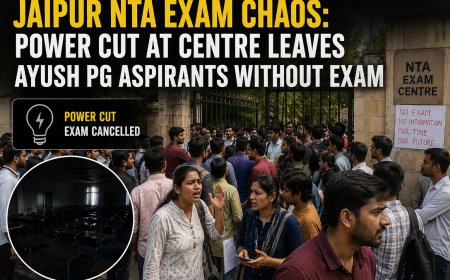
The decision is being seen as one of the strongest responses by the government to repeated incidents of examination fraud. Over the past few years, multiple recruitment and entrance examinations—including the highly debated NEET examination—have come under scrutiny due to allegations of question paper leaks, organized cheating networks, and irregularities. These incidents have not only delayed recruitment processes but have also shaken the confidence of students who spend years preparing for competitive examinations.
Speaking on the issue, Prime Minister Narendra Modi emphasized that the future of the country's youth cannot be compromised due to the actions of criminal networks involved in paper leak rackets. He stated that justice in such cases must not be delayed and that those responsible should face legal consequences as quickly as possible. According to the announcement, cases registered under paper leak laws and other examination-related frauds will receive priority in the judicial process through designated fast-track courts. This approach is expected to reduce the time taken for investigations and court proceedings, allowing victims and students to receive justice sooner while also deterring organized criminal groups operating across different states.
Competitive examinations play a crucial role in determining the careers of millions of students every year. Whether it is entrance tests for higher education or recruitment examinations for government jobs, candidates often spend several years preparing for these opportunities. Whenever an examination is cancelled due to a paper leak, students face emotional stress, financial burden, uncertainty, and delayed career opportunities. In many cases, authorities are forced to conduct fresh examinations, increasing administrative costs and causing frustration among genuine candidates. By introducing fast-track judicial proceedings, the government aims to send a clear message that examination fraud will not be treated as an ordinary criminal offence.
One of the biggest controversies in recent years has been the alleged irregularities surrounding the NEET examination. The issue triggered widespread debates across the country, with students, parents, educational institutions, and political parties demanding accountability and stricter action. Although investigation agencies have been probing various aspects of the case, many students expressed concerns over the lengthy legal process. The Prime Minister's announcement is expected to address these concerns by ensuring that such cases move through the judicial system without unnecessary delays. Education experts believe that faster court proceedings could strengthen public confidence in the fairness and transparency of India's examination system.
Apart from judicial reforms, the government has been introducing several measures to improve examination security. These include enhanced digital monitoring of examination centres, better coordination between central and state agencies, stronger cybersecurity mechanisms, advanced encryption for question papers, increased surveillance during transportation and distribution of examination materials, and tougher penalties under anti-paper leak laws. The establishment of fast-track courts is expected to complement these administrative reforms by ensuring that legal action keeps pace with investigative efforts and that offenders face timely punishment.
Many students and parents have welcomed the decision, describing it as a positive step toward protecting the interests of genuine candidates. For years, aspirants have argued that delays in court proceedings often weaken the impact of legal action against accused individuals. Students believe that quicker judgments will discourage future attempts at organized examination fraud and create greater confidence in recruitment and admission processes. Education experts have also pointed out that timely justice is essential to preserving the credibility of public examinations and maintaining faith in competitive testing.
While the announcement has received appreciation from several quarters, opposition leaders have argued that judicial reforms alone may not be sufficient. They have called for comprehensive improvements in examination management, stronger accountability mechanisms, greater transparency in conducting examinations, and better oversight of agencies responsible for organizing competitive tests. Some experts have also suggested establishing a centralized technology-driven examination security framework to further reduce the chances of future paper leaks and strengthen preventive measures.
Paper leak controversies have affected numerous recruitment examinations conducted by various state governments and central agencies. Delays caused by cancellations often leave government vacancies unfilled while candidates wait months—or even years—for fresh examinations. Fast-track courts could help resolve such disputes more efficiently, allowing recruitment processes to resume without prolonged legal uncertainty. Similarly, entrance examinations for higher education institutions could witness improved public confidence if legal disputes are settled within a shorter time frame.
Authorities believe that many paper leak incidents are linked to organized criminal networks operating across multiple states. These groups allegedly exploit technology, insiders, and financial incentives to illegally access question papers before examinations. Speedy prosecution through fast-track courts may increase conviction rates by ensuring that evidence is presented before courts without significant delays. It may also discourage future criminal activities by creating stronger legal consequences for offenders and sending a clear warning to those attempting to manipulate the examination system.
For millions of young Indians, competitive examinations represent years of hard work, sacrifice, and hope for a better future. Every paper leak not only compromises an examination but also affects public confidence in the education and recruitment system. The government's latest announcement seeks to reassure students that their efforts will be protected through stronger legal action against those attempting to manipulate examination processes. If implemented effectively, fast-track courts could become an important pillar in India's broader strategy to eliminate examination fraud and uphold fairness in education and public recruitment. The coming months will determine how quickly these courts begin functioning and whether the initiative succeeds in delivering timely justice, but the announcement marks a significant policy shift aimed at safeguarding the aspirations of the nation's youth.
What's Your Reaction?
 Like
0
 Dislike
0
 Love
0
 Funny
0
 Angry
0
 Sad
0
 Wow
0