


































Pegasus Spyware Back in Focus: How WhatsApp Was Exploited and What You Can Do to Protect Your Smartphone

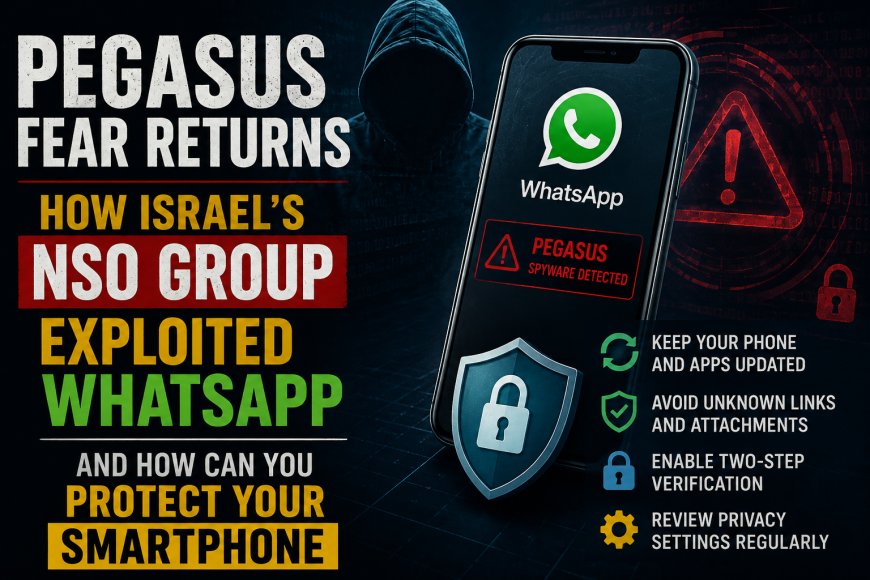
Pegasus, the military-grade spyware developed by Israel's NSO Group, is once again making headlines following renewed concerns over digital surveillance. The spyware became notorious for exploiting vulnerabilities in WhatsApp to infiltrate smartphones without user interaction. Here's everything you need to know about how Pegasus works, who it targets, and how you can better protect your device.

Jul 2, 2026 - 15:57
 0  3
Pegasus Spyware Back in Focus: How WhatsApp Was Exploited and What You Can Do to Protect Your Smartphone

Pegasus, one of the world's most sophisticated spyware platforms, has once again become the center of global cybersecurity discussions. Developed by the Israeli cyber intelligence company NSO Group, Pegasus gained international attention after reports revealed it had been used to target journalists, activists, political figures and government officials in several countries.

Although Pegasus is not believed to pose a mass threat to ordinary smartphone users, cybersecurity experts say the spyware highlights the growing risks associated with advanced digital surveillance.

What Is Pegasus?

Pegasus is a highly advanced spyware designed to secretly infiltrate smartphones and extract sensitive information. Once installed, it can potentially access messages, emails, photos, contacts, location data, microphones and cameras, allowing operators to monitor a target's activities without their knowledge.

Unlike traditional malware, Pegasus has been capable of exploiting previously unknown software vulnerabilities, making it extremely difficult to detect.

How Was WhatsApp Exploited?

One of the most well-known Pegasus incidents involved a vulnerability in WhatsApp's voice calling feature. Security researchers found that attackers could exploit a flaw by placing a specially crafted call to a target's device.

In some cases, the spyware could reportedly be installed without the victim answering the call, making it an example of a "zero-click" style attack. WhatsApp later patched the vulnerability and notified affected users while pursuing legal action against NSO Group.

Who Was Allegedly Targeted?

Investigations over the past several years have linked Pegasus to alleged surveillance operations involving journalists, human rights defenders, lawyers, opposition politicians and public officials in multiple countries.

NSO Group has consistently stated that Pegasus is sold only to authorized government agencies for combating terrorism and serious crime. However, allegations regarding its misuse have led to legal challenges and international scrutiny.

Can Your Smartphone Be Infected Today?

For most users, the likelihood of being targeted by Pegasus remains extremely low. The spyware is expensive, sophisticated and generally associated with high-profile surveillance operations rather than widespread cybercrime.

Nevertheless, cybersecurity experts recommend staying vigilant as smartphone vulnerabilities continue to evolve.

How to Protect Your Smartphone

To reduce cybersecurity risks, experts recommend following these best practices:

  • Keep your smartphone's operating system updated.
  • Regularly update WhatsApp and all installed apps.
  • Install applications only from official app stores.
  • Be cautious of suspicious links, files and unexpected messages.
  • Enable two-factor authentication wherever possible.
  • Review app permissions and remove unnecessary access.
  • Use strong device passwords and biometric security features.

Keeping software up to date remains one of the most effective defenses against newly discovered vulnerabilities.

Why It Matters

The Pegasus controversy has become a symbol of the broader debate over digital privacy, cybersecurity and government surveillance. As smartphones increasingly store personal, financial and professional information, protecting digital devices has become more important than ever.

While Pegasus itself is not considered a widespread consumer threat, the incident serves as a reminder that cybersecurity is an ongoing responsibility. Regular software updates, good digital hygiene and awareness of emerging threats remain the best ways to protect personal data in an increasingly connected world.

What's Your Reaction?

Like Like 0
Dislike Dislike 0
Love Love 0
Funny Funny 0
Angry Angry 0
Sad Sad 0
Wow Wow 0