


































Trump’s PERM Suspension Shock: Indian IT Stocks Rally as TCS, Infosys, HCLTech and Wipro Trade in Green
Indian IT stocks rallied despite concerns over the Trump administration’s reported suspension of eight major technology companies from the US PERM labor certification program. Shares of TCS, Infosys, HCLTech, and Wipro moved into positive territory, highlighting the market’s resilience amid uncertainty surrounding US immigration and employment rules.

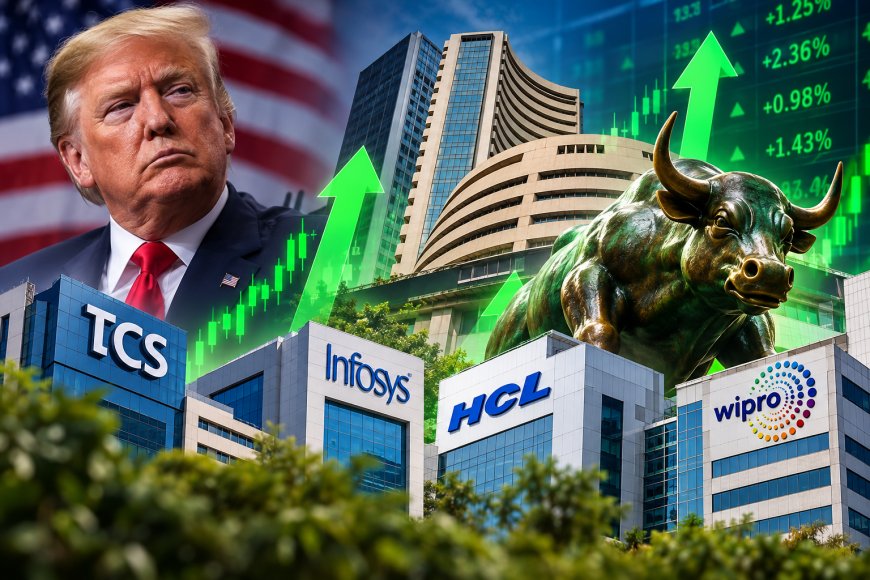
Indian IT stocks witnessed a positive trading session on October 9, 2026, as shares of major technology companies moved into the green despite concerns over a major immigration-related decision by the United States. Tata Consultancy Services (TCS), Infosys, HCL Tech, and Wipro attracted attention after the Trump administration suspended eight technology companies from the US Permanent Labor Certification (PERM) program. The development raised questions about the future of employment-based Green Card applications for Indian technology professionals working in America.
US PERM Suspension Puts Indian IT Companies Under Scrutiny
The US Department of Labor has suspended eight major technology companies from participating in the PERM program. The affected companies include Tata Consultancy Services (TCS), Infosys, Wipro, HCL Tech, Cognizant, Capgemini, Microsoft, and Adobe.
The decision forms part of a broader US government crackdown on alleged misuse of employment-based immigration programs. US officials have argued that certain companies may have relied on foreign workers in ways that disadvantaged American employees. The allegations are under scrutiny, and the action should not be treated as proof that every affected company committed a violation.
What Is the PERM Program?
PERM stands for Permanent Labor Certification. It is an important step in the employer-sponsored Green Card process for many foreign professionals seeking permanent residency in the United States.
Under the process, an employer generally needs to demonstrate that there are insufficient available, qualified, and willing US workers for the relevant position and that hiring a foreign worker will not adversely affect the wages and working conditions of similarly employed US workers.
With the suspension in place, the affected companies face restrictions on submitting new PERM applications and processing pending cases covered by the action. This could delay permanent residency plans for employees whose applications depend on these employers.
Why Are IT Stocks Still Rising?
The positive movement in IT shares despite the regulatory uncertainty highlights an important distinction between immigration-related risks and the broader business performance of technology companies.
Large Indian IT service providers generate revenue by delivering software development, consulting, cloud migration, cybersecurity, artificial intelligence, and other technology services to clients across global markets. A restriction on one employment-based immigration program does not automatically stop these companies from providing services or fulfilling existing contracts.
Investors may therefore be assessing the immediate business impact separately from the potential long-term consequences for hiring, employee mobility, and the cost of operating in the United States.
However, a rally in shares does not necessarily mean the market has dismissed the risks. Stock prices can respond to several factors, including broader market sentiment, company-specific developments, and valuations and expectations about future earnings. The exact contribution of each factor would require detailed market data.
TCS Says Its US Strategy Remains on Track
Tata Consultancy Services has said that the suspension is not expected to have a material impact on its workforce strategy or client engagements. The company has emphasized its focus on recruiting local talent in the United States.
According to a report published by The Times of India on October 9, TCS also reiterated its plan to hire an additional 15,000 employees in the US over the next five years. This suggests that the company intends to continue expanding its American workforce despite the regulatory development.
The company's response is significant because it indicates that at least one major Indian IT exporter expects to maintain its business plans while complying with the new restrictions. The longer-term impact, however, will depend on how the suspension evolves and whether the affected companies can continue to meet their staffing requirements through alternative recruitment channels.
What Could Happen to Indian IT Professionals?
The biggest concern may be for Indian professionals in the United States who are waiting for employment-based Green Cards through the affected companies.
The suspension could delay new and pending PERM cases covered by the action, creating uncertainty for employees planning their long-term careers and residency. The impact may be particularly important for workers whose immigration plans depend on completing labor certification within a specific timeframe.
However, the suspension does not automatically cancel existing H-1B visas or previously issued Green Cards. Its direct effect concerns the PERM process, while individual immigration outcomes depend on each worker's circumstances and the applicable rules.
Will the Move Affect India's IT Industry?
The potential consequences extend beyond individual workers. If the restrictions remain in place, companies may need to reassess staffing models, recruitment strategies, and the movement of skilled employees between India and the United States.
Greater reliance on local hiring could increase the importance of US-based recruitment and training. Companies may also explore alternative staffing arrangements to ensure continuity of client services.
At the same time, the scale of the immediate impact on each business will vary. The suspension of PERM applications is not the same as a blanket ban on all Indian IT services, nor does it automatically prevent the affected companies from conducting business in America.
For investors, the key questions will be whether the restrictions affect operating costs, talent availability, project execution, or future revenue growth. These factors will become clearer as the companies provide further updates and the US investigations progress.
Outlook: Market Optimism Meets Regulatory Uncertainty
The movement of TCS, Infosys, HCLTech, and Wipro into positive territory demonstrates that the immigration-related development did not prevent the IT sector from seeing buying interest during the reported session.
Nevertheless, investors should distinguish between a short-term share-price rally and the longer-term financial implications of the US decision. Future performance will depend on company earnings, demand for technology services, operating costs, global economic conditions, and the outcome of the ongoing regulatory process.
For Indian IT professionals, the priority is understanding how the suspension applies to their individual PERM applications rather than assuming that all work visas or Green Cards have been cancelled.
The situation remains important for both financial markets and India's technology workforce. As more information emerges, the response of the affected companies and any further action by US authorities will be crucial in determining the overall impact.
What's Your Reaction?
 Like
0
 Dislike
0
 Love
0
 Funny
0
 Angry
0
 Sad
0
 Wow
0