

































Canada Unveils ‘Accelerated Pathway’ to Lure H-1B Visa Holders Hit by Trump’s New Fee Policy
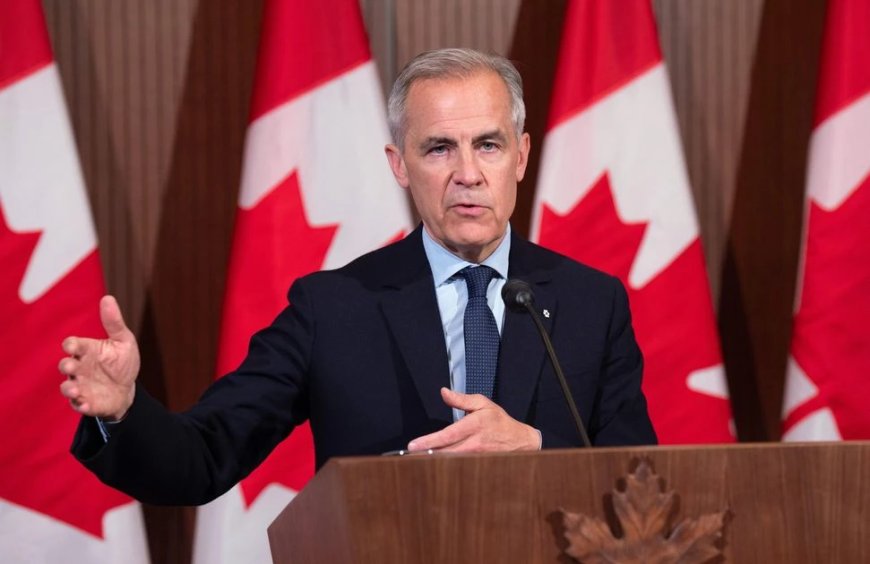
Ottawa, November 6: As the United States under Donald Trump’s leadership prepares to impose a hefty $100,000 annual fee on H-1B visa holders, Canada is positioning itself as an alternative destination for global tech and research talent. Prime Minister Mark Carney, in his first federal budget, announced a sweeping plan to attract highly skilled workers, international researchers, and H-1B professionals impacted by the US administration’s tightening immigration rules.

Canada’s $1.7 Billion Talent Initiative
The Canadian government has earmarked C$1.7 billion (US$1.2 billion) to recruit over 1,000 top international researchers in an effort to boost innovation and economic competitiveness.
“The expertise of these researchers will help advance our global competitiveness and contribute to the economy of the future,” the budget document stated, according to Bloomberg.
The initiative reflects Carney’s broader goal to make Canada a global hub for research, innovation, and skilled immigration — especially as the US adopts more restrictive visa and immigration policies.
Fast-Track Route for H-1B Visa Holders
Among the new measures, Canada plans to introduce an “accelerated pathway” designed specifically for H-1B visa holders seeking permanent residence or employment opportunities north of the border.
The program aims to streamline immigration processes for foreign tech workers — many of whom are Indian and Chinese nationals — facing uncertainty under the Trump administration’s new visa fee regime.
“What is clear is that there is an opportunity to attract people who previously would have been on H-1B visas,” Carney had said earlier in September, signaling his government’s intent to benefit from U.S. policy changes.
According to US government data, Indian nationals account for nearly 70% of all H-1B visa holders, most employed in the technology and research sectors. The new fee proposal has created anxiety among young professionals who now see Canada as a more stable and affordable alternative.
Balancing Skilled Immigration with Student Restrictions
While Canada is opening doors for H-1B professionals, it is simultaneously reducing its intake of international students and temporary residents.
Under the latest immigration plan, Canada will bring in 380,000 permanent residents per year between 2026 and 2028 but will cut temporary residents — including foreign students — to 385,000 in 2026 and 370,000 in the following years, marking a 40% reduction compared to current figures.
The government also plans to limit new study permits to 155,000 in 2026 and 150,000 in both 2027 and 2028, reflecting a significant tightening of the student visa pipeline.
Despite the reductions, the government maintains that the changes are meant to “rebalance” immigration flows, focusing on long-term contributors to the Canadian economy rather than short-term residents.
Universities Welcome Sustainable Immigration Shift
In response, Universities Canada acknowledged the government’s efforts to create a sustainable system, while cautioning that student intake policies must align with the country’s broader talent strategy.
“We recognize the government’s efforts to build a sustainable immigration system that welcomes those seeking to study at Canada’s world-class universities, but the plan must match its talent and economic agenda,” the association said in a statement.
A Strategic Opening Amid US Restrictions
The Trump administration’s decision to levy a massive annual fee on H-1B visas — used primarily by tech companies to hire global talent — has drawn widespread criticism from the business and technology sectors. Many argue that the move will push skilled workers toward other countries such as Canada, the UK, and Australia, which are increasingly competing to attract international talent.
Canada’s new “accelerated pathway” is seen as a direct response to that shift — transforming the country into a potential refuge for skilled immigrants facing policy barriers in the United States.

What's Your Reaction?
 Like
0
Like
0
 Dislike
0
Dislike
0
 Love
0
Love
0
 Funny
0
Funny
0
 Angry
0
Angry
0
 Sad
0
Sad
0
 Wow
0
Wow
0