























“China Stages Major Military Exercises Around Taiwan, Signaling Strategic Pressure”
China has launched large military war games around Taiwan under “Justice Mission 2025,” involving live‑fire drills and simulated blockades. Taiwan vows to defend its democracy amid heightened regional tensions.

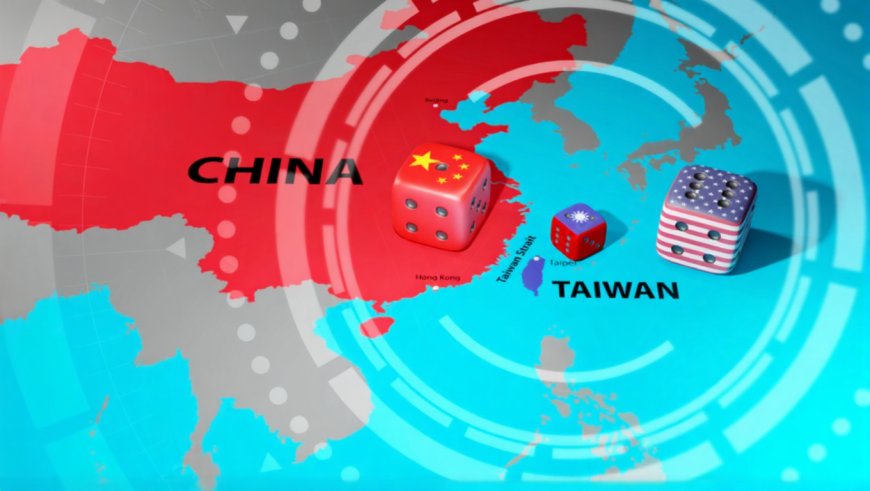
China’s military has launched a new round of large‑scale war games around Taiwan, prompting heightened military alertness on the self‑ruled island and drawing international concern over rising tensions in East Asia. The exercises, officially dubbed “Justice Mission 2025,” began on December 29, 2025, and involve coordinated drills by the People’s Liberation Army (PLA).
The drills come amid heightened regional friction, influenced by recent U.S. arms sales to Taiwan and sensitive diplomatic exchanges involving Japan’s leadership. The exercises mark the sixth major series of war games China has conducted around Taiwan since 2022, reflecting persistent tensions over sovereignty and regional security.
Details of the Military Drills
China’s Eastern Theatre Command announced that the war games include:
-
Army, naval, air force, rocket force, and artillery deployments around Taiwan.
-
Live‑fire exercises in designated zones surrounding the island with temporary sea and airspace restrictions.
-
Simulated blockade operations affecting major ports such as Keelung and Kaohsiung.
-
Deployment of fighter jets, bombers, unmanned aerial vehicles, and long‑range precision rockets.
Beijing described the drills as a stern warning to what it calls “Taiwan independence forces” and to external interference by other countries. The PLA’s official statements emphasized “all‑dimensional deterrence” and readiness to respond to threats to China’s territorial claims.
Taipei’s Reaction
Taiwan has denounced the war games as provocative military intimidation that undermines regional peace. In response:
-
Taiwanese armed forces were placed on high alert and conducted rapid response drills to counter sudden threats.
-
Government statements stressed the island’s commitment to defending democracy and sovereignty against any coercive action.
-
Taiwan’s military also bolstered surveillance and operational readiness, including naval, air, and ground components.
Despite the tensions, Taiwan’s financial markets remained stable, reflecting public resilience amid geopolitical pressure.
Context and Geopolitical Drivers
China claims Taiwan as part of its territory under the “one China” policy and has not ruled out the use of force to achieve unification. Conversely, Taiwan asserts it is a self‑governing democracy, with only its citizens entitled to decide their political future.
Analysts note that recent war games follow:
-
Approval of an $11.1 billion U.S. arms sales package to Taiwan, the largest to date.
-
Public comments by political leaders in allied states about potential collective defence responses.
China’s drills blur the line between routine military training and posturing that could intimidate Taiwan and deter foreign support. Observers warn that such exercises increase the risk of miscalculation, especially given the dense network of military forces in the Taiwan Strait.
The latest war games have attracted international attention as part of broader U.S.–China strategic competition in the Indo‑Pacific. Countries including the United States and Japan have repeatedly expressed concern over escalatory military actions that could destabilise regional security.
While no open conflict has occurred, China’s growing capability to conduct joint, large‑scale operations around Taiwan underscores the fragility of peace and the importance of diplomatic engagement among key stakeholders.
What's Your Reaction?
 Like
0
Like
0
 Dislike
0
Dislike
0
 Love
0
Love
0
 Funny
0
Funny
0
 Angry
0
Angry
0
 Sad
0
Sad
0
 Wow
0
Wow
0