









Under Siege at Home and Abroad, Iran’s Supreme Leader Falls Back on Repression as Protests Intensify
As protests spread and crises mount, Iran’s ailing Supreme Leader Ayatollah Ali Khamenei falls back on repression and hardline tactics to maintain control amid growing unrest.

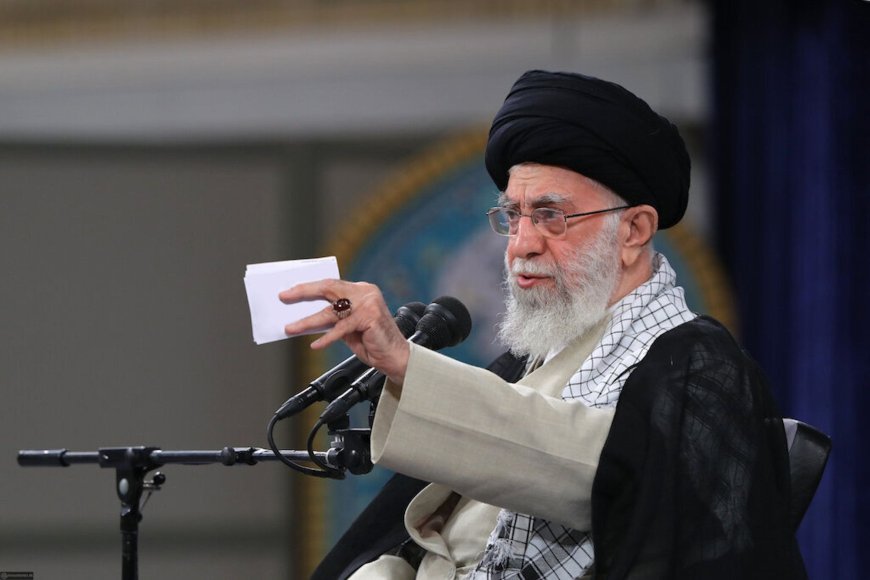
As multiple crises converge, Iran’s ailing Supreme Leader Ayatollah Ali Khamenei appears to be relying on the only strategy he has consistently trusted for decades: tightening control through repression, ideology, and force. With his health reportedly fragile and his authority increasingly challenged, the Iranian state is once again turning inward, cracking down on dissent as protests flare across the country.
Iran today faces a rare convergence of pressures. Economically, years of sanctions, mismanagement, and corruption have pushed inflation and unemployment to crushing levels. Politically, the regime’s legitimacy is eroding, especially among young Iranians who feel alienated from clerical rule. Socially, anger simmers over restrictions on personal freedoms, women’s rights, and harsh moral policing. Internationally, Iran remains isolated, entangled in regional conflicts and under constant threat of renewed sanctions or military escalation.
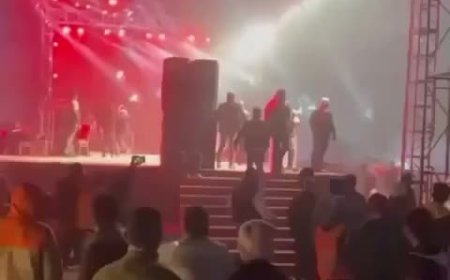
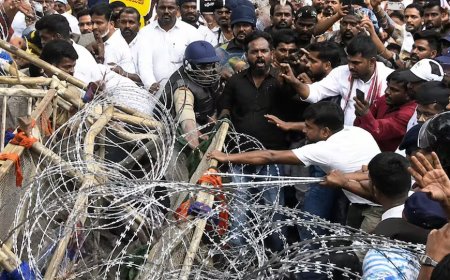
Against this backdrop, protests—sparked by economic hardship, political repression, or symbolic acts of defiance—continue to erupt despite brutal crackdowns. Security forces, including the Islamic Revolutionary Guard Corps (IRGC) and Basij militias, have responded with arrests, surveillance, internet shutdowns, and violence. The message from the top remains clear: dissent will not be tolerated.
Khamenei’s response reflects a familiar playbook. Rather than offering meaningful reforms or opening political space, the leadership frames unrest as a foreign conspiracy. Protesters are branded as agents of the West, Israel, or exiled opposition groups. This narrative, long used to justify repression, seeks to rally hardline supporters while delegitimizing genuine public grievances.
However, this approach carries growing risks. Iran’s population is younger, more connected, and less receptive to revolutionary-era slogans. Many protesters no longer demand reform within the system but openly question the system itself. Each crackdown may suppress unrest temporarily, but it deepens resentment and widens the gap between state and society.
The uncertainty surrounding succession further complicates matters. With Khamenei’s health in question, power struggles behind the scenes are intensifying. Hardliners appear determined to prevent any sign of weakness, fearing that concessions could unravel the Islamic Republic at a critical moment.
For now, the regime is betting that fear, force, and fatigue will outlast public anger. Yet history suggests that repression alone cannot indefinitely contain a population that feels it has little left to lose. As crises mount and protests persist, Iran’s leadership may find that its only playbook is no longer enough.
What's Your Reaction?
 Like
0
Like
0
 Dislike
0
Dislike
0
 Love
0
Love
0
 Funny
0
Funny
0
 Angry
0
Angry
0
 Sad
0
Sad
0
 Wow
0
Wow
0