





























Why Trump Wants Greenland: Arctic Strategy, Resources and Global Power Play
Donald Trump’s interest in Greenland goes beyond headlines. From Arctic military dominance and rare earth minerals to countering China and Russia, here’s why Greenland matters to U.S. global strategy.

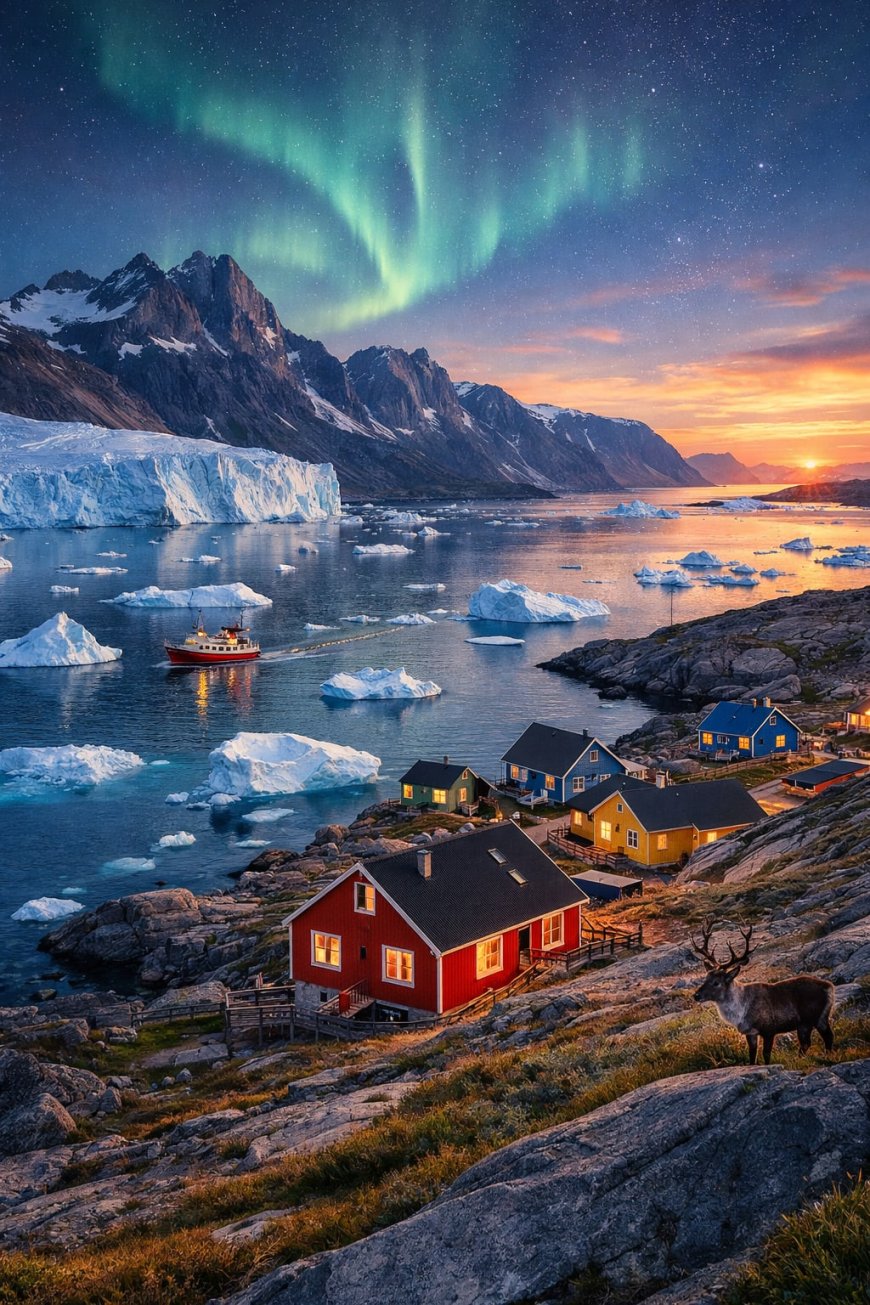
Former U.S. President Donald Trump’s repeated interest in acquiring Greenland may sound unconventional, but behind the headline-grabbing idea lies a serious mix of geopolitical strategy, military security, natural resources, and great-power competition.
Greenland, the world’s largest island, is an autonomous territory of Denmark located between North America and Europe. Though sparsely populated, its strategic value has grown sharply in recent years—especially as climate change opens new Arctic routes and intensifies global rivalry.
Strategic Military Importance
One of the primary reasons Trump wants Greenland is its critical military position. The island sits at the heart of the Arctic and North Atlantic, making it a natural defense shield for North America. The U.S. already operates Thule Space Base in northern Greenland, a key site for missile defense, space surveillance, and early warning systems.
Control over Greenland would significantly enhance U.S. ability to monitor Russian and Chinese military activity in the Arctic, where Moscow has rapidly expanded its presence.
Arctic Shipping and Global Trade Routes
Melting ice caps are opening new Arctic shipping lanes, potentially shortening trade routes between Asia, Europe, and North America. These routes could reshape global commerce in the coming decades.
By strengthening its influence over Greenland, the U.S. would gain leverage over future Arctic trade corridors, reducing reliance on traditional chokepoints like the Suez Canal and countering China’s ambitions in polar shipping.
Vast Natural Resources
Greenland is believed to hold enormous reserves of rare earth minerals, oil, gas, uranium, and critical metals essential for modern technology, renewable energy, and defense systems.
As the U.S. seeks to reduce dependence on China for rare earth supply chains, Greenland’s untapped resources become strategically vital. Trump’s business-minded worldview often framed territorial expansion as a long-term economic investment rather than a colonial move.
Countering China’s Arctic Ambitions
China has declared itself a “near-Arctic state” and has invested heavily in polar research, infrastructure, and mining projects across the region—including interest in Greenland.
Trump’s push can be seen as a direct response to China’s expanding footprint. Bringing Greenland closer into the U.S. strategic orbit would limit Beijing’s access to Arctic resources and influence.
The idea of buying Greenland is not new. The U.S. attempted to purchase it in 1867 and again after World War II, highlighting long-standing American interest. Trump revived the concept in line with his America First doctrine, emphasizing territorial advantage, resource security, and geopolitical dominance.
However, Denmark and Greenland firmly rejected the proposal, stressing that Greenland is not for sale and that its people have the right to decide their future.
Even if outright acquisition is unrealistic, Trump’s interest has already pushed the U.S. to expand diplomatic engagement, economic aid, and military cooperation in Greenland. The Arctic is fast becoming a central arena of 21st-century power politics—and Greenland sits at its core.
In essence, Trump’s Greenland push reflects a broader truth: the Arctic is no longer a frozen frontier—it’s a geopolitical battleground.
What's Your Reaction?
 Like
0
Like
0
 Dislike
0
Dislike
0
 Love
0
Love
0
 Funny
0
Funny
0
 Angry
0
Angry
0
 Sad
0
Sad
0
 Wow
0
Wow
0