




















CBSE Digital Evaluation Sparks Massive Trust Crisis, Thousands Demand Answer Sheets Amid Re-Exam Debate
India’s Central Board of Secondary Education is facing growing criticism after students raised concerns over digital answer-sheet evaluation errors in the 2026 board results. A large number of students have requested copies of their answer sheets, while demands for a Class 12 re-examination continue to intensify.

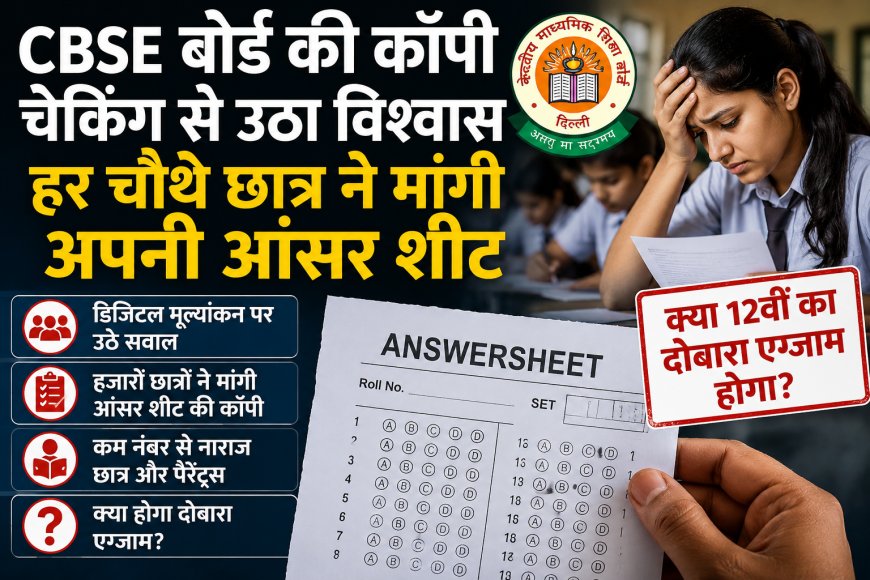
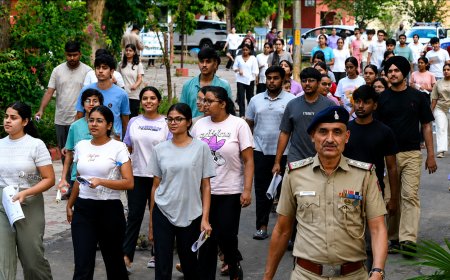
A major controversy has erupted around the 2026 board examination results declared by the Central Board of Secondary Education (CBSE), with thousands of students and parents questioning the reliability of the newly introduced digital evaluation system. The issue has triggered widespread concern across the country, leading to an unprecedented surge in requests for answer-sheet copies and re-evaluation applications.
The controversy began after several students claimed that their marks were drastically lower than expected despite strong academic performance and competitive exam success. Many students alleged discrepancies in the On-Screen Marking (OSM) system introduced for digital answer-sheet checking this year.
According to reports, nearly one in every four students applied to access scanned copies of their answer sheets after the results were declared. Education experts say this reflects a serious decline in trust in the evaluation process. Students and parents are increasingly demanding transparency regarding how marks were awarded under the digital assessment system.
One of the most talked-about cases involved a Class 12 student who alleged that a completely different Physics answer sheet had been uploaded against his roll number. The issue quickly went viral on social media and intensified criticism of the OSM system. Later, CBSE reportedly acknowledged the technical mistake and provided the correct answer sheet.
The incident has raised larger concerns about whether the digital evaluation process was implemented too quickly without sufficient safeguards and testing. Some students and cybersecurity researchers also claimed that certain online portals linked to the evaluation process showed technical vulnerabilities. However, CBSE clarified that the actual examination evaluation system had not been hacked and remained secure.
As outrage grew, India’s Education Ministry reportedly sought detailed explanations from CBSE regarding the technical glitches, evaluation complaints, and re-evaluation procedures. The board has since reduced certain rechecking and photocopy charges in an effort to address student concerns and ease public pressure.
The biggest question now dominating discussions is whether CBSE may conduct a re-examination for affected Class 12 students. So far, the board has not announced any nationwide re-test. Officials maintain that students can use the official verification, photocopy, and re-evaluation process if they believe their marks are inaccurate.
Education analysts believe conducting a nationwide re-exam for millions of students would be extremely difficult and unlikely unless large-scale systemic errors are officially confirmed. Instead, experts expect CBSE to focus on correcting individual cases, improving digital evaluation protocols, and strengthening verification mechanisms for future exams.
The controversy has also reignited debates about India’s rapid shift toward digital education infrastructure and whether adequate preparation and quality checks are in place before implementing technology-driven reforms on a national scale.
For now, students and parents across the country continue to wait for further clarification from Central Board of Secondary Education as pressure mounts on the board to restore confidence in the examination system.
What's Your Reaction?
 Like
0
Like
0
 Dislike
0
Dislike
0
 Love
0
Love
0
 Funny
0
Funny
0
 Angry
0
Angry
0
 Sad
0
Sad
0
 Wow
0
Wow
0