

































China’s Moonshot AI Unveils Kimi K3, Claims New Model Can Rival OpenAI and Anthropic

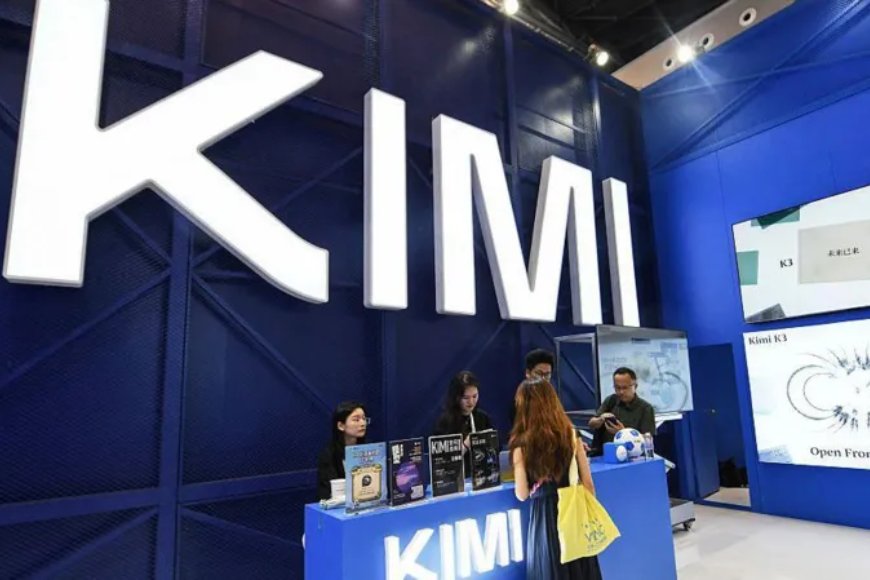
Chinese artificial intelligence startup Moonshot AI has launched its latest large language model, Kimi K3, claiming it can compete with leading AI systems developed by OpenAI and Anthropic. The announcement highlights China's growing ambitions in the global AI race, where companies are rapidly developing next-generation models for coding, reasoning, and enterprise applications.

Jul 18, 2026 - 15:49
 0  4
China’s Moonshot AI Unveils Kimi K3, Claims New Model Can Rival OpenAI and Anthropic

China's Moonshot AI Introduces Kimi K3, Aims to Challenge OpenAI and Anthropic in the Global AI Race

China's rapidly expanding artificial intelligence industry has taken another significant step forward with the launch of Kimi K3, the latest large language model developed by Beijing-based startup Moonshot AI. The company has boldly claimed that its newest AI model is capable of competing with some of the world's most advanced generative AI systems, including those developed by OpenAI and Anthropic. The announcement has attracted widespread attention within the technology sector, underscoring China's determination to become a global leader in artificial intelligence while intensifying competition among AI developers worldwide.

The release of Kimi K3 comes at a time when the global AI industry is evolving at an unprecedented pace. Since the emergence of advanced generative AI systems over the past few years, technology companies across the United States, China, Europe, and other regions have invested billions of dollars into developing increasingly capable large language models. These AI systems are designed to understand natural language, generate human-like responses, write software code, analyze documents, summarize complex information, perform mathematical reasoning, and assist businesses across numerous industries. As competition accelerates, each new model is being closely examined for improvements in reasoning ability, coding performance, multilingual understanding, efficiency, and real-world applications.

Moonshot AI has positioned Kimi K3 as a next-generation model capable of handling sophisticated tasks across multiple domains. According to the company, the model demonstrates strong performance in logical reasoning, software development, knowledge retrieval, content generation, and complex problem-solving. Moonshot AI claims that Kimi K3 has been trained using large-scale datasets and optimized with advanced reinforcement learning techniques, enabling it to produce more accurate, context-aware, and reliable responses. The company believes these improvements place Kimi K3 among the leading AI models currently available in the market and position it as a serious challenger to established global competitors.

One of the primary areas where Moonshot AI says Kimi K3 excels is software development and coding assistance. Modern AI models are increasingly being used by developers to generate code, identify programming errors, explain algorithms, optimize software performance, and automate repetitive development tasks. According to the company, Kimi K3 offers enhanced coding capabilities across multiple programming languages, making it useful for software engineers, technology companies, and enterprise customers seeking AI-assisted development solutions. As coding has become one of the key benchmarks used to evaluate advanced AI models, strong performance in this area could significantly enhance Kimi K3's commercial appeal.

Beyond programming, Moonshot AI emphasizes that Kimi K3 has been designed to support a wide variety of enterprise applications. Businesses are increasingly integrating AI into customer service, document analysis, research, financial reporting, legal assistance, healthcare administration, education, marketing, and workflow automation. AI systems capable of understanding complex instructions and producing reliable outputs are becoming valuable tools for improving productivity and reducing operational costs. Moonshot AI believes Kimi K3's reasoning capabilities and multilingual support make it well suited for enterprise adoption across diverse industries.

The launch of Kimi K3 also reflects China's broader strategy to strengthen its domestic artificial intelligence ecosystem. Over the past several years, Chinese technology companies have accelerated investments in AI research, cloud computing, semiconductor development, and advanced computing infrastructure. Government support for AI innovation, combined with substantial private-sector investment, has enabled Chinese firms to rapidly develop competitive large language models. Several Chinese companies have introduced their own AI systems in recent years, seeking to reduce dependence on foreign technology while expanding China's influence within the global AI landscape.

The international AI race has become increasingly competitive as major technology companies continue releasing more capable models. In the United States, firms such as OpenAI, Anthropic, Google, Meta, Microsoft, and xAI are investing heavily in foundation models that power chatbots, productivity tools, search engines, enterprise software, and developer platforms. At the same time, Chinese companies including Moonshot AI, Alibaba, Baidu, Tencent, Zhipu AI, and DeepSeek are rapidly narrowing the technological gap by introducing increasingly sophisticated AI systems designed for both domestic and international markets.

Competition in artificial intelligence is no longer limited to technical performance alone. Companies are also competing on factors such as operating costs, inference efficiency, accessibility, deployment flexibility, security, privacy protections, and developer ecosystems. Enterprise customers increasingly evaluate AI platforms based on reliability, customization options, regulatory compliance, and integration with existing business workflows. As a result, success in the AI market depends not only on benchmark scores but also on delivering practical solutions that organizations can deploy at scale.

Experts note that claims made by AI companies regarding model performance should be interpreted carefully until independent benchmarking and third-party evaluations become available. Technology firms frequently publish internal benchmark results highlighting strengths across reasoning, mathematics, coding, language understanding, and scientific knowledge. However, real-world performance often depends on the specific tasks being performed, the quality of user prompts, deployment environments, and continuous model updates. Independent testing remains essential for validating competitive claims and assessing how new models compare under standardized evaluation conditions.

Another significant factor shaping the AI industry is the growing demand for computational resources. Training and operating advanced large language models requires enormous amounts of computing power, specialized graphics processing units (GPUs), data storage infrastructure, and energy consumption. Companies capable of optimizing model efficiency while maintaining high performance may gain a competitive advantage by reducing operational costs and improving scalability. Moonshot AI has indicated that Kimi K3 incorporates architectural improvements designed to enhance efficiency alongside model capability, although detailed technical specifications continue to be evaluated by researchers.

The rapid pace of AI development has also intensified discussions surrounding regulation, transparency, safety, and responsible deployment. Governments worldwide are working to establish regulatory frameworks that encourage innovation while addressing concerns related to misinformation, privacy, cybersecurity, intellectual property, and the societal impact of increasingly capable AI systems. As companies release more advanced models, demonstrating responsible governance and robust safety mechanisms is becoming an important component of long-term market success.

For China, the introduction of Kimi K3 represents another milestone in its ambition to become a global AI powerhouse. Chinese firms are increasingly seeking not only domestic leadership but also international recognition by competing directly with some of the world's most established AI developers. Success in artificial intelligence is viewed as strategically important because AI technologies are expected to influence economic growth, industrial productivity, scientific research, healthcare, education, national security, and technological competitiveness for decades to come.

Conclusion

The launch of Kimi K3 by Moonshot AI marks another significant development in the rapidly evolving global artificial intelligence landscape. By claiming that its newest model can rival leading systems from OpenAI and Anthropic, Moonshot AI has signaled China's growing confidence in its AI capabilities and its determination to compete at the highest level of technological innovation. While independent evaluations will ultimately determine how Kimi K3 performs against established global models, its arrival highlights the accelerating pace of AI advancement and the increasingly competitive race to build the world's most capable artificial intelligence systems. As innovation continues across multiple regions, businesses, developers, researchers, and governments alike will closely monitor how emerging models such as Kimi K3 shape the future of artificial intelligence.

What's Your Reaction?

Like Like 0
Dislike Dislike 0
Love Love 0
Funny Funny 0
Angry Angry 0
Sad Sad 0
Wow Wow 0