

































16-Year-Old Builds a Million-Rupee Reselling Business: Is Online Reselling Possible for Teenagers in India?
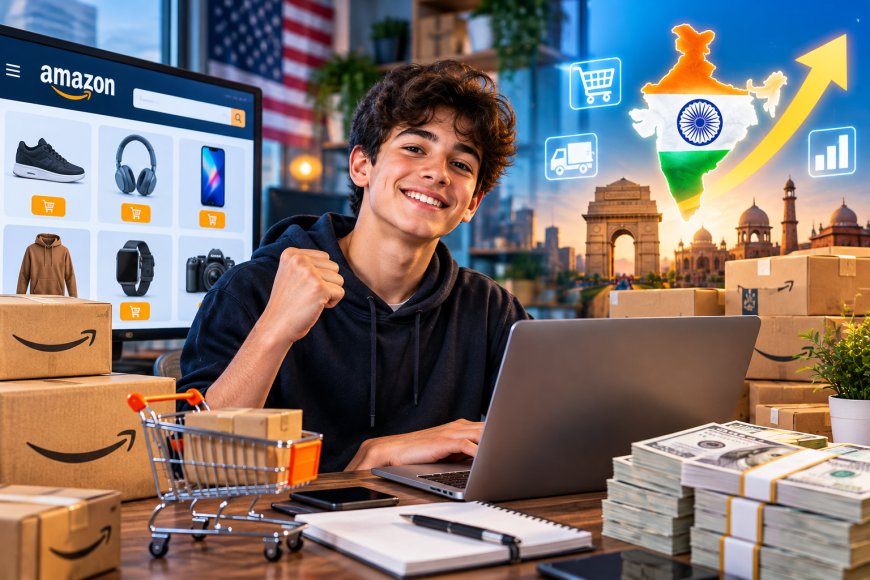
A 16-year-old American teenager, Ethan Alexander, made headlines after launching an online reselling business by purchasing discounted products from Walmart and selling them on Amazon. His sales reportedly reached around $25,000 per month, equivalent to approximately ₹24 lakh. The story has sparked interest in whether the same business model can work in India, where e-commerce is expanding and Amazon India has crossed 20 lakh sellers. However, sales revenue is not the same as profit, and minors must follow platform-specific rules.

16-Year-Old American Teen Builds an Online Reselling Business: Can Indian Teenagers Do the Same?
At an age when most teenagers are focused on school, examinations, and future career choices, an American teenager has attracted attention for building an online reselling business that reportedly generated sales worth lakhs of rupees every month. His story has raised an important question for young people in India: can teenagers start their own online businesses, and is reselling a practical way to earn money?
According to a report published by Aaj Tak on October 11, 2026, Ethan Alexander started his reselling venture at the age of 16. He purchased products from Walmart and sold them through Amazon. His reported monthly sales eventually exceeded $25,000, equivalent to approximately ₹24 lakh.
However, this figure represents sales revenue, not necessarily the amount he earned as profit. His experience offers useful lessons about entrepreneurship, product selection, business expenses, and the challenges of managing a business while studying.
Who Is Ethan Alexander?
Ethan Alexander began exploring online reselling in 2025 after receiving $500 from an investment account established by his great-grandfather. He used the money to learn about the business model and purchase products for resale.
According to his account published by Business Insider, he generated nearly $10,000 in sales during his first month. By August, his monthly sales had exceeded $25,000.
His strategy involved identifying products available at competitive prices in retail stores and reselling them through Amazon. Laundry detergent was among the first products he sold.
He focused on products that could generate relatively small profits per item but had the potential to sell in large quantities. As orders increased, he began spending considerable time purchasing stock, packaging products, and arranging shipments.
The business eventually became demanding enough to resemble a small warehouse operation. By February 2026, the workload had begun affecting his school performance, leading him to pause the business.
His experience demonstrates both the potential and the practical difficulties of running an online venture at a young age.
What Is Online Reselling?
Online reselling is a business model in which a seller purchases products from retailers, wholesalers, or other suppliers and sells them to customers through an online marketplace, usually at a higher price.
For example, imagine a seller purchases a product for ₹400 and lists it online for ₹600. The apparent difference is ₹200, but that is not necessarily the final profit.
The seller must account for marketplace fees, packaging, shipping, advertising, returns, and other operating costs. If these expenses total ₹150, the remaining amount would be ₹50 before any additional applicable costs or taxes.
One form of this business is known as retail arbitrage. It involves purchasing discounted products from retail stores or online sales and reselling them through another marketplace when demand and pricing make the transaction commercially viable.
Common product categories can include household supplies, clothing, toys, and personal-care products. However, sellers must check marketplace restrictions, authenticity requirements, and any applicable product-specific regulations before listing goods.
Is Online Reselling Active in India?
Yes. Online selling and reselling are established business activities in India, supported by marketplaces and the growing use of digital commerce.
Amazon India announced in September 2026 that the number of sellers on its marketplace had crossed 20 lakh. More than three lakh sellers had joined over the preceding year, according to the company's announcement.
This growing seller base includes businesses of different sizes, from small entrepreneurs to established brands.
Online reselling can be explored through different models, including buying new products from authorized suppliers for resale, selling eligible second-hand goods through suitable platforms, or building a small online store.
However, selling through a large marketplace is different from simply listing an item on social media. Marketplace sellers may need to meet requirements relating to identity verification, tax registration, banking details, product documentation, and category-specific rules.
Can Teenagers in India Start This Business?
Teenagers may learn about e-commerce and participate in a family business, but they must pay attention to the legal and contractual requirements of the platform they intend to use.
Amazon India's terms state that users under 18 may use its website only with the involvement of a parent or guardian. Its seller registration process also requires the relevant seller information and an eligible bank account.
Flipkart's seller terms, by contrast, state that minors are not eligible to register as sellers or use the platform as sellers in their own capacity.
Therefore, a teenager in India should not assume that they can independently open a seller account simply because a similar business has been operated by a teenager abroad. A parent or guardian may need to take responsibility for the account and business arrangements, subject to the applicable platform rules and legal requirements.
Before investing money, families should verify the latest seller terms, tax obligations, and other compliance requirements for the chosen business model.
How Much Investment Is Needed?
There is no single amount required to start an online reselling business. The investment depends on the product category, inventory size, sourcing method, and selling platform.
A small experiment could begin with a limited number of products, provided the seller meets all applicable requirements. Starting small can help test customer demand before committing a large amount of money to inventory.
Potential expenses include:
-
Inventory: The cost of purchasing products for resale.
-
Packaging: Materials required to protect products during shipping.
-
Marketplace fees: Charges that may apply to each sale or service.
-
Shipping and fulfillment: Costs associated with delivering orders to customers.
-
Advertising: Optional spending to increase product visibility.
-
Returns and damaged stock: Potential losses when products are returned, damaged, or cannot be resold.
A useful approach is to calculate the expected profit on each product before purchasing stock. Sellers should also consider how long their money could remain tied up in unsold inventory.
Does High Sales Revenue Mean High Profit?
One of the biggest lessons from reselling is that revenue and profit are not the same.
A business may sell products worth ₹5 lakh in a month but spend most of that amount on inventory, shipping, marketplace fees, advertising, and returns.
For example, if a product sells for ₹600 and costs ₹400 to purchase, the initial difference is ₹200. After ₹120 in combined fees and other expenses, the amount remaining is ₹80 before any additional overheads or applicable taxes.
This is why sellers need to monitor margins rather than focusing only on the total value of orders.
Demand forecasting is equally important. Purchasing too much stock without understanding customer demand can leave a seller with unsold products and limited cash for future purchases.
Can Students Balance Business and Studies?
Ethan Alexander's experience also highlights a challenge that is relevant to Indian students: managing business responsibilities alongside education.
Online selling can involve product research, purchasing inventory, managing listings, answering customer queries, packaging orders, and handling returns. These responsibilities may become time-consuming as sales increase.
Students interested in entrepreneurship can begin by learning basic accounting, market research, digital marketing, and customer service. They can also explore small supervised projects that do not interfere with their education.
Parents and guardians can help teenagers understand financial risk, consumer rights, platform policies, and responsible business practices.
The objective should be to develop useful skills and test an idea carefully rather than assuming that high earnings will follow quickly.
Conclusion
Ethan Alexander's story illustrates how online reselling can develop into a substantial business when product selection, pricing, and operations work together. His reported monthly sales of more than $25,000 attracted attention, but the workload and effect on his studies also reveal the challenges involved.
India already has a large and expanding online seller ecosystem, creating opportunities for people interested in e-commerce. Teenagers can learn about the business model, but their participation must comply with platform rules and applicable legal requirements.
For aspiring entrepreneurs, the most important lesson is to understand demand, calculate all expenses, protect working capital, and start cautiously. A successful reselling business depends not just on buying cheaply and selling at a higher price but on generating sustainable profit while managing risk.
What's Your Reaction?
 Like
0
 Dislike
0
 Love
0
 Funny
0
 Angry
0
 Sad
0
 Wow
0