


























Pakistan Admits Militants in PoK Were Once ‘Our Own Trained Men,’ Sparks Fresh Debate on Terror Networks
A senior Pakistani leader has acknowledged that many armed groups currently operating in Pakistan-occupied Kashmir (PoK) were once trained and supported by Pakistan. The statement has reignited debate over the country's long-standing approach to militant organisations and the security challenges it now faces.

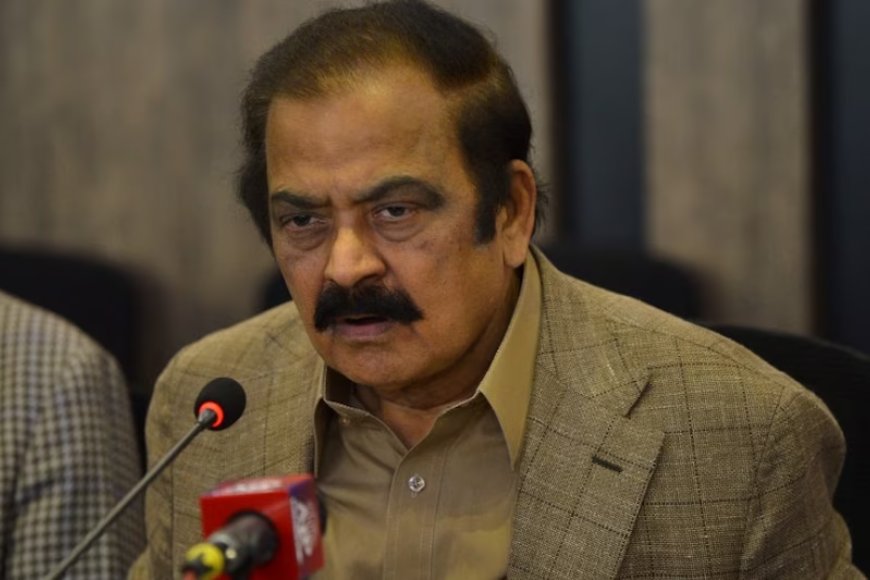
Pakistan has once again found itself at the centre of international attention after a senior political leader made a striking admission about the country's long-standing relationship with militant groups operating in Pakistan-occupied Kashmir (PoK). The remarks have triggered renewed discussions over Pakistan's security policies, regional stability, and the long-term consequences of supporting armed organisations.
Speaking publicly about the growing security situation in Pakistan-occupied Kashmir, senior political leader Rana Sanaullah acknowledged that many of the militants currently creating challenges for Pakistan were individuals who had previously received training and support from the country itself. His statement has attracted widespread attention because it openly recognises concerns that have frequently been raised by international observers regarding the origins of militant networks in the region.
A Rare Public Admission
During his remarks, Rana Sanaullah reportedly stated that many of those now fighting against Pakistan were "our own trained people." He suggested that the country is now facing the consequences of policies adopted over previous decades.
The comments have been interpreted as one of the clearest acknowledgements by a senior Pakistani political figure that militant organisations once considered strategic assets have evolved into serious internal security threats.
Although Pakistan has repeatedly maintained that it is committed to combating terrorism, the latest statement has intensified debate over how historical policies have contributed to present-day security challenges.
Growing Security Concerns in PoK
Pakistan-occupied Kashmir has witnessed increasing security concerns in recent months, with reports of militant activity, armed confrontations, and operations by Pakistani security forces.
Authorities have reportedly intensified surveillance and launched operations in areas believed to be affected by militant movements.
Local residents have expressed concerns over the impact of the security situation on daily life, while officials continue efforts to prevent further violence.
Analysts say the region remains strategically important because of its proximity to the Line of Control (LoC) and its role in the broader India-Pakistan security landscape.
The Legacy of Militant Networks
For decades, Pakistan has faced allegations from India and several international observers of providing support to militant organisations operating in the region.
Islamabad has consistently rejected accusations of sponsoring terrorism and maintains that it supports only the political aspirations of the people of Kashmir.
However, numerous militant organisations that were active during previous decades later fragmented into multiple groups, with some eventually turning their weapons against the Pakistani state itself.
Security experts describe this phenomenon as "blowback," where groups initially supported for strategic purposes become independent actors with their own agendas.
Internal Security Challenges
Pakistan has experienced numerous attacks carried out by militant organisations over the past two decades.
These incidents have targeted civilians, military personnel, police officers, educational institutions, religious sites, and government infrastructure.
Successive Pakistani governments have launched military operations aimed at dismantling extremist networks, particularly in the country's northwestern regions.
Despite these efforts, security analysts believe that the threat posed by armed organisations continues to evolve, requiring sustained counterterrorism operations.
International Concerns
The issue of terrorism has remained a significant aspect of Pakistan's international relations.
Global organisations, including the United Nations and the Financial Action Task Force (FATF), have repeatedly emphasised the importance of preventing terrorist financing and dismantling extremist infrastructure.
Pakistan has implemented a series of legal, financial, and administrative reforms in recent years to strengthen its counterterrorism framework.
International observers continue to monitor the country's efforts to prevent militant organisations from operating within its territory.
Political Reactions
Rana Sanaullah's comments have generated political debate within Pakistan.
Supporters argue that acknowledging past mistakes is necessary for developing more effective security policies and preventing future threats.
Critics, however, contend that such statements reinforce longstanding allegations made by neighbouring countries regarding Pakistan's historical links with militant organisations.
The remarks have also attracted attention across South Asia, where regional security remains closely tied to developments in Pakistan and Kashmir.
Implications for Regional Stability
Security experts believe that stability in South Asia depends heavily on reducing cross-border militancy and improving cooperation against terrorism.
The latest admission has renewed discussions about the need for stronger regional mechanisms to combat extremist organisations and prevent their resurgence.
Analysts argue that dismantling militant networks requires coordinated intelligence sharing, financial monitoring, law enforcement cooperation, and sustained political commitment.
Long-term peace, they say, cannot be achieved without addressing both immediate security threats and the underlying factors that contribute to radicalisation.
Counterterrorism Remains a Priority
Pakistan has repeatedly stated that combating terrorism remains one of its highest national security priorities.
The country has conducted numerous military operations against extremist organisations and has reported significant successes in weakening several militant groups.
At the same time, officials acknowledge that maintaining security requires continuous vigilance as extremist organisations frequently adapt their tactics and organisational structures.
Experts note that counterterrorism efforts today extend beyond military action and include financial regulation, cyber monitoring, border management, and community engagement.
Global Significance
The discussion surrounding Rana Sanaullah's statement extends beyond Pakistan.
International policymakers increasingly recognise that militant organisations often evolve over time, changing alliances and objectives in ways that create new security challenges.
Many countries have experienced similar situations where groups initially tolerated or indirectly supported eventually became domestic threats.
As a result, modern counterterrorism strategies emphasise preventing the creation of militant ecosystems rather than responding only after violence emerges.
Looking Ahead
Rana Sanaullah's remarks have added a new dimension to the ongoing debate over terrorism, regional security, and Pakistan's historical policies toward militant organisations.
Whether the statement leads to meaningful policy discussions within Pakistan remains uncertain, but it has already drawn significant attention from regional observers and the international community.
The incident also highlights the broader lesson that supporting armed non-state actors can create long-term security risks that extend far beyond their original purpose. As South Asia continues to face complex geopolitical and security challenges, governments across the region are expected to remain focused on strengthening counterterrorism cooperation, preventing extremist recruitment, and promoting long-term regional stability through dialogue, institutional reforms, and coordinated security efforts.
What's Your Reaction?
 Like
0
Like
0
 Dislike
0
Dislike
0
 Love
0
Love
0
 Funny
0
Funny
0
 Angry
0
Angry
0
 Sad
0
Sad
0
 Wow
0
Wow
0