
















‘The Last Five Years Have Been Extremely Difficult and Decisive for Russia’: Putin Launches Fresh Attack on Western Nations
Russian President Vladimir Putin has said the past five years have been among the most challenging and decisive in Russia's modern history, blaming Western nations for mounting geopolitical pressure, sanctions and attempts to weaken the country. His remarks come amid continuing tensions between Russia and the West.

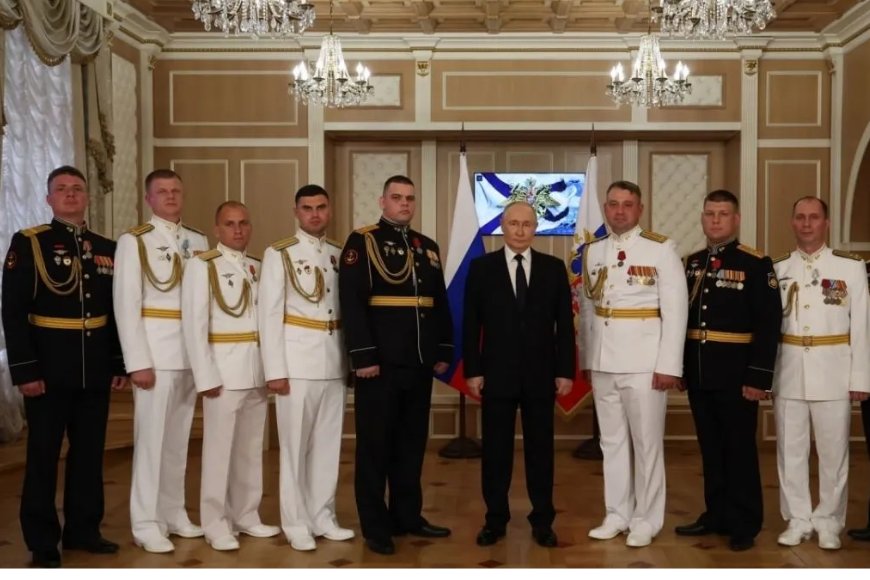
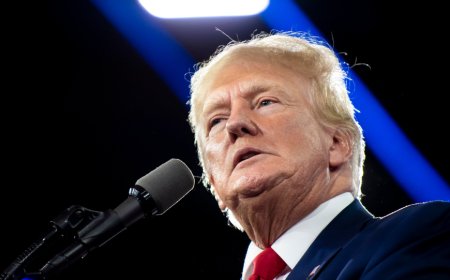
Russian President Vladimir Putin has delivered another strong message to Western countries, declaring that the last five years have been among the most difficult and decisive periods in Russia's recent history. Speaking at a public event, Putin accused Western nations of pursuing policies aimed at weakening Russia through economic sanctions, political pressure and strategic isolation. He asserted that despite these challenges, Russia has managed to withstand external pressure and continue pursuing what he described as its national interests.
In his address, Putin said the past five years had tested Russia in multiple ways, ranging from unprecedented international sanctions and diplomatic tensions to military and economic challenges. According to him, these developments have forced Russia to become more self-reliant, strengthen its domestic industries and reduce dependence on foreign economies. He argued that instead of weakening Russia, the pressure imposed by Western countries had encouraged the nation to build greater resilience and adapt to changing global circumstances.
The Russian President also criticised Western governments for what he described as attempts to maintain geopolitical dominance by using economic restrictions and diplomatic measures against Moscow. He claimed that sanctions imposed after the Ukraine conflict were designed to isolate Russia from global markets and limit its economic growth. However, Putin argued that Russia had adjusted to these restrictions by expanding trade partnerships with countries in Asia, the Middle East, Africa and Latin America while increasing domestic production in several key sectors.
During his speech, Putin maintained that Russia's strategic priorities had remained unchanged despite international criticism. He said the country's leadership would continue to focus on national security, economic stability and technological development. He also praised Russian industries, workers and businesses for adapting to difficult circumstances, claiming that their efforts had helped the country overcome significant economic challenges during a period of global uncertainty.
The remarks come at a time when relations between Russia and Western nations remain deeply strained. Since the outbreak of the Ukraine conflict, the United States, the European Union, the United Kingdom and several allied countries have imposed multiple rounds of sanctions targeting Russia's financial institutions, energy sector, technology imports and prominent individuals. These measures were introduced with the objective of increasing economic pressure on Moscow, while Russia has consistently criticised them as politically motivated and unlawful.
Putin also suggested that the changing global geopolitical landscape is leading to the emergence of a more multipolar world order. He argued that many countries are seeking greater independence in their foreign and economic policies rather than relying on traditional Western-led institutions. According to the Russian President, this shift presents new opportunities for Russia to strengthen cooperation with emerging economies and regional partners.
Political analysts believe Putin's latest comments are aimed not only at the international community but also at domestic audiences. By highlighting Russia's ability to withstand external pressure, the Kremlin seeks to reinforce public confidence in the government's policies and project an image of national resilience. Such statements have become a recurring theme in Putin's speeches, particularly as geopolitical tensions with Western countries continue.
Western governments, however, have consistently defended their sanctions policy, stating that the measures are intended to respond to Russia's actions in Ukraine and encourage compliance with international law. Officials from the United States and European Union have repeatedly stated that sanctions are targeted at limiting Russia's ability to sustain its military operations rather than affecting ordinary citizens. Moscow has rejected these claims, arguing that the restrictions have broader economic consequences and are part of a wider strategy to contain Russia's global influence.
The ongoing confrontation between Russia and the West has reshaped global diplomacy, energy markets and international trade over the past several years. While Russia has sought to diversify its economic partnerships and strengthen ties with non-Western countries, Western nations have continued to coordinate sanctions and diplomatic measures against Moscow. The geopolitical divide has also influenced defence policies, energy security and international alliances across Europe and beyond.
As tensions continue, Putin's latest statement underscores that Russia sees the past five years as a defining period in its modern history. His remarks reflect the Kremlin's position that external pressure has strengthened rather than weakened the country, while Western governments maintain that sanctions remain an important tool for responding to Russia's actions. With no immediate signs of easing geopolitical tensions, relations between Russia and the West are expected to remain a major focus of global politics in the months ahead.
What's Your Reaction?
 Like
0
Like
0
 Dislike
0
Dislike
0
 Love
0
Love
0
 Funny
0
Funny
0
 Angry
0
Angry
0
 Sad
0
Sad
0
 Wow
0
Wow
0