






























Landslide Kills 11 in Southwest China, Over 50 Still Missing as Massive Rescue Operation Continues
At least 11 people have been killed and more than 50 remain missing after a massive landslide struck southwest China following heavy rainfall. Emergency teams are carrying out round-the-clock rescue operations as authorities warn of further geological risks.

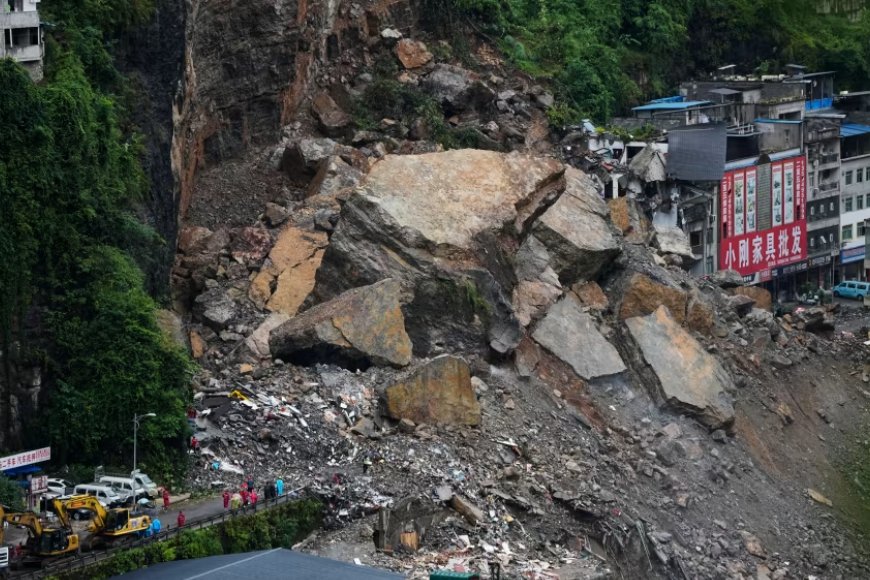
A devastating landslide in southwest China has claimed the lives of at least 11 people, while more than 50 others remain missing, according to state media. The disaster occurred after days of intense rainfall triggered a massive slope collapse, burying homes, roads and other infrastructure under tons of mud and debris. Rescue workers are racing against time to locate survivors as authorities continue large-scale search and relief operations in the affected region.
The landslide struck a mountainous area known for its fragile terrain and vulnerability to geological disasters during the monsoon season. Torrential rain had saturated the soil over several days, eventually causing a large section of the hillside to give way. The collapse swept through residential settlements with little warning, trapping residents inside their homes and cutting off access to nearby villages.
According to Chinese state media, emergency responders, including firefighters, police officers, military personnel and medical teams, were deployed immediately after the disaster. Hundreds of rescue workers equipped with excavators, sniffer dogs, drones and life-detection equipment have been searching through the debris in an effort to locate those still unaccounted for. Authorities say the operation remains extremely challenging due to unstable ground conditions, continuous rainfall and the risk of additional landslides.
Several homes were completely destroyed, while roads connecting the affected communities were blocked by mud, rocks and fallen trees. Rescue teams have been working to clear damaged routes to allow heavy machinery and emergency supplies to reach isolated areas. Temporary shelters have also been established for displaced residents who were forced to evacuate their homes because of safety concerns.
Hospitals in nearby cities have been placed on high alert to treat injured survivors. Medical teams are providing emergency care, while psychologists and social workers are assisting families affected by the tragedy. Local authorities have also arranged food, drinking water, blankets and other essential supplies for people staying in temporary evacuation centres.
Chinese officials have warned that the number of casualties could increase as rescue workers continue searching for those missing beneath the debris. The unstable weather has complicated rescue efforts, with intermittent rainfall slowing excavation work and increasing the danger for emergency personnel. Authorities have urged nearby residents to remain vigilant and follow evacuation orders where necessary.
The Chinese government has activated emergency disaster response mechanisms and directed local administrations to prioritise rescue operations and public safety. Geological experts have been deployed to assess the stability of surrounding hillsides and identify areas that remain at risk of further collapses. Officials are also monitoring rivers and drainage systems, as additional rainfall could trigger flash floods and secondary landslides.
Southwest China frequently experiences landslides during the annual rainy season due to its mountainous geography and steep slopes. Provinces in the region are particularly vulnerable to geological disasters, especially after prolonged periods of heavy rainfall. Climate experts have noted that increasingly intense rainfall events are contributing to a higher frequency of landslides and flash floods, posing growing challenges for disaster management authorities.
The latest disaster has once again highlighted the importance of early warning systems and emergency preparedness in landslide-prone regions. Although China has significantly expanded its geological monitoring network in recent years, sudden landslides triggered by extreme weather can still occur with little warning, leaving communities with limited time to evacuate.
Infrastructure damage has also been substantial. Several roads remain impassable, power supply has been disrupted in some villages, and communication networks have suffered temporary outages. Engineers are assessing bridges, highways and public facilities to determine the extent of the damage before reconstruction efforts begin. Local authorities have suspended access to vulnerable mountain routes until geological surveys confirm that the area is safe.
Chinese President and senior government officials have reportedly instructed local authorities to make every possible effort to rescue the missing, provide medical treatment to the injured and minimise further casualties. Disaster management agencies have also been ordered to strengthen monitoring of high-risk areas and prepare for potential secondary disasters caused by continuing rainfall.
The tragedy serves as another reminder of the destructive power of extreme weather and geological hazards in mountainous regions. While rescue operations continue around the clock, hopes remain that more survivors may still be found. However, with over 50 people still missing, the coming days will be critical as emergency teams continue their search amid difficult weather and dangerous terrain.
As investigations into the cause and impact of the landslide continue, authorities are expected to review disaster preparedness measures and strengthen monitoring systems to reduce the risk of similar tragedies in the future. For now, rescue efforts remain the top priority as families anxiously await news of their missing loved ones.
What's Your Reaction?
 Like
0
Like
0
 Dislike
0
Dislike
0
 Love
0
Love
0
 Funny
0
Funny
0
 Angry
0
Angry
0
 Sad
0
Sad
0
 Wow
0
Wow
0