

























Europe Enters a New Era of Mega Fires as Wildfires Burn with ‘Atomic Bomb’ Intensity
Europe is facing an unprecedented wildfire crisis, with experts warning that increasingly powerful "mega fires" are burning with an intensity comparable to atomic bomb explosions. Rising temperatures, prolonged droughts, and strong winds are driving larger, faster, and more destructive wildfires across the continent.

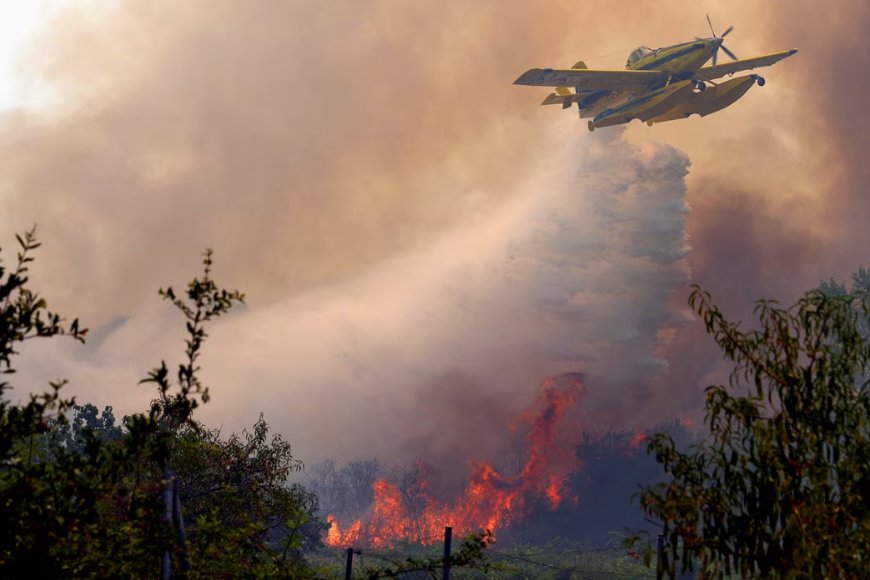
Europe is witnessing one of the most severe wildfire seasons in its recorded history, as climate experts and emergency authorities warn that the continent has entered a dangerous new era of "mega fires." These fires are no longer isolated summer incidents but rapidly evolving disasters that burn hotter, spread faster, and destroy larger areas than ever before.
Scientists have described the energy released by some of these massive wildfires as comparable to the intensity of an atomic bomb—not because they explode like nuclear weapons, but because of the enormous amount of heat energy they generate over time. This comparison highlights the extraordinary power of these fires and the growing challenge they pose to firefighters, governments, and communities.
A Summer of Relentless Wildfires
Over the past several weeks, wildfires have swept across multiple European countries, including Greece, Spain, Portugal, Italy, France, and parts of the Balkans. Thousands of firefighters have been deployed, assisted by helicopters, water-bombing aircraft, and military personnel as authorities struggle to contain rapidly spreading blazes.
Entire villages have been evacuated, highways closed, and popular tourist destinations temporarily shut down. Thick smoke has reduced air quality across vast regions, affecting millions of residents and disrupting daily life.
Emergency services report that several fires have become so intense that traditional firefighting techniques have proven insufficient, forcing authorities to focus primarily on protecting lives rather than immediately extinguishing the flames.
Why Experts Call Them "Mega Fires"
Unlike conventional forest fires, mega fires are significantly larger, hotter, and more unpredictable.
These fires can burn continuously for days or even weeks, consuming forests, grasslands, farmland, and residential communities. Their immense heat creates powerful updrafts capable of generating their own weather systems, including fire-induced thunderstorms known as pyrocumulonimbus clouds.
Such conditions allow fires to spread rapidly in multiple directions, making them extremely difficult to control.
Experts explain that the comparison with an atomic bomb refers to the enormous amount of thermal energy released during these prolonged fires. While entirely different from a nuclear explosion, the cumulative energy generated by some mega fires is astonishing and illustrates their destructive potential.
Climate Change Intensifies the Threat
Scientists overwhelmingly agree that climate change is playing a significant role in increasing the frequency and intensity of wildfires across Europe.
Average summer temperatures continue to rise, while prolonged heatwaves dry out forests, vegetation, and soil. Combined with declining rainfall and recurring drought conditions, landscapes become highly flammable, allowing even a small spark to trigger a devastating wildfire.
Strong winds further accelerate the spread of flames, carrying burning embers over long distances and igniting new fires several kilometres away from the original blaze.
Researchers warn that these conditions are becoming increasingly common as global temperatures continue to increase.
Human Activity Remains a Major Cause
Although weather conditions determine how fires spread, many wildfires are still triggered by human activity.
Authorities report that discarded cigarettes, unattended campfires, agricultural burning, electrical faults, construction work, and in some cases deliberate arson remain among the leading causes of wildfire ignition.
With forests already extremely dry, even minor human errors can quickly develop into large-scale disasters.
Governments across Europe have therefore imposed temporary restrictions on outdoor fires, barbecues, and access to vulnerable forest areas during periods of extreme heat.
Massive Impact on Communities
The ongoing wildfire crisis has forced thousands of residents to leave their homes as evacuation orders continue across several countries.
Entire neighbourhoods have been threatened by advancing flames, while emergency shelters have accommodated displaced families.
Many people have lost homes, farms, vehicles, and businesses, creating long-term economic and emotional challenges for affected communities.
Tourism has also suffered, particularly in Mediterranean destinations where beach resorts, hiking trails, and national parks have faced temporary closures because of nearby fires.
Environmental Consequences
The environmental damage caused by mega fires extends far beyond the immediate destruction of forests.
Millions of trees have been destroyed, eliminating vital wildlife habitats and reducing biodiversity. Numerous species have been displaced or killed as flames swept through protected ecosystems.
The fires also release enormous quantities of carbon dioxide into the atmosphere, further contributing to global warming and creating a dangerous feedback loop.
Following severe fires, burned landscapes become more vulnerable to soil erosion, flooding, and landslides once heavy rainfall returns.
Recovery of affected forests may take decades, while some ecosystems may never fully return to their original condition.
Challenges for Firefighters
Modern mega fires present unprecedented operational challenges.
Extreme temperatures, unpredictable wind patterns, steep terrain, and rapidly changing fire behaviour place firefighters at constant risk.
Many crews work around the clock under exhausting conditions, supported by aircraft that drop thousands of litres of water and fire retardant.
However, when fires generate their own weather systems, suppression efforts become significantly more difficult.
Emergency agencies increasingly rely on satellite monitoring, drones, artificial intelligence, and advanced weather forecasting to predict fire movement and improve evacuation planning.
Governments Expand Their Response
European governments are investing heavily in wildfire preparedness.
Several countries have expanded aerial firefighting fleets, strengthened cross-border cooperation, improved early warning systems, and increased funding for forest management.
The European Union's Civil Protection Mechanism has enabled member states to share firefighting aircraft, equipment, and personnel during major emergencies.
Authorities are also encouraging communities to create defensible spaces around homes, improve emergency evacuation plans, and increase public awareness about wildfire risks.
Looking Ahead
Scientists warn that Europe must prepare for a future where extreme wildfire seasons become more frequent rather than exceptional.
Unless greenhouse gas emissions are significantly reduced and climate adaptation measures are accelerated, rising temperatures and prolonged droughts are expected to create even more favourable conditions for mega fires in the coming decades.
Experts believe that protecting forests will require a combination of improved land management, stronger climate action, technological innovation, and greater public awareness.
While emergency services continue battling today's fires, policymakers face the larger challenge of reducing future risks through long-term environmental planning.
Europe's latest wildfire season serves as a stark reminder that climate-related disasters are becoming increasingly severe and complex. The emergence of mega fires marks a significant shift in how wildfires behave, demanding new firefighting strategies, stronger international cooperation, and sustained investment in climate resilience. As flames continue to threaten lives, ecosystems, and economies, the continent's response to this growing crisis may shape how future generations confront one of the defining environmental challenges of the 21st century.
What's Your Reaction?
 Like
0
Like
0
 Dislike
0
Dislike
0
 Love
0
Love
0
 Funny
0
Funny
0
 Angry
0
Angry
0
 Sad
0
Sad
0
 Wow
0
Wow
0