
















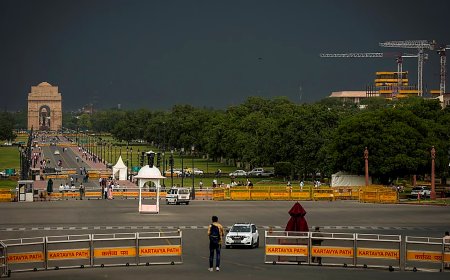











CM Bhupendra Patel Sweeps Road with Golden Broom as Ahmedabad Jagannath Rath Yatra Begins
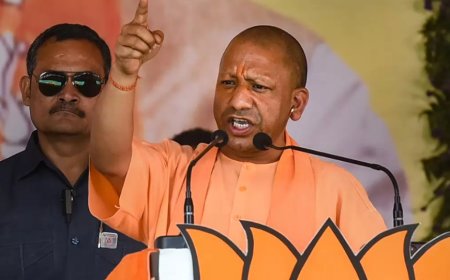
Gujarat Chief Minister Bhupendra Patel performed the traditional Pahind Vidhi by sweeping the path with a golden broom before the commencement of the historic Jagannath Rath Yatra in Ahmedabad. The centuries-old ritual symbolizes humility, equality, and devotion, marking the grand beginning of one of Gujarat's biggest religious processions

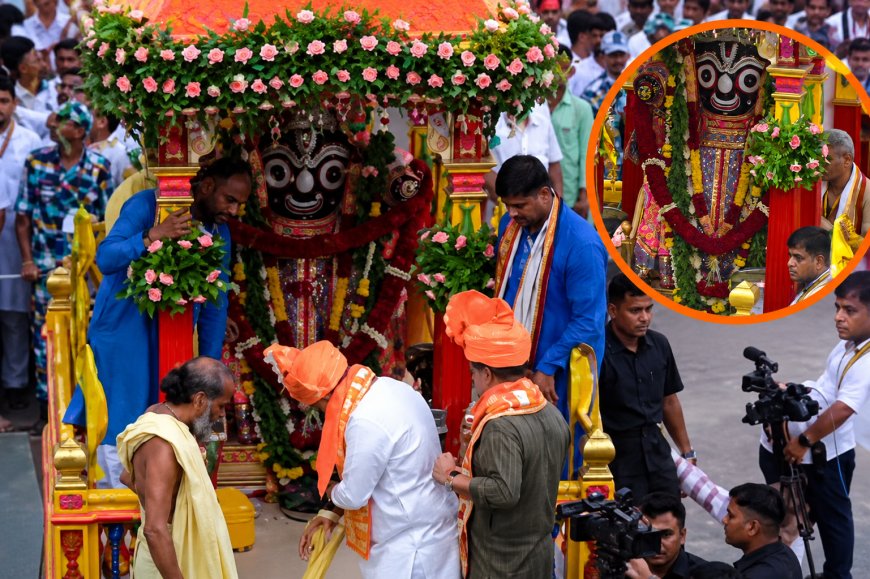
The historic Jagannath Rath Yatra commenced with great religious fervor in Ahmedabad as Gujarat Chief Minister Bhupendra Patel performed the sacred Pahind Vidhi, ceremonially sweeping the road with a golden broom before the chariots of Lord Jagannath, Lord Balabhadra, and Goddess Subhadra began their annual journey. The centuries-old tradition, deeply rooted in Hindu culture, symbolizes humility, equality, and selfless service before the Almighty. Thousands of devotees gathered along the streets of Ahmedabad to witness the grand religious spectacle, while elaborate security arrangements and civic preparations ensured the smooth conduct of one of Gujarat's largest annual spiritual events.
The Jagannath Rath Yatra in Ahmedabad is among India's most significant religious processions after the famous Rath Yatra in Puri, Odisha. Organized by the Jagannath Temple in Ahmedabad, the procession attracts lakhs of devotees every year. The event holds immense spiritual significance, with devotees believing that Lord Jagannath leaves His temple to bless all devotees, including those who cannot visit the shrine. The annual procession represents the Lord's journey among His devotees and reflects the values of compassion, inclusiveness, and divine connection.
Before the grand procession officially began, Chief Minister Bhupendra Patel performed the Pahind Vidhi, one of the most revered rituals associated with the Rath Yatra. Carrying a beautifully crafted golden broom, the Chief Minister swept the path in front of the chariots, following a tradition that has been observed for generations. The ritual signifies that before God, every individual is equal regardless of social status, position, or power. It also symbolizes humility, reminding leaders that public service is the highest form of devotion.
The tradition of the golden broom dates back centuries and is inspired by similar customs followed during the Jagannath Rath Yatra in Puri. Historically, kings and rulers performed the ritual to demonstrate that even the most powerful individuals are servants of Lord Jagannath. Over time, elected representatives and state leaders have continued the practice, preserving its spiritual and cultural importance. In Gujarat, the Chief Minister traditionally performs the ceremony before the chariots begin moving through Ahmedabad's streets.
This year's Rath Yatra witnessed participation from thousands of saints, devotees, volunteers, cultural groups, and members of various religious organizations. Decorated elephants, camels, devotional music, traditional folk performances, and beautifully adorned chariots created a vibrant spiritual atmosphere throughout the city. Devotees lined the procession route from the early hours of the morning, chanting religious hymns and offering prayers as the chariots passed through different neighborhoods.
Authorities implemented extensive security arrangements to ensure the peaceful conduct of the procession. Thousands of police personnel, paramilitary forces, surveillance cameras, drone monitoring systems, and emergency response teams were deployed across the route. Medical teams, ambulances, disaster response units, and civic volunteers were also stationed at strategic locations to assist devotees. Traffic diversions and public advisories were issued in advance to minimize inconvenience while ensuring public safety during the large gathering.
The Ahmedabad Rath Yatra also reflects Gujarat's rich cultural heritage. Apart from its religious significance, the procession showcases traditional music, folk dances, community participation, and charitable activities. Various organizations distribute food, drinking water, fruits, sweets, and refreshments to pilgrims throughout the day. The event serves as a symbol of communal participation and collective devotion, bringing together people from different backgrounds in celebration of faith and tradition.
Religious scholars explain that the Rath Yatra represents Lord Jagannath's annual visit outside the temple to meet His devotees. According to Hindu beliefs, the Lord does not remain confined within the sanctum but reaches out to bless every devotee irrespective of caste, social status, or economic background. This message of universal accessibility has made the Rath Yatra one of Hinduism's most inclusive festivals.
The ceremonial sweeping of the road with a golden broom carries profound spiritual symbolism. It reminds devotees and public leaders alike that true leadership begins with humility and service. The ritual teaches that before divine power, all worldly distinctions disappear, and every individual becomes an equal devotee. This enduring message continues to inspire millions who participate in or witness the annual procession.
Apart from its religious importance, the Rath Yatra contributes significantly to Ahmedabad's local economy. The festival boosts tourism, hospitality, transportation, handicrafts, food businesses, and local markets. Hotels witness increased occupancy while small businesses benefit from the large number of visitors arriving from different parts of Gujarat and neighboring states. The event also provides opportunities for artisans and craftsmen involved in decorating chariots, preparing traditional attire, and producing devotional items.
Political leaders from across party lines extended greetings to devotees on the occasion, emphasizing the festival's message of peace, harmony, and unity. Social organizations also used the event to promote environmental awareness, cleanliness drives, blood donation camps, and public welfare initiatives, reflecting the broader social impact of the annual celebration.
As the beautifully decorated chariots moved through Ahmedabad, devotees showered flowers, chanted "Jai Jagannath," and offered prayers seeking prosperity, happiness, and well-being. For many families, participating in the Rath Yatra is a cherished tradition passed down through generations. The spiritual atmosphere, combined with centuries-old rituals and vibrant cultural celebrations, continues to make Ahmedabad's Jagannath Rath Yatra one of India's most revered religious festivals.
This year's ceremony once again highlighted the timeless values of devotion, equality, humility, and public service embodied in the Pahind Vidhi. Chief Minister Bhupendra Patel's participation in the golden broom ritual reaffirmed a tradition that transcends politics and emphasizes the universal message that before Lord Jagannath, every individual is equal. As the chariots continue their sacred journey through Ahmedabad, lakhs of devotees celebrate not only a religious festival but also a living tradition that has united communities for generations.
What's Your Reaction?
 Like
0
Like
0
 Dislike
0
Dislike
0
 Love
0
Love
0
 Funny
0
Funny
0
 Angry
0
Angry
0
 Sad
0
Sad
0
 Wow
0
Wow
0