




















Jayant Chaudhary's RLD Shifts to Jat-Brahmin Formula Ahead of Uttar Pradesh Polls
The Rashtriya Lok Dal (RLD), led by Jayant Chaudhary, appears to be reshaping its electoral strategy ahead of the Uttar Pradesh Assembly elections. Moving beyond its traditional Jat-Muslim support base, the party is now emphasizing a Jat-Brahmin social coalition, a shift reflected in recent organizational appointments and outreach efforts.

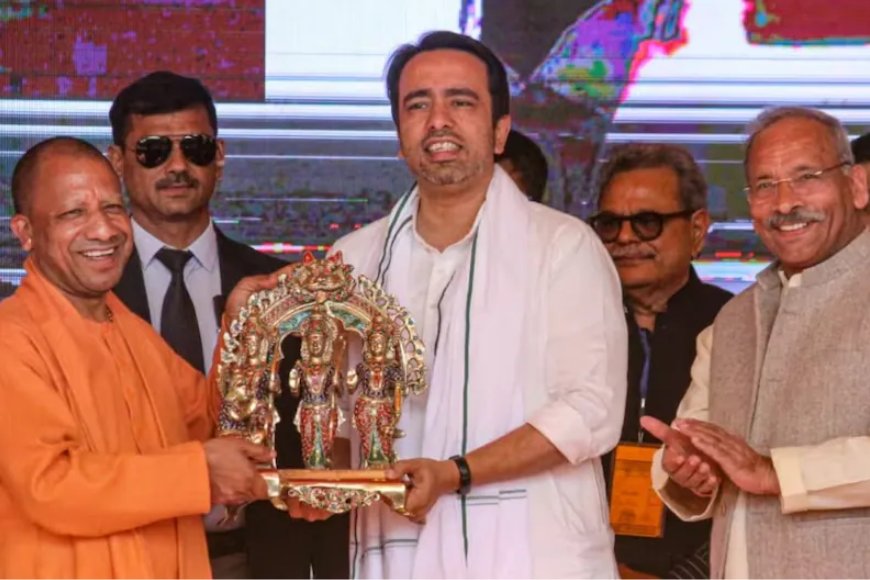
The political landscape of Uttar Pradesh is witnessing a significant shift as the Rashtriya Lok Dal (RLD), led by Union Minister Jayant Chaudhary, appears to be redefining its social and electoral strategy ahead of the upcoming Assembly elections. Traditionally recognized for its influence among Jat and Muslim communities in western Uttar Pradesh, the party is now increasingly emphasizing a Jat-Brahmin political combination, signaling an important evolution in its organizational and electoral approach.
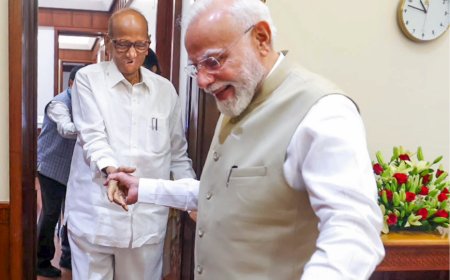
The latest developments have drawn widespread political attention after the RLD appointed Anupam Mishra, a Brahmin leader, as the party's Uttar Pradesh state president. Political observers view this appointment as more than a routine organizational decision. Instead, it is being interpreted as an attempt to broaden the party's support base by reaching out to communities beyond its traditional core voters.
For decades, the Rashtriya Lok Dal, founded by the late Ajit Singh and inspired by former Prime Minister Chaudhary Charan Singh's agrarian politics, has enjoyed considerable support among farmers, particularly the Jat community in western Uttar Pradesh. The party also built significant electoral success through the Jat-Muslim alliance, especially in regions where both communities constitute a sizeable portion of the electorate.
However, the political dynamics of Uttar Pradesh have changed considerably over the past decade. The rise of the Bharatiya Janata Party (BJP), shifting caste equations, and changing voter priorities have forced regional parties to rethink their electoral strategies. Following its alliance with the BJP at the national level, the RLD now appears focused on expanding its appeal among upper-caste voters, particularly Brahmins, while attempting to retain its traditional Jat support.
Political analysts believe the appointment of Anupam Mishra reflects a broader strategy of social engineering. By giving a prominent organizational role to a Brahmin leader, the RLD may be seeking to send a message of broader social representation and inclusiveness. The move could also help the party strengthen its presence in constituencies where Brahmin voters play a decisive electoral role.
The strategy is particularly significant because western Uttar Pradesh has historically witnessed complex social and political alliances. While the Jat-Muslim combination once formed the backbone of the RLD's electoral success, political developments after 2013 altered these voting patterns. Since then, different political parties have worked to build new caste-based coalitions to maximize electoral gains.
Jayant Chaudhary has consistently projected himself as a leader focused on farmers' issues, rural development, and employment. Since assuming leadership of the RLD after the passing of Ajit Singh, he has attempted to modernize the party while preserving its rural identity. His recent political decisions suggest an effort to position the RLD as a broader regional force capable of attracting diverse social groups.
The RLD's current alliance with the BJP has further reshaped political calculations. While some supporters view the alliance as a pragmatic decision aimed at increasing the party's influence within government, others believe it has fundamentally altered the party's traditional political identity. The evolving social strategy is therefore being closely watched by political observers.
Supporters of the new approach argue that modern electoral politics requires parties to move beyond fixed caste combinations and build broader social coalitions. They believe expanding outreach to Brahmin voters could improve the RLD's competitiveness across a wider range of constituencies in Uttar Pradesh.
Critics, however, question whether the party risks weakening its traditional support base by moving away from the Jat-Muslim political equation that historically defined its electoral strength. Some analysts suggest that balancing old loyalties with new political ambitions will be one of Jayant Chaudhary's biggest challenges in the coming months.
The BJP's continued dominance in Uttar Pradesh has forced regional parties to innovate politically. Rather than relying solely on historical voter bases, parties are increasingly experimenting with new combinations of caste, community, and regional representation. The RLD's apparent shift toward a Jat-Brahmin formula fits within this broader trend of political realignment.
Organizational restructuring also appears to be a key part of the strategy. Strengthening district-level leadership, increasing outreach among youth, and expanding engagement with professionals and urban voters could complement the party's evolving social coalition. Political observers believe such organizational changes may be crucial for translating social engineering into electoral success.
The role of Brahmin voters has traditionally been important in Uttar Pradesh politics. Although the community represents a relatively small percentage of the state's population, it holds considerable influence in many constituencies. By elevating a Brahmin leader within the party hierarchy, the RLD may hope to improve its acceptability among these voters while maintaining support from farmers and rural communities.
At the same time, the party will likely continue emphasizing issues such as agricultural reforms, sugarcane payments, rural infrastructure, employment generation, and local development. These issues have historically formed the foundation of the RLD's political identity and remain central to Jayant Chaudhary's public messaging.
As the Assembly elections approach, all major political parties are expected to intensify organizational expansion and social outreach. Candidate selection, alliance management, local leadership, and community engagement will all play significant roles in determining electoral outcomes.
Whether the Jat-Brahmin strategy ultimately delivers political gains remains to be seen. Electoral success depends not only on social arithmetic but also on effective grassroots organization, campaign messaging, leadership credibility, and voter confidence.
For Jayant Chaudhary, the coming election represents an important test of leadership. His ability to modernize the Rashtriya Lok Dal while preserving its historical identity will shape the party's future in Uttar Pradesh politics. If the new social engineering strategy succeeds, it could redefine the RLD's political position for years to come. If it fails, questions may arise about whether moving away from traditional political alliances was the right decision.
The evolving political landscape demonstrates that Uttar Pradesh remains one of India's most dynamic electoral battlegrounds, where caste equations, leadership strategies, governance issues, and alliance politics continue to influence the direction of state politics.
What's Your Reaction?
 Like
0
Like
0
 Dislike
0
Dislike
0
 Love
0
Love
0
 Funny
0
Funny
0
 Angry
0
Angry
0
 Sad
0
Sad
0
 Wow
0
Wow
0