
































Trump Alleges China Stole U.S. Election Data as Xi Jinping Continues Plans for High-Profile State Visit
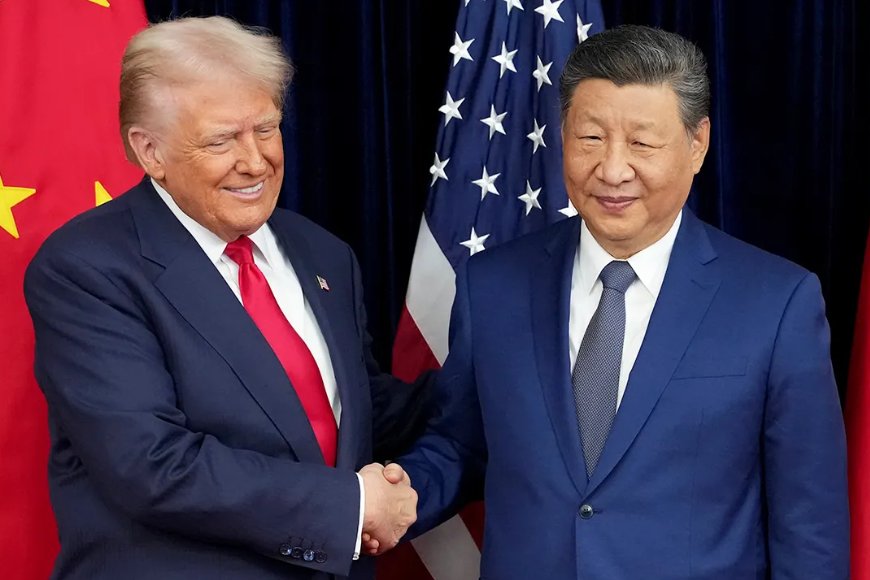
Former U.S. President Donald Trump has accused China of obtaining sensitive U.S. election data, reigniting tensions between Washington and Beijing. Despite the allegations and growing geopolitical friction, Chinese President Xi Jinping is reportedly still preparing for a high-profile state visit to the United States, underscoring the complex balance between strategic rivalry and diplomatic engagement.

Trump Accuses China of Accessing U.S. Election Data as Diplomatic Engagement Continues
Relations between the United States and China have once again come under intense global scrutiny following fresh allegations made by former U.S. President Donald Trump. In his latest remarks, Trump claimed that China had gained access to sensitive U.S. election-related data, reigniting concerns over election security, cyber espionage, and foreign interference in American democratic processes. The allegations arrive at a time when Washington and Beijing are already navigating one of the most complex and competitive relationships in modern geopolitics. Trade disputes, technological rivalry, military competition in the Indo-Pacific, tensions over Taiwan, and ongoing cybersecurity concerns have kept the world's two largest economies on an uneasy path. Yet, despite this renewed political controversy, reports suggest that Chinese President Xi Jinping continues to prepare for a high-profile state visit to the United States, highlighting the unusual reality that strategic rivals often continue diplomatic engagement even during periods of heightened tension.
Trump's latest accusations have immediately reignited debate in Washington over the security of American elections and the vulnerability of critical government systems to foreign cyber operations. According to Trump, China's alleged access to election-related information represents a significant national security threat that deserves immediate attention. While his statements have generated widespread political discussion, he has not publicly presented detailed evidence to substantiate the specific claims. As of now, no U.S. government agency has officially confirmed that China obtained U.S. election data in the manner described by Trump. Nevertheless, the remarks have once again placed cybersecurity and election integrity at the center of American political discourse. Concerns over foreign influence in elections have remained a recurring issue in the United States for several election cycles, leading federal agencies to invest heavily in protecting election infrastructure, strengthening cyber defenses, and improving intelligence-sharing mechanisms designed to detect and prevent external interference.
The controversy also draws renewed attention to the rapidly evolving landscape of cybersecurity. Modern cyber threats extend far beyond traditional hacking attempts and now encompass intelligence gathering, cyber espionage, data theft, influence campaigns, and attacks on critical digital infrastructure. Experts have repeatedly warned that election systems, political organizations, government databases, and communication networks have become increasingly attractive targets for sophisticated cyber actors seeking strategic advantages. In today's digital era, governments around the world recognize that protecting democratic institutions requires not only securing voting machines but also defending voter registration databases, political campaign networks, cloud storage systems, government servers, and digital communication channels. As election infrastructure becomes more interconnected, cybersecurity has emerged as one of the most important pillars of national security, making allegations such as Trump's particularly significant even when official verification remains absent.
The latest accusations come at a time when U.S.-China relations are already under extraordinary pressure. Over the past several years, both nations have engaged in an intense strategic rivalry that extends across economic, military, technological, and diplomatic domains. Trade tariffs, restrictions on semiconductor exports, competition in artificial intelligence, disagreements over intellectual property rights, military activities in the South China Sea, Taiwan-related tensions, and disputes concerning human rights have all contributed to a relationship marked by both competition and mutual dependence. Despite these persistent disagreements, policymakers in both Washington and Beijing continue to acknowledge that maintaining communication between the world's two largest economies remains essential to preventing misunderstandings and reducing the risk of unintended escalation. This complicated relationship explains why diplomatic initiatives often continue even while political rhetoric grows increasingly confrontational.
One of the most notable aspects of the current situation is the reported planning for a state visit by Chinese President Xi Jinping to the United States. Although the allegations made by Trump have generated fresh political controversy, preparations for high-level diplomatic engagement reportedly remain under consideration. A state visit would provide both governments with an opportunity to discuss a broad range of issues, including trade, investment, technology regulations, climate cooperation, regional security, economic stability, and crisis management. Diplomatic experts frequently point out that dialogue between rival powers is not a sign of weakness but rather a necessary mechanism for managing competition responsibly. Throughout history, major powers have often continued formal diplomatic engagement even while publicly criticizing one another on issues of national security and foreign policy. Such meetings can help establish communication channels that reduce misunderstandings during periods of geopolitical tension.
The importance of U.S.-China diplomacy extends well beyond bilateral relations because both countries occupy central positions in the global economy. Together, they account for a significant share of worldwide manufacturing, technological innovation, international trade, financial markets, and global investment flows. Decisions made by Washington and Beijing have far-reaching consequences for businesses, governments, investors, and consumers across every continent. Consequently, developments affecting their relationship are closely monitored by international financial institutions, multinational corporations, technology firms, and diplomatic observers alike. Escalating political tensions between the two countries could influence global supply chains, semiconductor production, technology exports, foreign investment, currency markets, regional alliances, and broader geopolitical stability. Conversely, successful diplomatic engagement has the potential to reduce uncertainty, stabilize markets, and create opportunities for cooperation on shared global challenges.
Election security has become one of the defining national security issues of the digital age. Governments increasingly recognize that protecting democratic institutions requires constant vigilance against sophisticated cyber threats capable of targeting nearly every aspect of the electoral process. Modern election security encompasses not only ballot counting systems but also voter registration databases, campaign communications, political party infrastructure, government networks, cloud-based information systems, and digital public services. Many democratic countries now conduct regular cybersecurity exercises designed to identify vulnerabilities before elections take place. Intelligence agencies also cooperate internationally to exchange information regarding emerging cyber threats, malicious software, and techniques used by foreign actors attempting to gain unauthorized access to sensitive information. As technology continues to evolve, so too does the complexity of defending critical democratic infrastructure.
China, for its part, has consistently rejected accusations of conducting cyber operations aimed at interfering with foreign political systems whenever similar allegations have surfaced in previous years. Chinese officials generally maintain that China itself is frequently targeted by cyberattacks and has repeatedly called for greater international cooperation to combat cybercrime. Beijing has often argued that cybersecurity disputes should be addressed through dialogue, technical cooperation, and international agreements rather than through public accusations lacking mutually verified evidence. Regarding Trump's latest claims, Chinese authorities have not publicly accepted the allegations and continue to advocate for diplomatic engagement despite growing political tensions between the two countries.
The broader implications of the controversy extend far beyond cybersecurity alone. Relations between the United States and China influence nearly every aspect of international politics, economics, defense, technology, and global governance. Investors, financial institutions, multinational corporations, and policymakers carefully assess every major development affecting bilateral ties because even relatively small diplomatic disputes can have significant economic consequences. Rising political tensions may affect international trade negotiations, technology partnerships, semiconductor supply chains, investment strategies, regional security arrangements, and multinational business operations. At the same time, continued diplomatic engagement offers opportunities to address shared challenges such as climate change, global health, financial stability, counterterrorism, and nuclear non-proliferation.
One defining characteristic of modern U.S.-China relations is the simultaneous existence of strategic competition and practical cooperation. While the two countries compete intensely for technological leadership, economic influence, military capabilities, and geopolitical partnerships, they also recognize the necessity of working together on issues that cannot be effectively addressed by any single nation acting alone. Climate policy, global financial stability, pandemic preparedness, international trade regulations, and scientific collaboration remain areas where both governments have incentives to maintain dialogue despite broader disagreements. This delicate balance explains why diplomatic initiatives often continue even during periods of heightened political confrontation.
Within the United States, Trump's allegations are also likely to shape domestic political discussions surrounding election security, cybersecurity funding, intelligence operations, and national defense policy. Election integrity has become an increasingly prominent issue across the American political spectrum, with lawmakers emphasizing the importance of protecting democratic institutions against foreign cyber threats. Whether Trump's latest claims result in additional investigations, congressional hearings, intelligence reviews, or policy changes remains uncertain. Much will depend on whether further evidence emerges and how relevant government agencies assess the allegations.
Ultimately, Donald Trump's accusations that China accessed U.S. election data have added another layer of complexity to an already challenging and strategically significant bilateral relationship. Although the claims have intensified public debate over election security and cyber espionage, no official confirmation has publicly substantiated the specific allegations at this stage. Meanwhile, reports indicating that President Xi Jinping continues preparations for a possible state visit to the United States demonstrate that diplomacy frequently continues alongside political disputes. As Washington and Beijing navigate an increasingly competitive relationship marked by both rivalry and cooperation, the balance between confrontation, dialogue, national security, and global stability will remain one of the defining challenges shaping international affairs in the years ahead.
What's Your Reaction?
 Like
0
Like
0
 Dislike
0
Dislike
0
 Love
0
Love
0
 Funny
0
Funny
0
 Angry
0
Angry
0
 Sad
0
Sad
0
 Wow
0
Wow
0