



























Ron DeSantis Sparks Republican Power Struggle in Florida Governor Race
Florida Governor Ron DeSantis has sparked growing tensions within the Republican Party after his endorsement and political maneuvering in the race to succeed him. What was expected to be a straightforward Republican contest has evolved into an internal power struggle involving allies of former President Donald Trump, influential GOP leaders, and competing factions seeking control of Florida's political future.

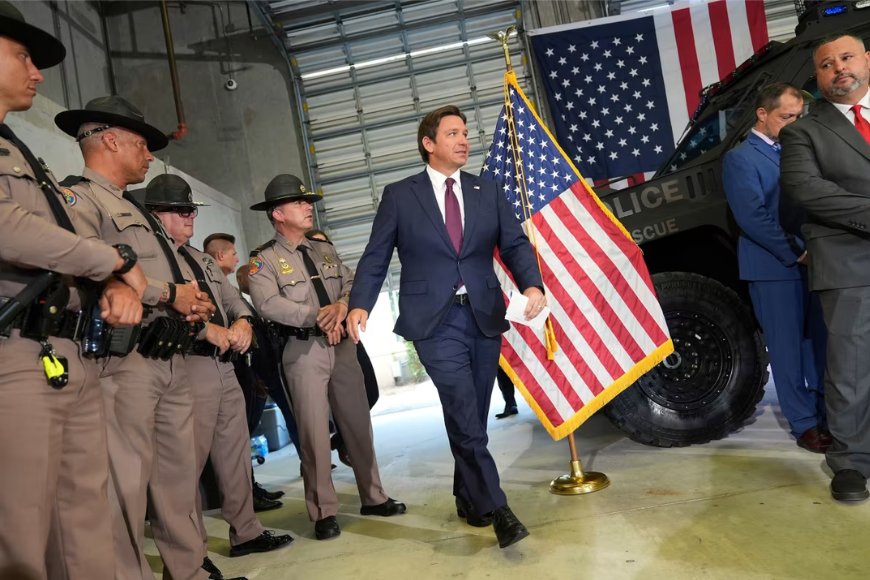
How Ron DeSantis Turned Florida's Governor Race Into a Republican Family Feud
Florida has long been regarded as one of the Republican Party's strongest political strongholds, but the race to elect the state's next governor has exposed deep divisions within the GOP. What initially appeared to be a routine succession contest has transformed into an intense internal political battle, fueled by competing endorsements, personal rivalries, and conflicting visions for the future of the Republican Party. At the center of the controversy stands Governor Ron DeSantis, whose political decisions have unexpectedly turned the Florida governor's race into what many observers describe as a Republican family feud.
As DeSantis approaches the end of his gubernatorial tenure due to term limits, attention has shifted toward identifying his political successor. Rather than witnessing a unified Republican transition, Florida has become the stage for a broader struggle involving influential party leaders, donors, conservative activists, and competing factions aligned with different national figures. The contest is increasingly being viewed not merely as a state election but as a battle over the future direction of the Republican Party itself.
Much of the political tension began when speculation intensified over whether Florida First Lady Casey DeSantis would enter the governor's race. Widely regarded as one of Governor DeSantis' closest political advisers and one of the state's most popular Republican figures, Casey DeSantis has developed a significant public profile through her advocacy initiatives and active participation in her husband's administration. Many supporters viewed her as the natural successor capable of continuing the policies that helped reshape Florida's political landscape over the past several years.
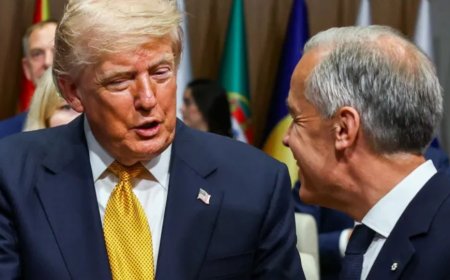
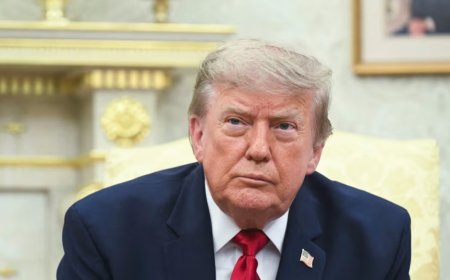
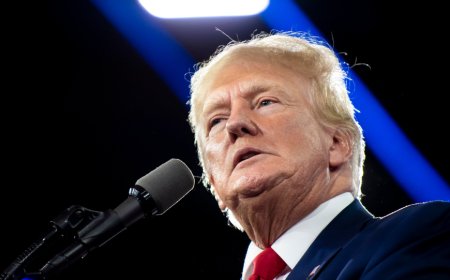
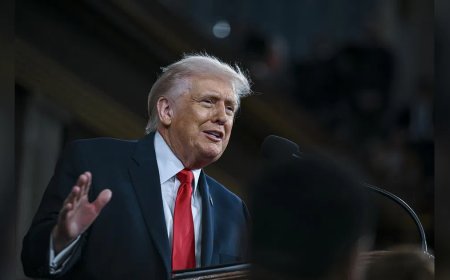
However, the possibility of Casey DeSantis entering the race quickly encountered resistance from another powerful faction within the Republican Party. Former President Donald Trump, who continues to hold considerable influence among Republican voters, publicly endorsed Congressman Byron Donalds as his preferred candidate for governor. Trump's endorsement dramatically altered the political dynamics of the race by signaling that the contest would involve competing centers of influence within the Republican Party rather than a unified effort behind a single candidate.
The competing endorsements effectively divided Republicans into overlapping but increasingly distinct political camps. One group remains closely aligned with Governor DeSantis and favors extending the policy agenda implemented during his administration. Another continues to identify strongly with Trump and views Byron Donalds as the candidate best positioned to represent the former president's political movement in Florida. While both factions broadly share conservative policy priorities, differences over leadership, political strategy, and national influence have become increasingly visible.
Political analysts note that Florida occupies a uniquely important position within Republican politics. Beyond its significance as one of the nation's largest states, Florida serves as a fundraising hub, a testing ground for conservative policies, and a major source of political influence within the GOP. Whoever succeeds DeSantis will inherit substantial national visibility and could emerge as an influential figure in future Republican presidential politics. Consequently, the governor's race carries implications extending well beyond state government.
Governor DeSantis has consistently defended his administration's record, emphasizing achievements in economic growth, education reform, immigration enforcement, public safety, tax policy, and pandemic governance. His supporters argue that preserving these policies requires leadership committed to continuing his governing philosophy. They contend that Florida's economic performance and population growth during his tenure demonstrate the effectiveness of his approach and justify supporting a successor who would maintain policy continuity.
Meanwhile, supporters of Byron Donalds argue that his close relationship with Donald Trump positions him to unite the broader conservative movement while maintaining Florida's Republican dominance. Donalds has emerged as a nationally recognized conservative voice, particularly on issues related to fiscal policy, border security, and limited government. Trump's endorsement has significantly strengthened his visibility among Republican primary voters and conservative activists across the state.
The evolving contest has also highlighted the increasingly personalized nature of American politics. Rather than focusing exclusively on policy differences, much of the public discussion has centered on political alliances, endorsements, personal relationships, and competing leadership styles. Media coverage has frequently portrayed the race as an indirect continuation of the rivalry that emerged between Trump and DeSantis during the Republican presidential nomination process. Although both leaders have publicly emphasized shared conservative values, their respective political networks continue to compete for influence within the party.
Fundraising has become another critical element of the unfolding political battle. Florida's governor's race is expected to attract hundreds of millions of dollars in campaign spending from donors, political action committees, advocacy organizations, and national interest groups. Major contributors are carefully evaluating which candidate offers the strongest combination of electability, policy consistency, and long-term influence within Republican politics. Financial support will likely play a decisive role in shaping campaign organization, advertising, grassroots mobilization, and voter outreach efforts throughout the election cycle.
Beyond campaign strategy, the race also reflects broader questions about the Republican Party's future identity. Since Trump's emergence as a dominant political figure, the GOP has experienced ongoing debates regarding leadership, messaging, electoral strategy, and ideological priorities. While many Republicans remain united on issues such as border security, economic policy, judicial appointments, and limited government, differences continue to emerge regarding political style, coalition-building, and the party's long-term direction. The Florida governor's race has become one of the clearest examples of these broader internal debates unfolding in a high-profile electoral contest.
Political observers also caution that internal divisions, if prolonged, could create opportunities for Democratic candidates to compete more effectively in future elections. Although Florida has shifted toward the Republican Party in recent years, maintaining party unity remains an important objective for GOP leaders seeking to preserve their electoral advantage. Extended primary battles often require significant financial resources and may expose internal disagreements that opponents can later exploit during general election campaigns.
For Governor DeSantis personally, the succession battle carries substantial political significance. The outcome will inevitably influence perceptions of his continuing leadership within the Republican Party after leaving office. Successfully helping shape Florida's political future could strengthen his national standing and preserve his influence over conservative policymaking. Conversely, if another faction successfully determines the party's direction in Florida, it may alter the balance of influence among leading Republican figures ahead of future national elections.
As the campaign develops, voters are expected to closely examine not only the candidates themselves but also the broader political coalitions supporting them. Issues such as economic growth, education, immigration, infrastructure, insurance reform, environmental resilience, and public safety will remain central to the campaign. However, underlying questions about leadership, party unity, and national political influence are likely to continue shaping public debate.
Conclusion
What began as a routine contest to choose Florida's next governor has evolved into one of the Republican Party's most closely watched internal political battles. Governor Ron DeSantis' efforts to shape his succession, combined with Donald Trump's endorsement of a rival candidate, have transformed the race into a broader contest over leadership, influence, and the future direction of the GOP. As competing factions seek to define the party's next chapter, the Florida governor's race has become far more than a state election—it is now a symbol of the ongoing struggle for the Republican Party's political identity in the years ahead.
What's Your Reaction?
 Like
0
Like
0
 Dislike
0
Dislike
0
 Love
0
Love
0
 Funny
0
Funny
0
 Angry
0
Angry
0
 Sad
0
Sad
0
 Wow
0
Wow
0