






























Vikram-1 Creates History: India’s First Private Orbital Rocket Successfully Reaches Space with Six Special Payloads
India has entered a new era in space exploration as Skyroot Aerospace's Vikram-1 successfully completed its maiden orbital mission. The historic launch made Vikram-1 the country's first privately developed orbital rocket to reach space, carrying six special payloads, including satellites and advanced technology demonstrations. The achievement marks a major milestone for India's rapidly growing private space industry.

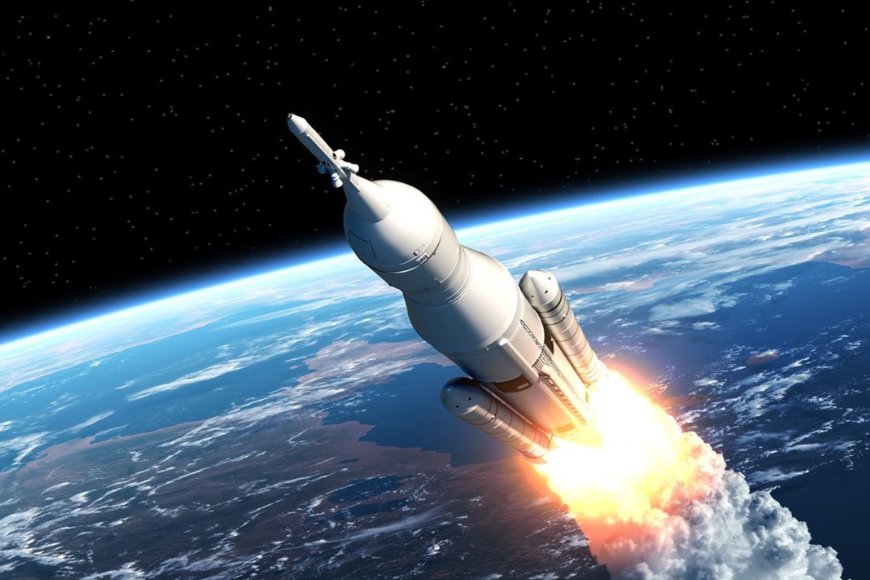
Vikram-1 Creates History, Opening a New Chapter for India's Private Space Industry
India has achieved a historic milestone in space exploration with the successful launch of Vikram-1, the country's first privately developed orbital rocket. Developed by Hyderabad-based Skyroot Aerospace, the rocket successfully entered Low Earth Orbit (LEO), making India one of the few nations where a private company has independently placed payloads into orbit. The mission, named Mission Aagaman, is being celebrated as a defining moment for India's rapidly expanding commercial space ecosystem.
The successful launch represents far more than a technological achievement. It signals India's transition from a government-led space program to a collaborative ecosystem where private enterprises are becoming key contributors to innovation, satellite launches, and global commercial space services.
A Landmark Moment for Indian Space Startups
For decades, India's space achievements were driven almost exclusively by the Indian Space Research Organisation (ISRO). However, after the Indian government opened the space sector to private participation in 2020, several startups emerged with ambitious plans to build launch vehicles, satellites, and space technologies.
Skyroot Aerospace has become the first among them to achieve orbital success.
Founded in 2018 by former ISRO engineers, the company spent years designing, testing, and validating the Vikram series of rockets. Earlier, Skyroot successfully launched the suborbital Vikram-S mission in 2022. Vikram-1, however, represents a much bigger leap because it is capable of placing satellites into Earth's orbit, making it suitable for commercial satellite launches.
Mission Aagaman: A Historic First
The maiden orbital mission was aptly named Mission Aagaman, meaning "arrival." The name symbolizes the arrival of India's private sector into the global orbital launch market.
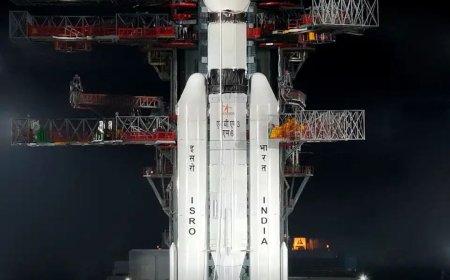
The rocket lifted off from the Satish Dhawan Space Centre in Sriharikota after a brief technical delay before launch. Once airborne, all mission stages performed as expected, allowing the vehicle to successfully deploy its payloads into an orbit approximately 450 kilometers above Earth.
The success immediately drew praise from scientists, policymakers, and industry experts who described the mission as one of the biggest breakthroughs in India's commercial space ambitions.
What Did Vikram-1 Carry into Space?
One of the biggest highlights of the mission was the six special payloads carried aboard Vikram-1.
These payloads included customer satellites, technology demonstration spacecraft, and in-orbit scientific experiments developed by Indian as well as international organizations. The mission also carried experimental hardware designed to validate new technologies that could support future commercial satellite launches.
The payloads are expected to generate valuable data for Earth observation, communication technologies, engineering demonstrations, and future space applications. Several experiments are also intended to validate systems that could be used in upcoming commercial missions.
By successfully deploying all six payloads into Low Earth Orbit, Skyroot Aerospace demonstrated that its launch vehicle is capable of handling real-world commercial missions with precision and reliability.
Advanced Rocket Technology
Vikram-1 is a modern four-stage orbital launch vehicle engineered specifically for the growing small satellite market.
Standing approximately 22 meters tall, the rocket can carry payloads of up to 350 kilograms into Low Earth Orbit. Its propulsion architecture combines three solid-fuel stages with a liquid-fuel orbital adjustment module, providing greater flexibility for precise satellite deployment.
One of the most notable technological achievements is the use of a 3D-printed engine, making Vikram-1 one of the most advanced rockets ever developed by an Indian private company. The extensive use of lightweight composite materials and advanced manufacturing techniques also helps reduce production costs while improving launch efficiency.
Why This Launch Matters
The successful Vikram-1 mission comes at a crucial time when the global demand for launching small satellites is increasing rapidly.
Thousands of satellites are expected to be launched over the next decade for applications such as:
- Earth observation
- Climate monitoring
- Internet connectivity
- Navigation services
- Agriculture
- Disaster management
- Defence and surveillance
- Scientific research
Private launch providers are becoming increasingly important because they offer flexible schedules and cost-effective launch solutions. With Vikram-1's successful debut, India now has a new commercial launch option capable of competing internationally.
Industry experts believe the achievement could significantly strengthen India's position in the global launch market while attracting foreign customers looking for affordable access to space.
Boost for India's Commercial Space Economy
India currently accounts for only a small share of the global space economy, but the government has set ambitious targets for substantial growth over the coming years.
The success of Vikram-1 is expected to accelerate investments in space startups, satellite manufacturing, launch infrastructure, and research and development.
It also demonstrates that private Indian companies can now build sophisticated launch vehicles capable of competing with established international players.
As more startups enter the sector, India could become a major hub for affordable satellite launches, especially for emerging markets and small satellite operators worldwide.
Recognition from National Leadership
Following the successful mission, Prime Minister Narendra Modi congratulated the Skyroot Aerospace team and praised the achievement as a proud moment for the nation.
He noted that the successful launch would inspire India's youth to dream bigger and pursue innovation in science and technology. The accomplishment has also been widely welcomed by scientists, entrepreneurs, and industry leaders who view it as a turning point for India's private aerospace sector.
The Road Ahead
Although Vikram-1 has completed its maiden orbital mission successfully, this is only the beginning of Skyroot Aerospace's long-term plans.
The company intends to conduct additional developmental flights before beginning regular commercial launch services. Future versions of the Vikram rocket family are expected to offer higher payload capacities, reusable technologies, and even more cost-effective launch solutions.
As India's private space ecosystem continues to mature, companies like Skyroot Aerospace are expected to play a major role in satellite launches, deep-space technologies, and international commercial partnerships.
Conclusion
The successful launch of Vikram-1 is more than just another rocket mission—it is the beginning of a new era for India's space industry. By becoming the country's first privately developed orbital rocket to successfully place six payloads into space, Skyroot Aerospace has demonstrated that Indian startups are capable of competing at the highest level of global space technology.
Mission Aagaman has not only strengthened India's position in the international commercial space market but has also inspired a new generation of scientists, engineers, entrepreneurs, and innovators. As India continues to expand its presence in the global space economy, Vikram-1 will be remembered as the mission that transformed India's private space ambitions into reality.
What's Your Reaction?
 Like
0
Like
0
 Dislike
0
Dislike
0
 Love
0
Love
0
 Funny
0
Funny
0
 Angry
0
Angry
0
 Sad
0
Sad
0
 Wow
0
Wow
0