































Trump Imposes 50% Tariffs on Canadian Goods, PM Mark Carney Vows to ‘Intensify’ Trade Talks
U.S. President Donald Trump has announced sweeping 50% tariffs on a broad range of Canadian imports, escalating trade tensions between the two neighbors. Canadian Prime Minister Mark Carney has condemned the move and pledged to intensify negotiations while defending Canadian workers, businesses, and national interests.

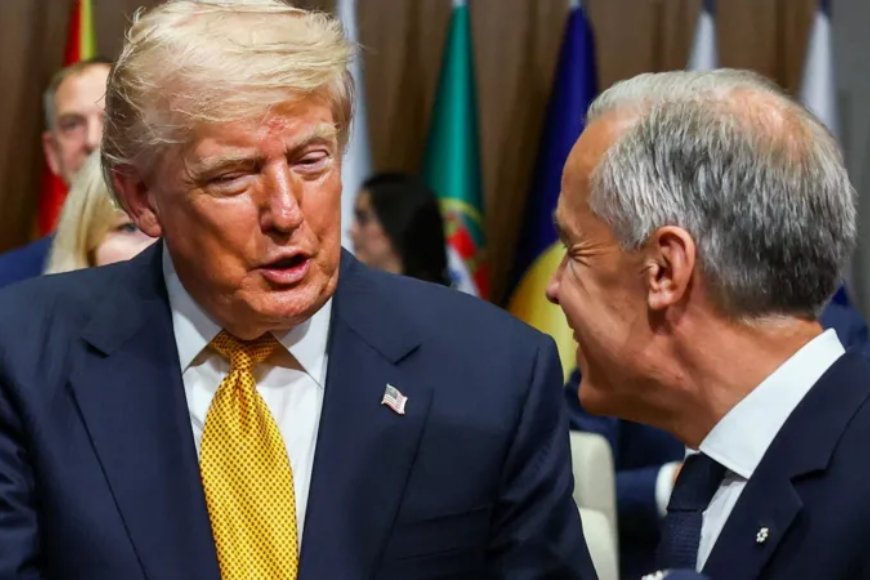
Trade relations between the United States and Canada have entered a new period of uncertainty after U.S. President Donald Trump announced a 50% tariff on a wide range of Canadian goods. The decision marks one of the most significant escalations in North American trade tensions in recent years and has drawn an immediate response from Canadian Prime Minister Mark Carney, who vowed to "intensify" trade negotiations while promising to protect Canada's workers, businesses, and economy.
The tariffs were announced under Section 338 of the U.S. Tariff Act of 1930, a rarely used legal provision that allows the U.S. President to impose duties on imports from countries considered to be discriminating against American commerce. The Trump administration argues that Canada has maintained unfair trade practices affecting U.S. exports, particularly in the automobile, dairy, and alcohol sectors.
According to the White House, the new duties are intended to counter what it describes as discriminatory Canadian policies that disadvantage American manufacturers and exporters. U.S. officials claim Canada has restricted access for American automobiles, provided preferential treatment to dairy imports from other regions, and imposed measures affecting U.S. alcoholic beverages.
The tariffs will apply to a broad list of Canadian products, including consumer goods, agricultural products, furniture, paper products, clothing, and other manufactured items. However, certain strategic exports—including energy products, potash, fish, critical minerals, and products already subject to separate tariff regimes—have been exempted from the new measures.
Canadian Prime Minister Mark Carney responded swiftly, criticizing the U.S. decision as another unilateral trade action that undermines the spirit of the Canada-United States-Mexico Agreement (CUSMA/USMCA). In an official statement, Carney said Canada had consistently acted within its rights when responding to previous American tariffs and emphasized that Ottawa remains committed to resolving disputes through dialogue rather than prolonged economic confrontation.
Carney stated that Canada has already submitted detailed proposals aimed at modernizing the North American trade framework and resolving long-standing disagreements. He stressed that Canada is prepared to "intensify" negotiations in the coming weeks to reach a mutually beneficial agreement while continuing to defend Canadian sovereignty and economic interests.
The announcement immediately raised concerns among economists and business groups on both sides of the border. Canada and the United States share one of the world's largest bilateral trading relationships, with billions of dollars in goods and services crossing the border every day. Increased tariffs could significantly raise costs for businesses, disrupt integrated supply chains, and ultimately increase prices for consumers in both countries.
Industry representatives warned that sectors dependent on cross-border manufacturing could face considerable challenges if the tariffs remain in place for an extended period. Automobile production is particularly vulnerable because vehicle components frequently cross the U.S.-Canada border multiple times before final assembly. Higher tariffs could increase manufacturing costs and reduce competitiveness for companies operating across North America.
Agriculture is another area expected to feel the impact. Canadian producers exporting dairy products, processed foods, and agricultural goods may encounter reduced access to the U.S. market, while American exporters could also face continued retaliatory measures if negotiations fail to produce a breakthrough. Trade analysts caution that prolonged disputes often result in losses for producers on both sides rather than creating clear economic winners.
Financial markets also reacted to the announcement. The Canadian dollar weakened following the news, reflecting investor concerns about slower trade activity and potential economic uncertainty. Analysts noted that while the exemptions for energy and critical minerals reduce some immediate risks, many industries remain exposed to significant disruption.
Despite the sharp rhetoric, Canadian officials have continued to emphasize diplomacy. Carney reiterated that Canada believes in free and fair trade and remains willing to engage constructively with Washington. He also highlighted Canada's recent efforts to strengthen trade partnerships with other countries, suggesting that diversifying export markets remains an important long-term strategy.
The Trump administration, meanwhile, argues that the tariffs are necessary to ensure reciprocal market access for American businesses. Officials insist the measures are designed to encourage Canada to remove what they view as discriminatory barriers affecting U.S. industries. They maintain that the tariffs are intended to create leverage during negotiations rather than permanently restrict trade.
The dispute also carries broader geopolitical significance. Canada and the United States are long-standing allies whose economic relationship supports millions of jobs across manufacturing, agriculture, energy, technology, and services. Any prolonged deterioration in trade relations could influence investment decisions, supply-chain planning, and future regional economic cooperation.
Political observers note that both governments face domestic pressure. The Trump administration has framed the tariffs as part of its broader strategy to protect American industries and reduce trade imbalances. In Canada, Carney faces expectations to defend national economic interests while avoiding a prolonged trade conflict that could slow growth and affect employment.
Experts believe the coming weeks will be critical. Since the tariffs are scheduled to take effect after a notice period, negotiators have a limited window to reach a compromise. If successful, discussions could prevent further escalation and preserve stability in one of the world's most integrated trading partnerships. Failure to achieve progress, however, may lead to additional retaliatory measures and deeper economic uncertainty.
Businesses on both sides of the border are now closely monitoring developments. Many companies are preparing contingency plans, reviewing supply chains, and assessing the financial impact should the tariffs remain in force.
As Washington and Ottawa prepare for another round of high-stakes negotiations, the outcome will likely shape North American trade relations for years to come. Whether diplomacy succeeds or tensions escalate further, the dispute underscores the importance of stable trade frameworks between two of the world's closest economic partners.
What's Your Reaction?
 Like
0
Like
0
 Dislike
0
Dislike
0
 Love
0
Love
0
 Funny
0
Funny
0
 Angry
0
Angry
0
 Sad
0
Sad
0
 Wow
0
Wow
0