

















Sonam Wangchuk’s Hunger Strike Echoes in the U.S., Global Activists Back Demand for Dharmendra Pradhan’s Resignation
The hunger strike led by education reform advocate Sonam Wangchuk has gained international attention, with activists in the United States expressing solidarity and supporting calls for the resignation of Union Education Minister Dharmendra Pradhan over alleged irregularities in the NEET examination. The protest has intensified the debate over transparency, accountability, and reforms in India's education system.

The ongoing hunger strike by noted education reform advocate and environmentalist Sonam Wangchuk has now drawn attention far beyond India's borders, with activists and members of the Indian diaspora in the United States expressing support for his campaign and backing demands for the resignation of Union Education Minister Dharmendra Pradhan. What began as a domestic protest over alleged irregularities in the National Eligibility-cum-Entrance Test (NEET) has evolved into an issue attracting international discussion about education governance, transparency, and public accountability. As Wangchuk's protest enters a critical phase, growing global solidarity has added a new dimension to the debate surrounding India's examination system and the demand for comprehensive educational reforms.
Sonam Wangchuk, widely recognized for his contributions to education and sustainable development in Ladakh, launched the hunger strike to press for stronger action over allegations related to the conduct of the NEET examination. The nationwide medical entrance examination is one of India's most competitive tests, with millions of students appearing each year in the hope of securing admission to medical colleges. Allegations of paper leaks and examination irregularities have triggered widespread concern among students, parents, and educators, leading to calls for greater transparency in the examination process. Wangchuk's decision to undertake an indefinite fast has transformed the issue into a broader movement emphasizing fairness, institutional accountability, and the protection of students' interests.
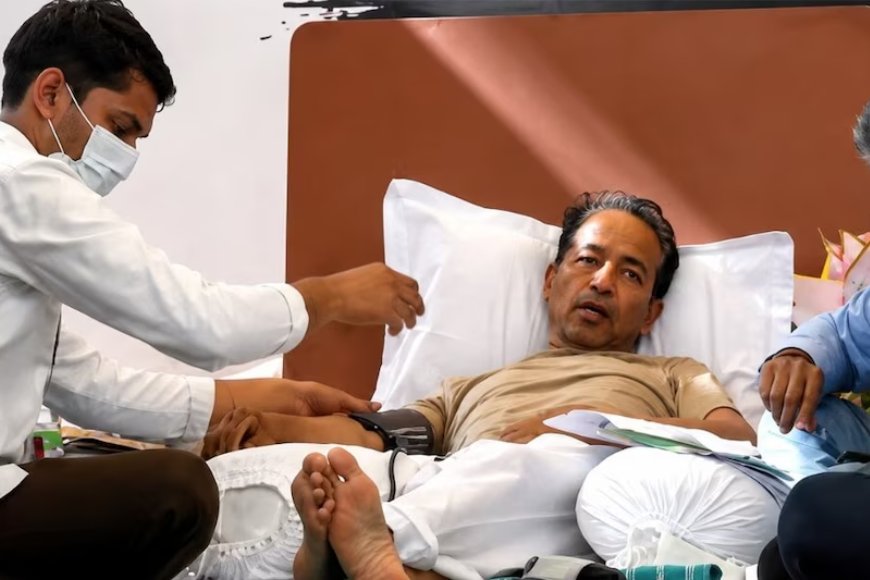
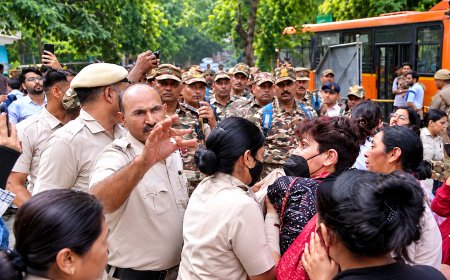
As the protest continued, reports indicated that Wangchuk's health began to deteriorate, prompting medical intervention and increasing public concern. Images and updates regarding his condition circulated widely across social media platforms, generating sympathy from supporters in India and abroad. International attention grew further when activists in the United States organized demonstrations and public gatherings expressing solidarity with Wangchuk's movement. These groups argued that the integrity of national examinations directly affects the future of millions of students and therefore deserves urgent institutional attention. Several members of the Indian diaspora also participated in awareness campaigns, emphasizing the importance of maintaining public confidence in competitive examinations.
Supporters of Wangchuk's campaign contend that repeated allegations surrounding major entrance examinations have undermined trust in India's education system. They argue that students invest years of preparation, considerable financial resources, and significant emotional effort into competitive examinations such as NEET. Any perceived compromise in examination integrity, they say, risks damaging not only individual careers but also public confidence in educational institutions. According to these supporters, ensuring transparent, secure, and credible examination processes is essential for preserving merit-based opportunities and maintaining confidence in higher education admissions.
One of the central political demands emerging from sections of the protest movement has been the call for the resignation of Union Education Minister Dharmendra Pradhan. Critics argue that ministerial accountability is necessary whenever major examination controversies affect millions of students nationwide. They believe that leadership should accept responsibility for systemic failures and initiate comprehensive reforms to restore confidence in examination authorities. Supporters of this position maintain that accountability at the highest administrative level would demonstrate the government's commitment to addressing public concerns regarding educational governance.
However, the government has maintained that it has taken multiple steps to investigate allegations, strengthen examination security, and identify those responsible for any irregularities. Officials have repeatedly emphasized that law enforcement agencies and investigative authorities are examining complaints related to the examination process. The government has also highlighted efforts to improve digital monitoring, strengthen question paper security, enhance coordination among agencies, and implement technological safeguards aimed at preventing future breaches. Government representatives have argued that reforms should be guided by evidence emerging from ongoing investigations rather than political pressure.
The international attention surrounding Wangchuk's protest illustrates how domestic issues can increasingly attract global engagement in the age of digital communication. Social media platforms have enabled supporters across different countries to organize awareness campaigns, circulate information, and express solidarity with movements occurring thousands of kilometers away. While such international support may not directly influence official policy decisions, it often contributes to greater media visibility and sustained public discussion surrounding important issues. For many members of the Indian diaspora, participation in these campaigns reflects continued engagement with developments affecting India's education system and future generations.
Education experts note that competitive examinations occupy a uniquely significant position within India's higher education framework. Millions of students compete annually for a limited number of seats in prestigious institutions, making examination integrity critically important. Even isolated allegations of malpractice can generate widespread anxiety among students and families. Consequently, examination authorities face increasing pressure to adopt advanced security technologies, improve transparency, strengthen oversight mechanisms, and ensure rapid investigation whenever concerns arise. Many experts believe continuous modernization of examination systems is essential to maintaining public confidence as candidate numbers continue growing each year.
The debate has also reignited broader discussions about educational reform in India. Beyond examination security, policymakers, educators, and student organizations have increasingly emphasized the need to modernize assessment systems, expand institutional capacity, improve access to quality education, and reduce excessive dependence on single high-stakes examinations. Some experts advocate greater use of technology-driven assessment methods, enhanced data security, artificial intelligence-based monitoring systems, and decentralized evaluation mechanisms capable of reducing opportunities for malpractice while improving administrative efficiency.
Sonam Wangchuk's involvement has brought additional public attention because of his long-standing reputation as an advocate for educational innovation. Over several decades, he has promoted alternative learning models, experiential education, and community-based educational development, particularly in remote Himalayan regions. His public image as an education reformer has enabled his protest to resonate with many students and civil society organizations seeking greater accountability within educational institutions. Supporters view his hunger strike as an extension of his longstanding commitment to improving educational opportunities and governance rather than simply a political demonstration.
Political observers suggest that the protest may also influence broader discussions surrounding governance, institutional accountability, and public trust. In democratic societies, peaceful demonstrations and hunger strikes have historically served as methods through which citizens seek to draw attention to issues they believe require urgent government action. While opinions differ regarding the effectiveness of such methods, they often stimulate wider public debate and encourage policymakers to respond to emerging concerns. The current movement has similarly expanded beyond examination issues to include questions regarding administrative responsibility, institutional transparency, and public participation in policy discussions.
Meanwhile, student organizations across India continue monitoring developments closely. Many students have expressed concern regarding examination fairness while simultaneously urging authorities to avoid unnecessary uncertainty that could affect future academic schedules. Parents and educators have also called for timely communication, transparent investigations, and effective reforms capable of preventing similar controversies in future examination cycles. Restoring confidence in national entrance examinations remains a shared objective across multiple stakeholder groups regardless of differing political viewpoints.
As the protest continues attracting attention domestically and internationally, its ultimate impact will likely depend on several factors, including the findings of ongoing investigations, the government's policy response, and broader public engagement with educational reform. International expressions of solidarity may continue highlighting the issue globally, but decisions regarding examination administration and ministerial accountability remain matters for India's constitutional and democratic institutions.
Conclusion
Sonam Wangchuk's hunger strike has evolved from a national protest into an internationally recognized campaign advocating educational transparency and institutional accountability. Support from activists in the United States and members of the Indian diaspora has expanded global awareness of concerns surrounding India's examination system while intensifying discussions about governance and public trust. As investigations and policy deliberations continue, the movement underscores the growing importance of ensuring secure, transparent, and credible examination processes that protect the aspirations of millions of students. Whether the protest ultimately leads to major reforms or political consequences, it has already become a significant chapter in the ongoing debate over the future of education and accountability in India.
What's Your Reaction?
Like
0
Dislike
0

Love
0

Funny
0

Angry
0

Sad
0

Wow
0