


































Deadliest Ukrainian Strikes Inside Russia in Two Years Leave Eight Dead, Including Warehouse Workers
Ukraine launched one of its deadliest long-range drone attacks inside Russia in the past two years, killing at least eight people—including warehouse workers—and injuring dozens. The strikes targeted logistics hubs, warehouses, and energy infrastructure, marking a major escalation in the ongoing conflict.

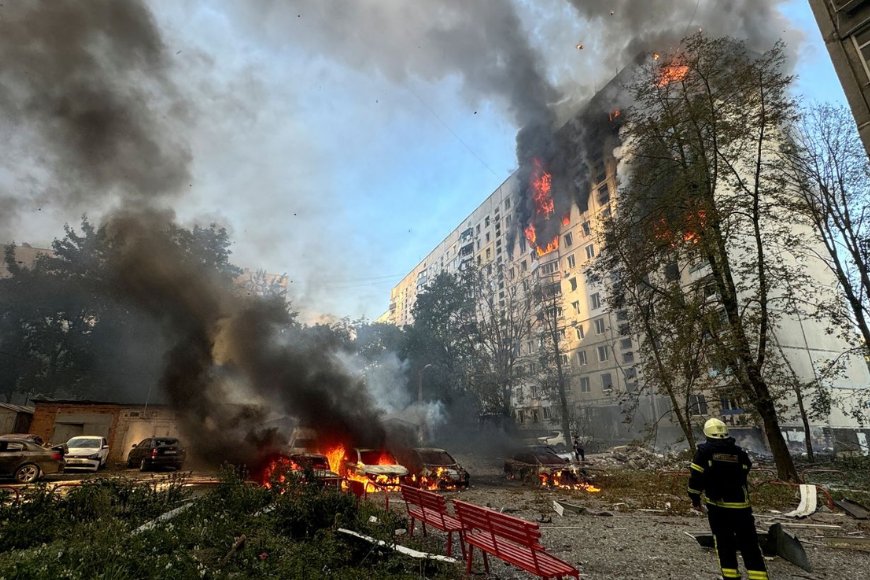
Ukraine has carried out one of its deadliest attacks inside Russian territory in the past two years, with a wave of long-range drone strikes killing at least eight people, including warehouse workers, and injuring dozens more. The coordinated assault targeted logistics facilities, warehouses, and energy infrastructure across multiple Russian regions, signaling a significant escalation in Kyiv's campaign to disrupt Russia's military supply chain.
According to Russian regional authorities, the most devastating attack occurred at a major warehouse complex operated by one of Russia's largest online retail companies. The strike hit the facility during the night shift, when hundreds of employees were reportedly working inside. Several workers were killed instantly, while many others suffered injuries ranging from burns to trauma caused by collapsing structures and flying debris. Emergency crews rushed to the scene to extinguish large fires and rescue trapped workers from the damaged building.
Officials said the warehouse attack accounted for the majority of the fatalities reported during the overnight strikes. Hospitals in the region admitted dozens of injured workers, while firefighters continued cooling operations hours after the explosions to prevent further structural collapse. Authorities also launched investigations into the extent of damage and workplace safety conditions following the strike.
The attacks were not limited to a single location. Additional drones struck another warehouse near Moscow, causing extensive damage and leaving dozens of people injured. Fires also broke out at an oil depot in the Moscow region after another drone penetrated Russian air defenses. The blaze prompted emergency evacuations in nearby areas, including the relocation of patients from a maternity hospital as a precaution.
Russian authorities described the operation as one of the largest Ukrainian drone assaults since the conflict began. The Defense Ministry claimed that hundreds of drones were intercepted across numerous regions, but acknowledged that several aircraft reached their intended targets despite the country's extensive air-defense network.
Ukraine has not publicly disclosed detailed operational information about every strike, but President Volodymyr Zelenskyy indicated that the attacks were directed at logistics infrastructure linked to Russia's military operations. Ukrainian officials argue that warehouses storing components for drones, navigation equipment, and other military supplies are legitimate targets because they support Russia's war effort.
The strikes reflect Ukraine's evolving military strategy. Over the past year, Kyiv has increasingly relied on domestically produced long-range drones capable of reaching deep into Russian territory. Rather than focusing solely on frontline positions, Ukrainian forces have sought to damage supply chains, fuel depots, industrial facilities, and transportation networks that sustain Russian military operations.
Military analysts believe these long-distance attacks are intended to increase logistical pressure on Russia while forcing Moscow to divert additional air-defense systems away from the battlefield. By threatening strategic infrastructure hundreds of kilometers from the front lines, Ukraine aims to complicate Russia's military planning and reduce the efficiency of its supply network.
However, the deaths of warehouse workers have also drawn attention to the human cost of such operations. While Ukrainian authorities maintain that the targeted facilities contribute to Russia's military capabilities, Russian officials argue that civilian employees became victims of attacks on non-combat locations. The incident has renewed international debate over the risks associated with strikes on dual-use infrastructure that serves both civilian and military purposes.
Russian regional governors confirmed that emergency responders remained deployed throughout the affected areas, with rescue operations continuing well into the following day. Several warehouses sustained severe structural damage, while transportation and industrial activity experienced temporary disruptions due to security concerns and ongoing investigations.
The latest attacks come amid an increasingly intense cycle of cross-border strikes between Russia and Ukraine. In recent weeks, both countries have expanded the geographical reach of their operations, targeting military facilities, ports, energy infrastructure, logistics hubs, and transportation networks far from the main front lines. This escalation has raised concerns that the conflict is entering a new phase characterized by deeper attacks on critical infrastructure.
International observers note that both sides continue to emphasize strategic military objectives while accusing each other of endangering civilians. Humanitarian organizations have repeatedly called on all parties to comply with international humanitarian law by taking every feasible precaution to minimize civilian harm during military operations.
The attacks also demonstrate the growing importance of drone warfare in modern conflicts. Compared with traditional missiles, drones are often less expensive, more flexible, and capable of traveling long distances while avoiding some air-defense systems. Their increasing use has transformed military strategy, allowing countries to project force far beyond conventional battlefields.
Economically, the strikes may also have broader implications. Damage to logistics centers, warehouses, and energy facilities can disrupt supply chains, delay deliveries, and increase operating costs for businesses. Companies operating critical infrastructure may now face higher security expenditures as they adapt to evolving threats.
Security experts believe Russia is likely to strengthen protection around industrial and logistics facilities following the latest attacks. Enhanced air-defense deployments, improved surveillance systems, and reinforced infrastructure could become priorities as authorities seek to reduce vulnerabilities exposed by the drone strikes.
For Ukraine, the operation demonstrates its expanding ability to conduct precision strikes deep inside Russian territory despite extensive defensive measures. Whether such attacks significantly alter the strategic balance remains uncertain, but they undoubtedly increase pressure on Russian military planners and infrastructure managers alike.
As the conflict continues, the humanitarian consequences remain severe on both sides of the border. Civilian casualties, infrastructure destruction, and economic disruption continue to mount, underscoring the escalating human and strategic costs of a war that shows few signs of ending soon.
What's Your Reaction?
 Like
0
Like
0
 Dislike
0
Dislike
0
 Love
0
Love
0
 Funny
0
Funny
0
 Angry
0
Angry
0
 Sad
0
Sad
0
 Wow
0
Wow
0