

























Supreme Court Ends 49-Year-Old Royal Property Dispute, Says ‘Only the Throne Goes to the Eldest Son, Not the Entire Estate’
In a landmark judgment, the Supreme Court has brought an end to a 49-year-old royal inheritance dispute, ruling that the title and ceremonial throne of a former royal family may pass to the eldest son, but the family’s private properties and wealth cannot automatically be inherited solely under the traditional rule of primogeniture. The verdict is being seen as a major clarification on royal succession and modern inheritance laws in India.

The Supreme Court has finally settled a decades-old legal battle involving inheritance rights within a former royal family. The dispute, which continued for nearly 49 years, revolved around whether the eldest son of the royal household could claim exclusive ownership over the entire ancestral estate based on traditional royal succession customs.
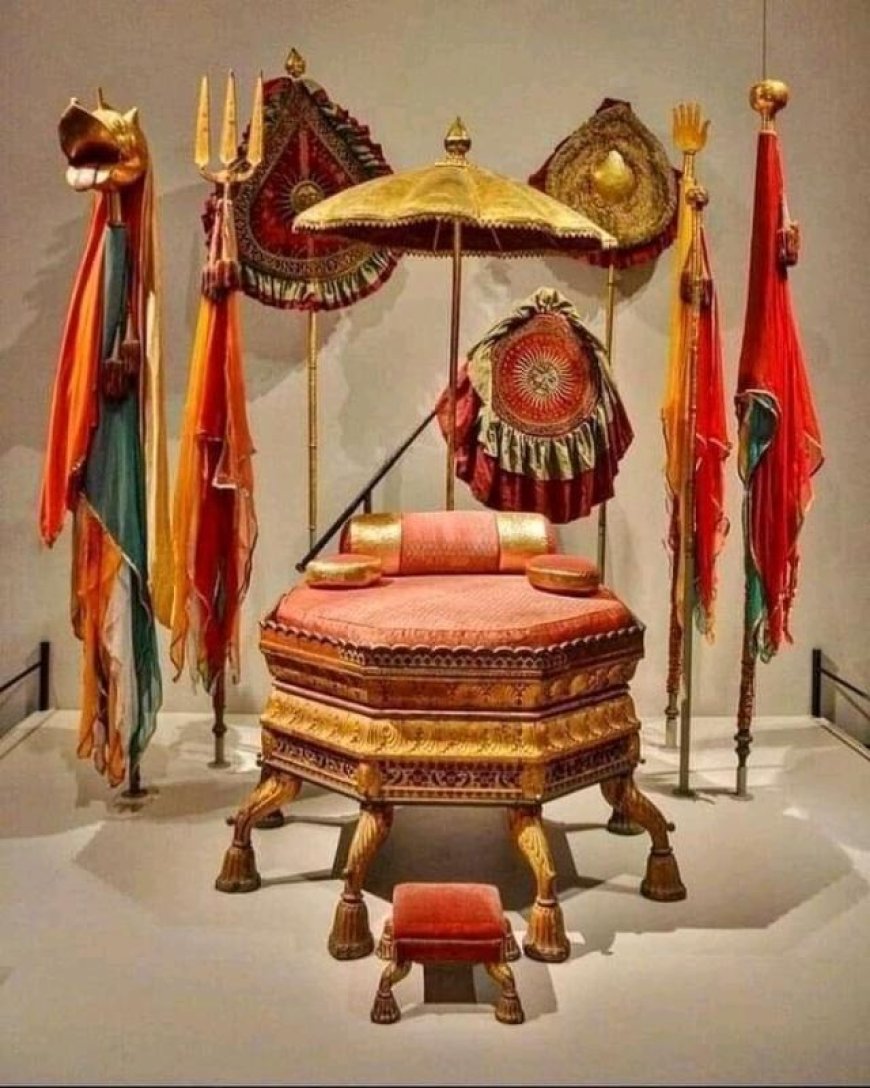
In its ruling, the court clarified that while ceremonial titles, royal dignity, and symbolic positions such as the “throne” may traditionally pass to the eldest heir, private properties and family wealth are governed by modern Indian inheritance laws and cannot automatically belong to a single successor.
The verdict is being viewed as a significant legal interpretation balancing traditional royal customs with constitutional and civil property laws.
Why Did the Dispute Start?
The legal conflict reportedly began after disagreements emerged among members of a former royal family over ownership and control of ancestral assets, palaces, land holdings, and other valuable properties.
The eldest son claimed that, according to royal customs and the principle of primogeniture, he alone had the right to inherit the entire estate as the successor to the royal throne. Other family members challenged this claim, arguing that private assets should be divided according to regular succession laws applicable to all citizens.
The dispute eventually reached multiple courts over several decades before the Supreme Court issued its final decision.
What Did the Supreme Court Say?
The Supreme Court observed that after the abolition of princely privileges and privy purses in India, royal families no longer enjoy separate constitutional status regarding property inheritance.
The bench reportedly emphasized that ceremonial recognition and symbolic succession cannot override statutory inheritance laws governing private property ownership. According to the judgment, traditional customs may continue for cultural or ceremonial purposes, but they cannot deny legal inheritance rights to other family members.
The court clarified that the “gaddi” or royal throne can remain a symbolic and traditional institution linked to the eldest heir, but personal and ancestral assets must be treated as divisible property under Indian law.
Why Is the Judgment Important?
Legal experts believe the ruling could influence several ongoing inheritance disputes involving former royal families across India. Many princely families continue to possess massive ancestral wealth, heritage palaces, agricultural land, and historical assets that often become subjects of legal battles between heirs.
The judgment reinforces the idea that all citizens, including descendants of former royals, are subject to the same constitutional and civil laws governing succession and property rights.
Analysts say the verdict also reflects how India’s legal system continues to separate ceremonial traditions from enforceable legal ownership rights.
Impact on Royal Families and Heritage Properties
The ruling may have broader implications for royal households that continue to follow traditional succession practices. Several royal families across Rajasthan, Madhya Pradesh, Gujarat, and other states still maintain ceremonial titles and cultural influence despite losing official royal recognition decades ago.
Experts believe the judgment could encourage more family members to challenge exclusive inheritance claims based solely on traditional customs. It may also affect the management and ownership structure of heritage properties converted into hotels, museums, and tourism businesses.
A Legal Battle That Lasted Nearly Five Decades
The case remained in courts for almost half a century, making it one of the longest-running inheritance disputes involving a former royal family. During this period, multiple legal arguments were presented regarding Hindu succession laws, family settlements, constitutional amendments, and historical royal customs.
The Supreme Court’s final ruling is expected to bring legal closure to the prolonged family dispute and prevent further uncertainty regarding ownership claims.
The Supreme Court’s decision marks a landmark moment in India’s legal and social history by drawing a clear distinction between royal traditions and modern inheritance law. While the eldest heir may continue to inherit symbolic royal status and ceremonial authority, the court has made it clear that private wealth and ancestral property cannot be monopolized solely on the basis of tradition.
The verdict not only ends a 49-year-old dispute but also sets an important precedent for future inheritance battles involving former royal families in India.
What's Your Reaction?
 Like
0
Like
0
 Dislike
0
Dislike
0
 Love
0
Love
0
 Funny
0
Funny
0
 Angry
0
Angry
0
 Sad
0
Sad
0
 Wow
0
Wow
0