


































India's Supreme Court Seeks Public Feedback on AI Use in Judiciary, Debate Over Rules Intensifies
The Supreme Court of India has invited suggestions and comments until June 20 on proposed guidelines governing the use of artificial intelligence in judicial processes, as debates continue over transparency, accountability and the future role of AI in courts.

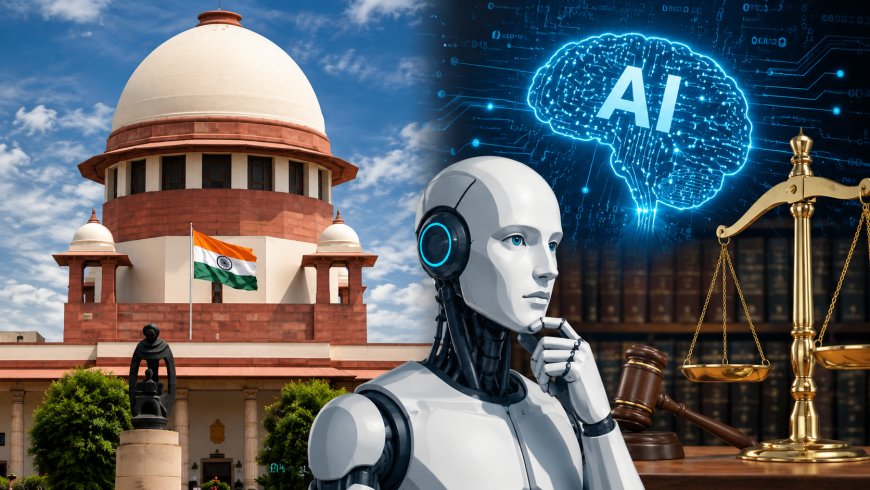
New Delhi: India's Supreme Court has opened a public consultation on the use of artificial intelligence (AI) within the judicial system, inviting suggestions and comments on its proposed framework until June 20. The move comes amid growing debate over how emerging technologies should be integrated into courts while safeguarding fairness, transparency and judicial independence.
The consultation reflects the judiciary's recognition that AI is increasingly becoming a part of legal systems around the world. In India, courts have already experimented with AI-powered tools for legal research, document management, translation services and case categorisation. Supporters argue that such technologies could help reduce delays, improve efficiency and make judicial processes more accessible.
However, the proposed guidelines have also sparked significant discussion among legal experts, lawyers and technology specialists. Critics caution that excessive reliance on AI could introduce risks, including algorithmic bias, lack of transparency in decision-making and concerns over data privacy. They argue that while AI may assist judges and court staff, it should not influence or replace judicial reasoning and human judgment.
According to legal observers, the Supreme Court's initiative is aimed at creating a balanced framework that encourages innovation while preserving the fundamental principles of justice. The court is expected to consider feedback from legal professionals, academic institutions, technology experts, civil society organisations and members of the public before finalising any policy recommendations.
A key issue under discussion is the extent to which AI-generated outputs can be relied upon in legal proceedings. Experts have pointed out that AI systems may occasionally produce inaccurate or misleading information, making human oversight essential in all judicial applications. The consultation is therefore expected to focus heavily on accountability mechanisms and safeguards against misuse.
The debate comes at a time when governments and judicial institutions worldwide are grappling with similar questions. From the United States to the European Union, regulators are exploring ways to harness the benefits of AI while addressing ethical and legal concerns. India's Supreme Court appears keen to ensure that any future adoption of AI aligns with constitutional values and the rights of citizens.
The consultation process is expected to play an important role in shaping the future of technology within India's legal system. The final framework could influence how courts across the country use AI tools in the years ahead, potentially setting standards for responsible and transparent adoption of artificial intelligence in the administration of justice.
Why This Matters
The discussion goes beyond technology. It concerns how courts can modernise while maintaining public trust, judicial accountability and the principle that legal decisions must ultimately remain in human hands.
What's Your Reaction?
 Like
0
Like
0
 Dislike
0
Dislike
0
 Love
0
Love
0
 Funny
0
Funny
0
 Angry
0
Angry
0
 Sad
0
Sad
0
 Wow
0
Wow
0