


















“From Melting Ice to Rusting Rivers: Arctic Transformation Raises Global Alarm”
The Arctic is undergoing rapid and unprecedented transformation, far faster than previously projected, according to the 2025 Arctic Report Card, a comprehensive scientific assessment tracking environmental changes in the polar region. From record-breaking temperatures to the emergence of so-called “rusting rivers,” the report paints a stark picture of a region under extreme stress due to accelerating climate change. Scientists found that Arctic air temperatures in recent years have risen at more than three times the global average, making the region one of the fastest-warming places on Earth. This sustained warming is driving cascading impacts across ecosystems, infrastructure, and global climate systems. One of the report’s most striking findings is the growing prevalence of orange and rust-colored rivers across parts of the Arctic. Researchers attribute this phenomenon to thawing permafrost, which exposes minerals rich in iron and other metals. As these materials oxidize, they discolor waterways and release contaminants that threaten freshwater ecosystems and downstream communities. The thawing of permafrost is also destabilizing landscapes, damaging roads, buildings, and pipelines while releasing stored greenhouse gases such as carbon dioxide and methane into the atmosphere. Scientists warn that this feedback loop could further accelerate global warming, making climate targets harder to achieve. Sea ice decline remains another critical concern. The report notes continued reductions in both the extent and thickness of Arctic sea ice, disrupting wildlife habitats and traditional livelihoods for Indigenous communities. Reduced ice cover also amplifies warming by allowing the ocean to absorb more solar radiation. Researchers stress that the Arctic’s transformation is not a remote or isolated issue. Changes in the region influence global weather patterns, sea levels, and ocean circulation, increasing the likelihood of extreme weather events far beyond the polar circle. The 2025 Arctic Report Card underscores an urgent message: the Arctic is entering a new and rapidly changing state, one that demands immediate global attention. Scientists warn that without swift and sustained action to reduce greenhouse gas emissions, the pace of change will continue to outstrip predictions, with consequences felt worldwide

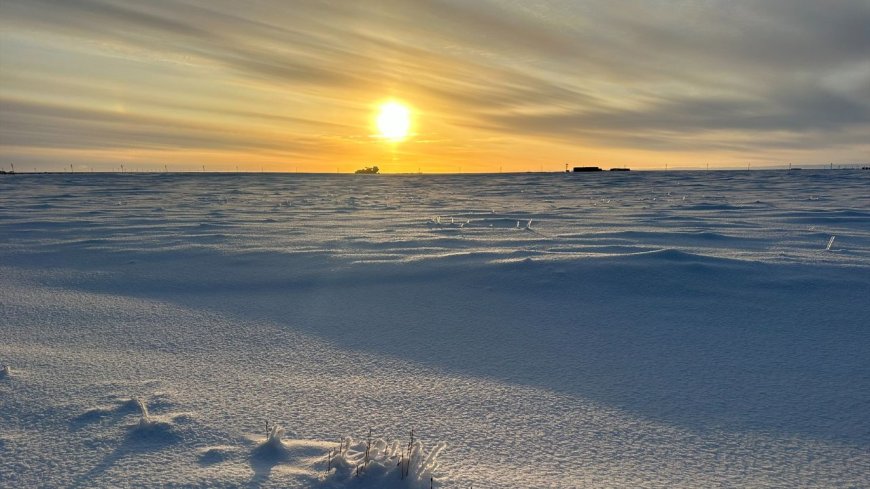
The Arctic is undergoing rapid and unprecedented transformation, far faster than previously projected, according to the 2025 Arctic Report Card, a comprehensive scientific assessment tracking environmental changes in the polar region. From record-breaking temperatures to the emergence of so-called “rusting rivers,” the report paints a stark picture of a region under extreme stress due to accelerating climate change.
Scientists found that Arctic air temperatures in recent years have risen at more than three times the global average, making the region one of the fastest-warming places on Earth. This sustained warming is driving cascading impacts across ecosystems, infrastructure, and global climate systems.
One of the report’s most striking findings is the growing prevalence of orange and rust-colored rivers across parts of the Arctic. Researchers attribute this phenomenon to thawing permafrost, which exposes minerals rich in iron and other metals. As these materials oxidize, they discolor waterways and release contaminants that threaten freshwater ecosystems and downstream communities.
The thawing of permafrost is also destabilizing landscapes, damaging roads, buildings, and pipelines while releasing stored greenhouse gases such as carbon dioxide and methane into the atmosphere. Scientists warn that this feedback loop could further accelerate global warming, making climate targets harder to achieve.
Sea ice decline remains another critical concern. The report notes continued reductions in both the extent and thickness of Arctic sea ice, disrupting wildlife habitats and traditional livelihoods for Indigenous communities. Reduced ice cover also amplifies warming by allowing the ocean to absorb more solar radiation.
Researchers stress that the Arctic’s transformation is not a remote or isolated issue. Changes in the region influence global weather patterns, sea levels, and ocean circulation, increasing the likelihood of extreme weather events far beyond the polar circle.
The 2025 Arctic Report Card underscores an urgent message: the Arctic is entering a new and rapidly changing state, one that demands immediate global attention. Scientists warn that without swift and sustained action to reduce greenhouse gas emissions, the pace of change will continue to outstrip predictions, with consequences felt worldwide
What's Your Reaction?
 Like
0
Like
0
 Dislike
0
Dislike
0
 Love
0
Love
0
 Funny
0
Funny
0
 Angry
0
Angry
0
 Sad
0
Sad
0
 Wow
0
Wow
0