

































“From Tradition to Statutory Body: ISI Bill 2025 Explained”
The ISI Bill 2025 proposes converting the Indian Statistical Institute into a statutory body, triggering protests over academic autonomy and governance.

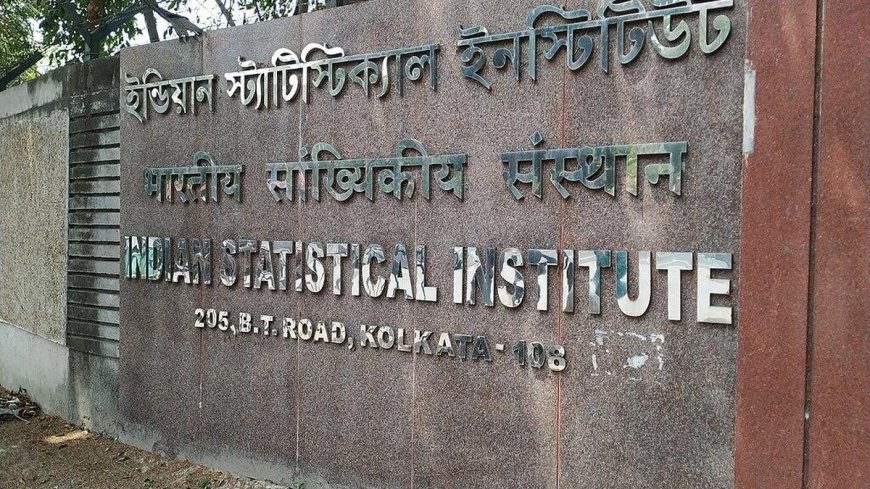
The draft ISI Bill 2025 seeks to convert the ISI from a society‑registered body (under the 1959 Act) into a statutory “body corporate” established by Parliament. Under the new structure, a centrally appointed Board of Governance (BoG) will become the ultimate authority over academic, administrative, financial, and personnel decisions. Government nominees are to form the majority on this board. The existing governing council and faculty‑driven decision‑making will be replaced by a model where internal representation is limited (only a few seats for internal ISI members).
-
Key powers include the ability to open, merge, relocate, or shut down centers (in India or abroad). The bill does not guarantee permanent headquarters status for the existing ISI Kolkata campus.
-
Financially, ISI would be pushed toward self‑sufficiency, allowed to raise revenue via fees, consultancy, intellectual property, and sponsored research. Annual audits (e.g., by the Comptroller & Auditor General) and mandatory compliance reports to the Centre are envisaged.
Concerns
-
Many faculty, researchers, and students argue that transforming ISI into a statutory corporate‑style institution undermines its autonomy, tradition of academic freedom, and internal self‑governance.
-
The shift is seen by many as a “top‑down” control: government nominees in the majority on the Board, limited representation from inside ISI, and centralized decision-making over academic and financial matters.
-
The ability to relocate or restructure centers—possibly outside Kolkata—raises concerns over erosion of ISI’s historic legacy and the identity associated with its Kolkata campus.
-
The push toward revenue generation (fees, consultancy, research with commercial interest) raises fears that long‑term foundational/basic research (often not immediately profitable) may be deprioritized.
Because of these concerns: students and researchers have begun protests and voiced opposition, seeing the bill as jeopardizing what made ISI a globally recognized center for statistical science, mathematics, and research.
Reformist View
Proponents argue that the bill aims to modernize ISI’s governance structure—making it more efficient, accountable, financially sustainable, and globally competitive as it approaches its centenary (2031).
Supporters claim that stronger, leaner governance and expanded revenue-generation powers will enable ISI to upgrade infrastructure, launch new academic/research programs, and attract global talent.
What Changes If Bill Passes
-
Governance and administrative control will shift from the internal community (faculty and researchers) to a centralized board—hence decision-making will likely become less democratic and more bureaucratically managed.
-
ISI may start charging higher fees and encourage consultancy/sponsored research—reducing the state‑funded “free/subsidized” model that many students and researchers currently benefit from.
-
Potential restructuring of campuses: centers may be merged, relocated, or reshaped; the prominence of ISI Kolkata may diminish over time.
-
Basic research (especially that without immediate commercial value) may decline; emphasis could shift toward revenue‑yielding, applied research or consultancy.
What's Your Reaction?
 Like
0
Like
0
 Dislike
0
Dislike
0
 Love
0
Love
0
 Funny
0
Funny
0
 Angry
0
Angry
0
 Sad
0
Sad
0
 Wow
0
Wow
0