






























José Antonio Kast Wins Chilean Presidency with Tough Immigration and Security Agenda
José Antonio Kast has been elected Chile's president, promising strict immigration policies and stronger public security. Learn about his victory and plans

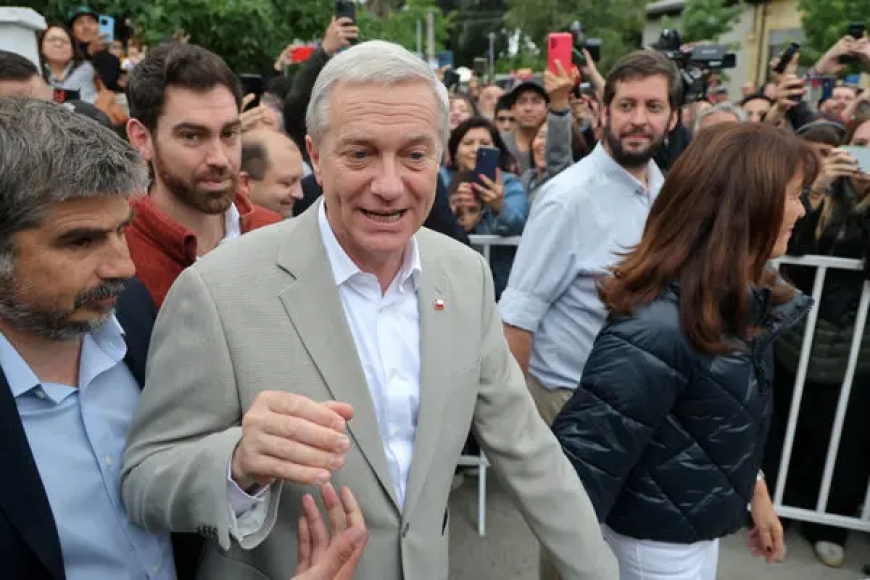
Santiago, Chile — In a decisive election, ultra-conservative José Antonio Kast has been chosen as Chile’s next president. With over 99% of votes tallied, Kast secured 58.16%, defeating leftist candidate Jeannette Jara, who garnered 41.84%.
Kast, a former congressman, is known for his conservative stance, admiration for former dictator Augusto Pinochet, and opposition to abortion and same-sex marriage. His campaign prominently emphasized tough measures on immigration and public safety, including plans to expel thousands of undocumented migrants.
In his victory speech, Kast told supporters, “Chile has won, and hope has won—hope for a life without fear.” Analysts suggest his focus on rising crime and public insecurity, alongside concerns about increased migration, resonated with voters despite Chile remaining one of the safer countries in Latin America.
Over the past decade, the migrant population in Chile has doubled, driven largely by Venezuelans fleeing economic turmoil. Kast repeatedly linked migration to crime and pledged that undocumented migrants must leave the country before his administration takes office on March 11, 2026, or face forced expulsion.
Kast outlined a security-heavy platform, inspired by global right-wing figures, including proposals for detention centers, fortified borders, and increased military presence along northern frontiers with Peru and Bolivia.
This marks Kast’s third presidential campaign; he previously lost the 2021 runoff to current president Gabriel Boric. In a gesture of political decorum, Boric congratulated Kast and invited him for a transition meeting at the presidential palace, La Moneda.
Despite losing the election, Jara pledged to support a constructive opposition, emphasizing national unity and denouncing any acts of violence.
Internationally, U.S. Secretary of State Marco Rubio congratulated Kast, highlighting shared priorities in security, immigration control, and trade. Argentina’s far-right leader Javier Milei also celebrated Kast’s victory, while Brazil’s leftist president Luiz Inácio Lula da Silva affirmed his willingness to continue collaborative relations.
Analysts view Kast’s win as part of a regional right-wing trend in South America, following recent victories in Ecuador, Bolivia, and Argentina. However, Chile’s election is also seen as a continuation of the traditional alternation of power between left and right parties since the country’s return to democracy.
Despite his victory, Kast will face challenges in Congress, lacking an absolute majority in both houses. He has promised to cut public spending by $6 billion within 18 months, though details on implementation remain unclear. Political analysts note that while his economic policies are still uncertain, his plans for security and public order are more clearly defined.
Rossana Castiglioni, a political science professor at Universidad Diego Portales, commented, “We know less about the economic side of a Kast government, but on security issues, his direction is clear. His campaign revolved heavily around law and order, and that is likely to continue.”
What's Your Reaction?
 Like
0
Like
0
 Dislike
0
Dislike
0
 Love
0
Love
0
 Funny
0
Funny
0
 Angry
0
Angry
0
 Sad
0
Sad
0
 Wow
0
Wow
0