




















Lord Jagannath Sets Out to Visit His Aunt with Siblings: Know the Religious Significance of Rath Yatra
Lord Jagannath, along with his siblings Balabhadra and Subhadra, embarks on the sacred Rath Yatra to visit his aunt's home, symbolizing devotion, equality, and the divine bond between God and devotees. Here's why this centuries-old festival holds immense spiritual importance.

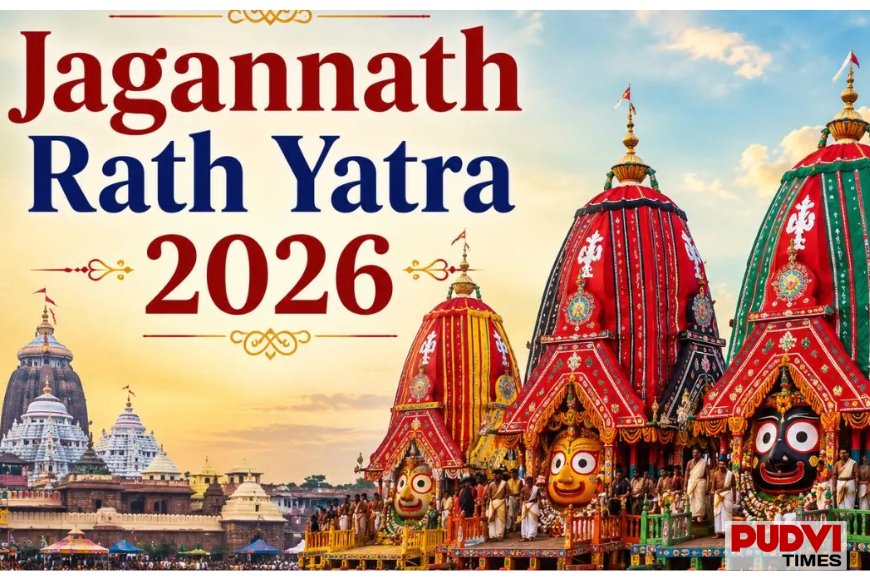
Lord Jagannath Sets Out with His Siblings to Visit Their Aunt: Know the Deep Religious Significance of the Rath Yatra
The Jagannath Rath Yatra is one of the most sacred and spectacular festivals in Hinduism, celebrated every year with immense devotion in Puri, Odisha. The grand procession marks the annual journey of Lord Jagannath, accompanied by his elder brother Lord Balabhadra and younger sister Goddess Subhadra, from the revered Jagannath Temple to the Gundicha Temple, which is traditionally believed to be the home of their maternal aunt (Mausi). This divine journey is much more than a religious procession—it is a timeless celebration of faith, devotion, equality, and the unique relationship between God and His devotees. Every year, millions of pilgrims from across India and around the world gather in Puri to witness the magnificent sight of the three colossal wooden chariots being pulled through the streets by thousands of devotees. The belief that the Lord Himself comes out of His temple to bless every devotee, irrespective of caste, religion, gender, or social status, makes the Rath Yatra one of the most inclusive and spiritually uplifting festivals in the world. For many devotees, witnessing even a glimpse of Lord Jagannath during this procession is considered as sacred as having darshan inside the temple itself, making the event an extraordinary expression of divine grace.
The tradition of the Rath Yatra is deeply rooted in Hindu scriptures, mythology, and centuries-old customs. According to popular belief, Lord Jagannath embarks on this annual journey to visit His maternal aunt at the Gundicha Temple, where He stays along with Balabhadra and Subhadra for seven days before returning to the Jagannath Temple in the famous Bahuda Yatra, or return journey. Another widely accepted legend connects the festival with Lord Krishna's desire to revisit Vrindavan and meet His beloved devotees. Since Lord Jagannath is regarded as a form of Lord Krishna, the Rath Yatra symbolizes this reunion of the Lord with His devotees and His willingness to leave the sanctum of the temple to shower blessings upon everyone. Unlike many temple rituals that remain confined within sacred walls, the Rath Yatra allows people from every background to witness and participate in the divine journey, reinforcing the message that God belongs to all humanity. This aspect has transformed the festival into a universal celebration of compassion, accessibility, and equality, making it one of the most cherished religious events in Hindu tradition.
One of the most captivating features of the Rath Yatra is the construction of the three magnificent wooden chariots, which are rebuilt every year following centuries-old rituals and precise architectural guidelines. Skilled artisans begin crafting these massive chariots months before the festival using specially selected sacred wood. Each chariot has its own identity, design, color, and symbolism. Lord Jagannath travels in Nandighosha, a towering chariot with sixteen wheels; Lord Balabhadra rides Taladhwaja, which has fourteen wheels; while Goddess Subhadra's chariot, known as Darpadalana or Devadalana, is built with twelve wheels. These beautifully decorated chariots, adorned with vibrant fabrics, intricate carvings, and sacred symbols, become the center of devotion as thousands of devotees gather to pull them using thick ropes. The act of pulling the chariot is considered an act of supreme devotion, and Hindu belief holds that participating in this sacred service or even witnessing it with sincere faith brings immense spiritual merit and blessings. The ropes themselves symbolize the inseparable bond between the divine and humanity, while the collective effort required to move the chariots reflects unity, humility, and shared devotion.
Before the procession begins, one of the most meaningful rituals known as Chhera Pahanra is performed by the Gajapati King of Puri. Despite being the traditional ruler, the king sweeps the platforms of the chariots with a golden broom while sprinkling sandalwood water and fragrant flowers. This centuries-old ceremony carries a profound spiritual message that before the Almighty, every individual is equal, regardless of wealth, status, or authority. It reminds devotees that humility and selfless service are among the highest virtues in Hindu philosophy. The ritual beautifully demonstrates that even a king considers himself a humble servant of Lord Jagannath, emphasizing that devotion transcends power and social hierarchy. This message of equality has remained one of the defining principles of the Rath Yatra and continues to inspire millions of people across generations.
The spiritual significance of the Rath Yatra extends far beyond mythology and ritual. The festival represents the eternal journey of the human soul toward truth, devotion, and liberation. Lord Jagannath's decision to step outside His temple symbolizes the belief that God is always willing to reach out to His devotees, irrespective of where they are or who they are. The procession teaches that divine blessings are not restricted by walls, customs, or privilege, but are freely available to anyone who approaches with sincere faith and a pure heart. Many spiritual scholars interpret the moving chariot as a metaphor for human life itself, where the body serves as the chariot, the soul as its passenger, and devotion acts as the guiding force leading one toward salvation. The festival also highlights the importance of family, compassion, service, and collective harmony, as Lord Jagannath travels together with His siblings to fulfill a cherished family tradition. This beautiful blend of devotion and human values makes the Rath Yatra not only a religious celebration but also a timeless lesson in love, unity, and humility.
Over the centuries, the Jagannath Rath Yatra has grown beyond the boundaries of Odisha and India to become a global spiritual celebration. Grand Rath Yatra processions are now organized in countries such as the United States, the United Kingdom, Canada, Australia, South Africa, Singapore, and many parts of Europe, attracting devotees from diverse cultures and backgrounds. Organizations such as ISKCON have played a significant role in introducing Lord Jagannath's message of devotion and universal brotherhood to millions across the world. While the grandeur of the Puri Rath Yatra remains unmatched, the spirit of the festival continues to inspire communities globally, bringing people together in prayer, music, dance, and service. At the same time, the annual festival significantly contributes to Odisha's economy by attracting millions of pilgrims and tourists, benefiting local artisans, craftsmen, transport operators, hotels, restaurants, and small businesses. Traditional Odia culture, music, handicrafts, and cuisine also receive worldwide recognition during this period, making the Rath Yatra an important cultural as well as religious event.
In today's fast-paced world, the Jagannath Rath Yatra continues to offer timeless lessons that remain deeply relevant. It reminds people that true spirituality lies not merely in rituals but in humility, compassion, equality, and unwavering faith. Lord Jagannath's journey from the temple to the streets symbolizes the idea that the divine is always close to humanity and that no barrier should exist between God and His devotees. As millions join hands to pull the sacred chariots, differences of caste, language, nationality, and social status disappear, replaced by a shared sense of devotion and unity. This enduring message of inclusiveness, selfless service, and universal love has allowed the Rath Yatra to remain one of the world's greatest spiritual celebrations for centuries. Every year, as Lord Jagannath, Balabhadra, and Subhadra set out to visit their aunt, the festival renews faith in the timeless belief that the path to God is open to all, and that divine grace reaches every heart filled with devotion.
What's Your Reaction?
 Like
0
Like
0
 Dislike
0
Dislike
0
 Love
0
Love
0
 Funny
0
Funny
0
 Angry
0
Angry
0
 Sad
0
Sad
0
 Wow
0
Wow
0