




























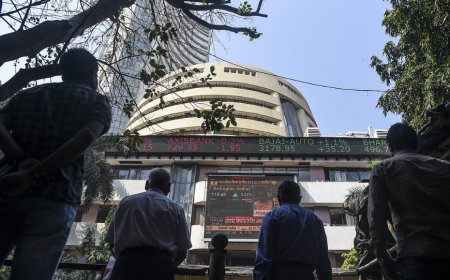






Nifty Retreats ~2% After Brushing Record High — Should You Worry?
India’s benchmark index, the Nifty 50, slipped about 2 % after coming within striking distance of its all-time high. At face value, this pause might ignite concern among investors — but experts say it may be less a red flag and more a healthy consolidation process. Here’s a deeper look into what’s happening, why it matters, and what you should keep an eye on.


What Just Happened
- The Nifty was near a record high, but pulled back roughly 2 % during the session. Key factors cited for the decline:
- Uncertainty over the proposed India-US free trade deal. Diminished expectations of a US Federal Reserve rate cut in December. Intermittent selling by foreign institutional investors (FIIs).
- Despite the drop, analysts describe the move as “consolidation within a broader upward trend” rather than the start of a major downturn.
Why It’s Not Time to Panic
- Pullbacks near highs are normal — When indices approach record territory, some profit-booking and caution set in, leading to short-term dips.
- Underlying trend remains positive — The fact the market got so close to a record suggests underlying strength; the pull-back may simply reflect temporary macro headwinds.
- Opportunity for base building — A modest retreat can allow the market to form a stronger base for the next leg higher, rather than rushing to break the record and then collapsing.
What Could Be the Risks
- Global macro shocks: Any unexpected slowdown in the US economy, a surge in global interest rates, or geopolitical flare-ups could shift sentiment sharply negative.
- Domestic earnings disappointment: If India’s corporate earnings disappoint or key sectors fail to deliver, investor optimism may waver.
- Foreign outflows picking up pace: While FIIs are only intermittent sellers now, a sustained exit could pressure the market.
- Valuation fatigue: The closer the Nifty climbs to all-time highs, the more risk there is of “valuation scepticism” — investors asking, “Is this already priced in?”
What Investors Should Do
- Monitor key levels: If you trade or invest, watch the support zones (recent pull-back levels) to see if the index stabilises.
- Stay stock-specific: Broad markets may navigate sideways; identifying individual companies with robust fundamentals becomes more important.
- Maintain perspective: If your time-horizon is medium- to long-term, a 2 % dip is within normal volatility. Avoid overreacting.
- Keep event-risk on radar: Upcoming economic data, RBI/Fed policy signals, and corporate earnings releases could drive the next phase.
- Diversify & re-balance: If you’re overweight growth stocks or high-beta names, consider whether the recent strength warrants some profit-taking or reallocation into more defensive plays.
What's Your Reaction?
 Like
0
Like
0
 Dislike
0
Dislike
0
 Love
0
Love
0
 Funny
0
Funny
0
 Angry
0
Angry
0
 Sad
0
Sad
0
 Wow
0
Wow
0