

















'Neither Free Nor Disputed': Protesters in Rawalakot Challenge Pakistan's Narrative, Call PoK 'An Illegally Occupied Territory'
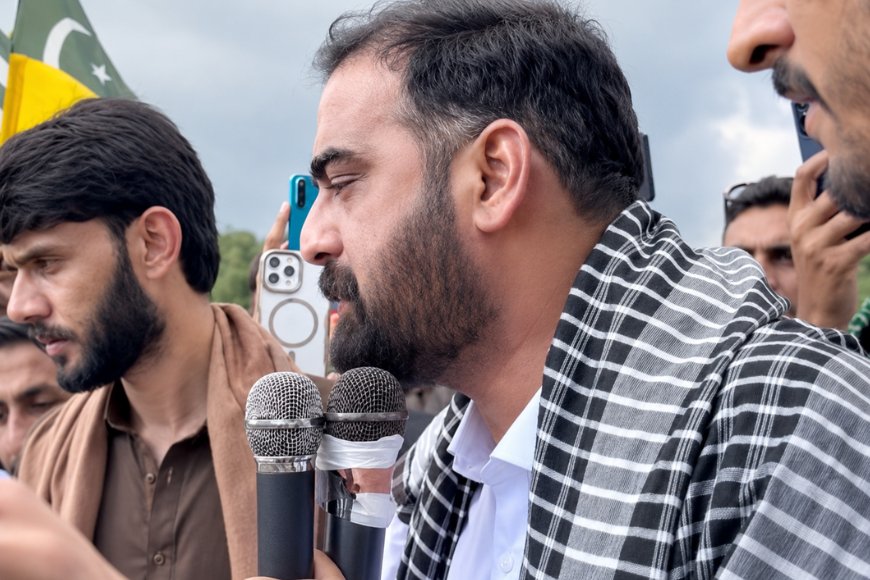
Protesters in Rawalakot, Pakistan-administered Kashmir, publicly challenged Pakistan's official narrative during a demonstration, with protest leader Sardar Aman Khan stating that PoK is "neither free nor disputed, but an illegally occupied territory." The remarks come amid ongoing unrest and protests in the region.

'Neither Free Nor Disputed': Rawalakot Protesters Challenge Pakistan's Narrative Over PoK
Political tensions in Pakistan-administered Kashmir (PoK) have intensified after protesters in Rawalakot openly challenged Pakistan's official position on the region. During a large public gathering, protest leader Sardar Aman Khan declared that the territory is "neither free nor disputed, but an illegally occupied territory." His remarks have sparked fresh debate about the ongoing protests and the political situation in the region.
The statement was made during a demonstration attended by thousands of people in Rawalakot, where protesters raised slogans against the administration and demanded greater political rights, economic reforms, and improved governance. The comments quickly gained attention on social media and in regional media outlets, adding a new dimension to the ongoing unrest in Pakistan-administered Kashmir.
According to protest organizers, the demonstrations are aimed at highlighting what they describe as long-standing issues related to governance, economic hardship, rising living costs, electricity tariffs, unemployment, and political representation. Many protesters argue that the local population has not received adequate control over its own affairs and resources, leading to growing dissatisfaction among residents.
During his address, Sardar Aman Khan questioned Pakistan's long-standing description of the territory as "Azad Kashmir." He argued that genuine freedom would mean complete political autonomy and decision-making power for local residents. According to him, the region remains under significant administrative control, and many residents believe their voices are not adequately represented in governance.
The protests in Rawalakot are part of a broader movement that has expanded across several areas of Pakistan-administered Kashmir in recent months. Initially focused on economic concerns such as inflation, electricity prices, and access to essential commodities, the movement has gradually evolved into broader demands related to governance, civil rights, and political reforms.
Reports indicate that several demonstrations have witnessed confrontations between protesters and security personnel. Some incidents have resulted in casualties and injuries, while authorities have deployed additional security forces to maintain law and order. The situation remains closely monitored as tensions continue in different parts of the region.
Protest organizers have alleged that authorities have attempted to restrict demonstrations through increased security measures and legal action against activists. Pakistani authorities, however, have maintained that their actions are aimed at preserving public order and ensuring security during periods of unrest.
Political analysts believe the current unrest reflects deeper concerns among sections of the local population regarding governance and economic conditions. They note that issues such as unemployment, inflation, electricity shortages, and resource management have been recurring subjects of public dissatisfaction for several years. These concerns have now merged with wider political demands, giving the movement greater momentum.
The remarks made by Sardar Aman Khan have attracted significant attention because they directly challenge Pakistan's official narrative regarding the territory. However, it is important to note that his comments represent the views expressed by a protest leader and should not be interpreted as an established legal or internationally accepted position.
The political status of Pakistan-administered Kashmir remains part of the broader and long-standing India-Pakistan dispute over Jammu and Kashmir. India maintains that the entire former princely state of Jammu and Kashmir, including the territory administered by Pakistan, is an integral part of India. Pakistan maintains a different position regarding the region. As a result, statements about the area's political status often reflect the perspective of the speaker or the government involved.
International observers emphasize that developments in such sensitive regions should be assessed carefully, relying on verified information, official statements, and credible reporting rather than unverified claims circulating on social media. While videos and speeches from protests frequently attract global attention, they do not necessarily represent the views of all residents or constitute official policy.
The demonstrations have also drawn attention to broader issues affecting daily life in the region. Protesters continue to demand affordable electricity, better public services, greater transparency, and stronger local representation. Whether these demands will lead to policy changes or negotiations remains uncertain.
As the protests continue, authorities are monitoring the situation closely, while political observers expect further developments in the coming days. Any future dialogue between protest leaders and the administration could play a significant role in determining the direction of the movement.
For now, the Rawalakot demonstrations have once again brought international attention to Pakistan-administered Kashmir, highlighting both the political debate surrounding the territory and the local grievances expressed by protesters. With no immediate resolution in sight, the situation remains fluid, and further official statements from both the administration and protest leaders are expected.
What's Your Reaction?
 Like
0
Like
0
 Dislike
0
Dislike
0
 Love
0
Love
0
 Funny
0
Funny
0
 Angry
0
Angry
0
 Sad
0
Sad
0
 Wow
0
Wow
0