

















Shambhu Border Sealed: Heavy Barricading Stops Farmers' Delhi March, Pandher Says 'We Want Dialogue, Not Confrontation'
Security has been intensified at the Shambhu border as thousands of farmers march towards Delhi to protest the proposed India-US Free Trade Agreement (FTA). While Haryana Police have erected multiple barricades and enforced prohibitory orders, farmer leader Sarwan Singh Pandher has reiterated that the agitation is peaceful and that farmers are willing to resolve the issue through dialogue with the Centre.

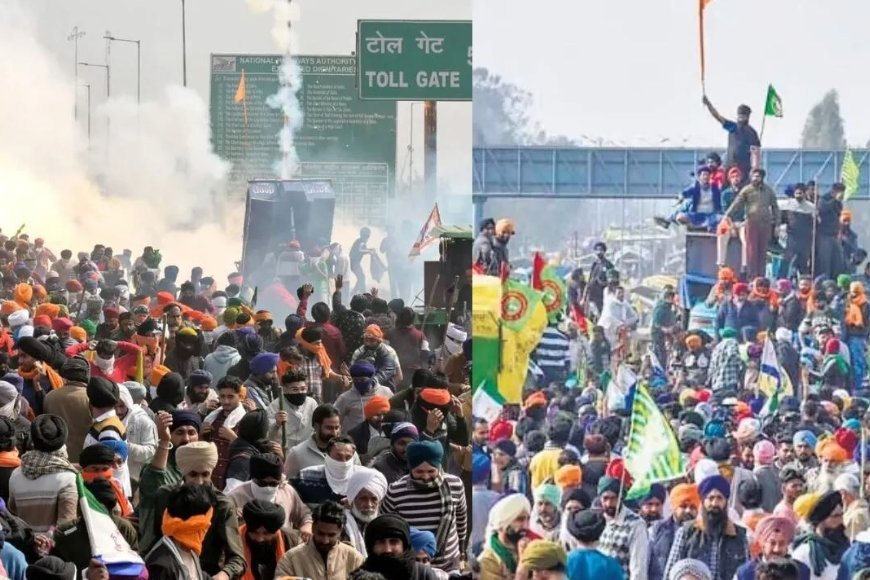
Shambhu Border Under Tight Security as Farmers Resume Delhi March Over India-US FTA
The Punjab-Haryana Shambhu border has once again become the epicentre of a major farmers' movement as thousands of farmers attempted to march towards Delhi on Monday in protest against the proposed India-US Free Trade Agreement (FTA). Anticipating large gatherings, the Haryana administration deployed heavy police forces, erected multi-layered barricades, and enforced prohibitory orders under Section 163 of the Bharatiya Nagarik Suraksha Sanhita (BNSS), effectively preventing protesters from moving towards the national capital.
The protest, organized under the banner of the Desh Bachao Morcha, has drawn participation from farmers across Punjab, including Amritsar, Gurdaspur, Tarn Taran, and other districts. Convoys of tractors, buses, and private vehicles carrying protesters began reaching the Shambhu border early in the morning, where they encountered an extensive security setup.
Police Fortify Border to Prevent Entry into Haryana
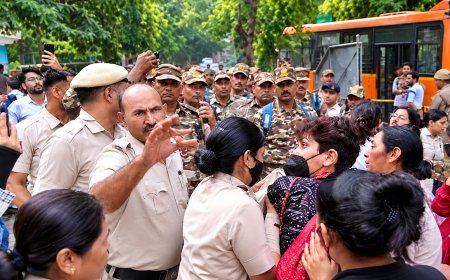
Authorities had anticipated the large-scale mobilization and deployed personnel from Haryana Police along with other security agencies at strategic locations. Multiple layers of concrete barricades, iron fencing, and security checkpoints were installed to prevent protesters from entering Haryana and proceeding towards Delhi.
Officials stated that the restrictions were imposed as a precautionary measure to maintain law and order and avoid disruption to traffic and public life. Section 163 BNSS, which restricts unlawful assembly in sensitive areas, was invoked around the border region.
The administration maintained that while peaceful protest is a democratic right, any attempt to violate prohibitory orders or force entry into Haryana would invite legal action.
Farmers Oppose India-US Free Trade Agreement
The primary trigger behind the latest march is the proposed India-US Free Trade Agreement, which farmer organizations believe could have severe implications for Indian agriculture.
Farmer unions argue that greater access for imported agricultural products could negatively affect domestic producers by exposing them to international competition without adequate safeguards. They also allege that the Centre has not shared sufficient details of the negotiations with stakeholders.
The protesting organizations have demanded complete transparency regarding the proposed agreement and insist that farmers' interests should not be compromised in any international trade deal.
Pandher Calls for Dialogue Instead of Conflict
Farmer leader Sarwan Singh Pandher, who is leading the agitation, emphasized that the movement is peaceful and that farmers are not looking for confrontation.
Addressing supporters at the protest site, Pandher said the organizations remain open to discussions with the Central Government and urged authorities to initiate meaningful dialogue.
According to him, negotiations remain the best solution, provided the government is willing to listen to the concerns of farmers regarding the proposed FTA and broader agricultural policies.
His remarks sought to reassure both protesters and the administration that the agitation would continue democratically while keeping the door open for negotiations.
Large Turnout Despite Restrictions
Despite heavy restrictions, thousands of farmers continued reaching the protest site throughout the day. Many participants carried union flags and banners opposing the trade agreement, while volunteers managed food, water, and medical facilities at temporary camps near the border.
The atmosphere remained charged but largely peaceful as leaders addressed gatherings and appealed to protesters to maintain discipline.
Authorities closely monitored the situation through surveillance systems and maintained additional security reserves in nearby areas in case the situation escalated.
Political Significance of the Protest
The latest agitation comes at a politically significant time as the proposed trade agreement has sparked debate over its possible impact on Indian agriculture.
Farmer organizations claim that agricultural issues deserve greater consultation before any major international agreement is finalized. They argue that farmers should be considered key stakeholders in negotiations that could affect crop prices, market access, and long-term rural livelihoods.
Political observers believe the protest could increase pressure on the Centre to engage with farm unions before moving ahead with the agreement.
Traffic and Public Movement Affected
The extensive security arrangements resulted in traffic diversions around the Punjab-Haryana border. Commuters travelling through the region experienced delays as authorities restricted vehicle movement near sensitive points.
Police advised travellers to use alternate routes and cooperate with security personnel until the situation normalizes.
Local administrations also remained in constant coordination to ensure that emergency services and essential transport continued without major disruption.
Government Yet to Announce Formal Talks
While farmer leaders have publicly expressed willingness for dialogue, there has been no official announcement regarding fresh negotiations between the Centre and the protesting organizations at the time of writing.
Officials have continued to monitor developments while maintaining that security measures will remain in place until the situation is fully under control.
Observers believe the next phase of the agitation will largely depend on whether formal communication is initiated between government representatives and farmer leaders.
What Lies Ahead
As thousands of farmers remain gathered at the Shambhu border, the situation continues to be closely watched across the country. The coming days are expected to determine whether the issue moves toward negotiations or develops into a prolonged standoff.
With protesters insisting that they only want their concerns heard and authorities focused on maintaining law and order, the Shambhu border once again stands at the centre of a crucial national debate involving agriculture, trade policy, and democratic protest.
For now, the farmers remain firm on their demands, while simultaneously reiterating that dialogue—not confrontation—is their preferred path forward. Whether the government responds with negotiations could shape the future course of the movement in the days ahead.
What's Your Reaction?
 Like
0
Like
0
 Dislike
0
Dislike
0
 Love
0
Love
0
 Funny
0
Funny
0
 Angry
0
Angry
0
 Sad
0
Sad
0
 Wow
0
Wow
0