
































Ahmedabad Plane Crash: Final Investigation Report Likely by October, AAIB Informs Supreme Court
The Aircraft Accident Investigation Bureau (AAIB) has informed the Supreme Court that the final investigation report into the Ahmedabad Air India AI171 plane crash is expected by October 2026. The agency said the probe is being conducted under international aviation norms and is in its final stages.

Ahmedabad Plane Crash: Final Investigation Report Likely by October, AAIB Tells Supreme Court
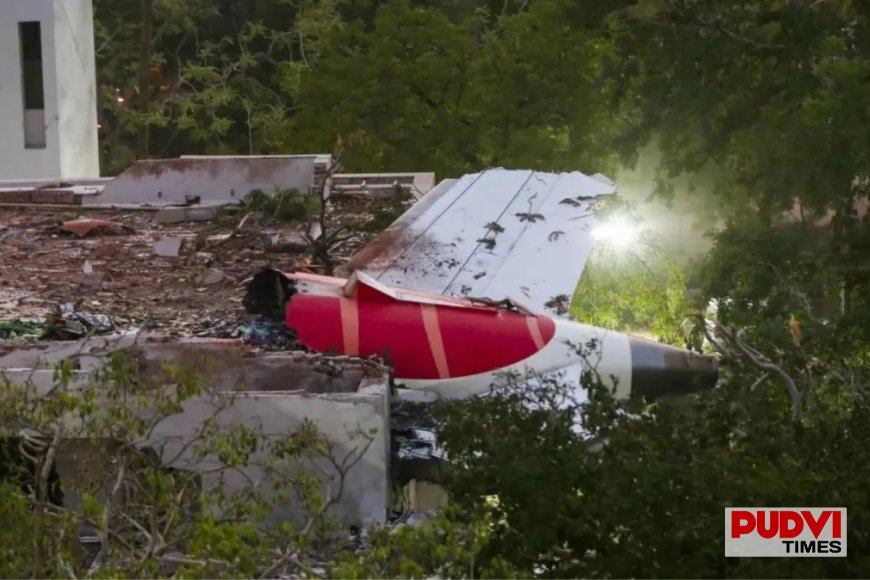
More than a year after the tragic Air India AI171 crash near Ahmedabad that claimed 260 lives, the Aircraft Accident Investigation Bureau (AAIB) has informed the Supreme Court that the final investigation report is expected to be ready by October 2026. The update came during the hearing of petitions seeking a court-monitored probe into one of India's deadliest aviation disasters in recent years. According to the AAIB, the investigation is progressing in accordance with international aviation standards laid down by the International Civil Aviation Organization (ICAO), and there is no need for a separate judicial or independent investigation at this stage. The bureau told the apex court that while the mandatory evidence collection and technical examination have largely been completed, several complex aspects of the investigation are still under analysis. It stated that approximately six more weeks are required to complete the remaining technical work, after which a draft report will be shared with relevant international stakeholders before the final report is officially published. The agency emphasized that aircraft accident investigations involve multiple international authorities, manufacturers, technical experts, and regulatory bodies, making the process highly detailed and time-consuming.
The Air India AI171 accident occurred on June 12, 2025, when the Boeing 787 Dreamliner operating a scheduled flight from Ahmedabad to London crashed shortly after take-off. The aircraft reportedly encountered a catastrophic emergency within seconds of becoming airborne before crashing into a densely populated area near the airport. The tragedy resulted in the deaths of 260 people, including passengers, crew members, and individuals on the ground, making it one of the worst aviation disasters in India's modern history. The incident triggered a massive rescue and recovery operation involving the National Disaster Response Force (NDRF), local authorities, firefighters, police personnel, and medical teams. Aviation experts from India and several foreign agencies also joined the investigation because the aircraft was manufactured overseas and carried passengers from multiple countries. Given the international nature of the accident, the investigation has been carried out under globally accepted protocols that require coordination among various aviation authorities before any official findings are released.
During the Supreme Court proceedings, the AAIB strongly opposed demands for a court-supervised investigation, arguing that the existing inquiry is fully compliant with Indian law as well as international treaty obligations. The bureau informed the court that its investigation is independent and protected from outside influence to ensure that the final conclusions remain evidence-based and technically accurate. It also clarified that confidential materials such as the Cockpit Voice Recorder (CVR) recordings and other sensitive technical evidence cannot be disclosed publicly while the investigation is underway. According to international aviation regulations, such recordings are considered protected information because their disclosure could compromise the integrity of accident investigations and discourage open communication within aircraft cockpits in the future. The AAIB maintained that all decisions regarding publication of evidence will be taken only after the investigation is complete and in accordance with international norms.
One of the most significant aspects of the ongoing probe has been the extensive technical examination of the aircraft's flight systems, engines, maintenance history, and operational records. Investigators have also analyzed data recovered from the Flight Data Recorder (FDR) and Cockpit Voice Recorder to reconstruct the aircraft's final moments. In addition to engineering analysis, officials have reportedly conducted what is known as a "psychological autopsy," a specialized investigative method used to understand the decision-making process, mental state, and operational circumstances surrounding the crew before the accident. Such assessments do not aim to assign blame but rather help investigators identify whether human factors, communication issues, procedural lapses, or external pressures contributed to the chain of events. Alongside these efforts, experts have been examining weather data, air traffic control communications, aircraft performance parameters, and maintenance documentation to build a complete picture of the accident sequence.
The AAIB has also highlighted that aircraft accident investigations are fundamentally different from criminal investigations. Their primary objective is not to determine legal liability or punishment but to identify the technical, operational, environmental, and human factors that caused the accident so that similar tragedies can be prevented in the future. International aviation safety standards require investigators to carefully evaluate every possible factor before arriving at conclusions, which explains why major accident reports often take many months or even years to complete. Once the technical investigation is finalized, a draft report will be circulated among participating states, aircraft manufacturers, engine manufacturers, and other relevant organizations for factual comments. Only after reviewing these observations will the AAIB issue its final report, along with recommendations aimed at improving aviation safety in India and globally.
The Supreme Court's hearing has drawn significant public attention because several petitions sought greater transparency and independent oversight of the investigation. Families of victims have repeatedly demanded timely answers regarding the cause of the crash and accountability wherever necessary. While expressing sympathy for the victims' families, the AAIB assured the court that every aspect of the accident is being investigated thoroughly and without external interference. The bureau maintained that any premature disclosure of incomplete findings could create confusion and potentially affect the credibility of the final conclusions. Therefore, investigators believe it is essential to complete the scientific analysis before making definitive statements about the cause of the accident.
The expected release of the final report in October 2026 is likely to provide the most comprehensive account of what led to the Ahmedabad tragedy. It is expected to include a detailed reconstruction of the flight, technical findings, operational analysis, contributing factors, and a series of safety recommendations for airlines, regulators, aircraft manufacturers, maintenance organizations, and aviation authorities. These recommendations could influence future pilot training procedures, aircraft maintenance standards, emergency response protocols, regulatory oversight, and operational safety measures across the aviation sector. Such reports have historically played a crucial role in improving global aviation safety by identifying systemic weaknesses and recommending preventive reforms.
As India continues to witness rapid growth in civil aviation, the findings of the Ahmedabad Air India AI171 crash investigation are expected to have far-reaching implications for the country's aviation ecosystem. The tragedy not only highlighted the importance of robust safety mechanisms but also reinforced the need for transparent, scientific, and internationally coordinated investigations following major air disasters. While the families of the victims continue to await definitive answers, the AAIB has assured the Supreme Court that the investigation remains on schedule and that the final report will be released after completing all mandatory technical, legal, and international review procedures. Until then, authorities have urged the public to rely only on verified information and avoid speculation, emphasizing that the final conclusions will be based solely on evidence collected during the extensive investigation.
What's Your Reaction?
 Like
0
Like
0
 Dislike
0
Dislike
0
 Love
0
Love
0
 Funny
0
Funny
0
 Angry
0
Angry
0
 Sad
0
Sad
0
 Wow
0
Wow
0