

































Andal Land Subsidence Triggers Panic: Families Demand Rehabilitation and Compensation as Fear Persists 24 Hours Later
More than 24 hours after a major land subsidence incident in Andal near Asansol, West Bengal, fear continues to grip displaced families. Residents say they fled without essential belongings and documents, while demands for permanent rehabilitation, compensation, and a thorough investigation have intensified.

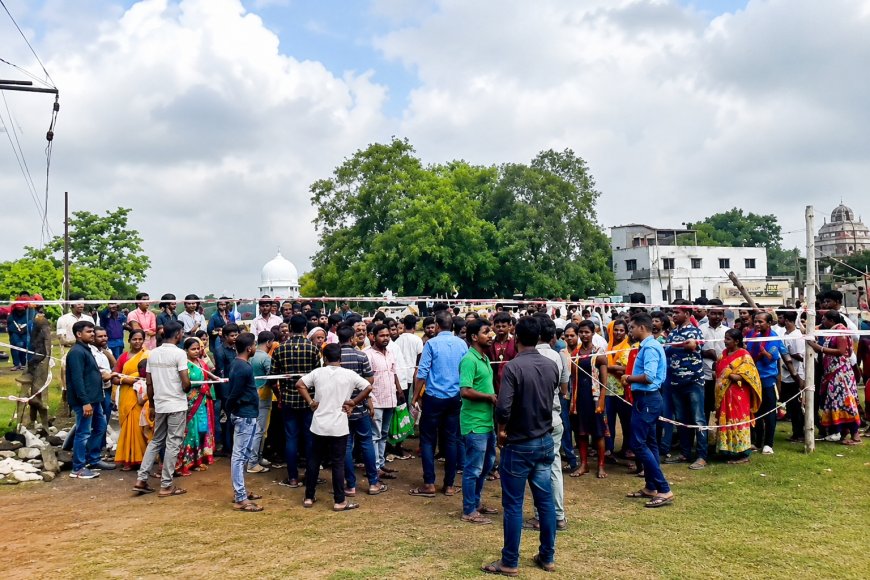
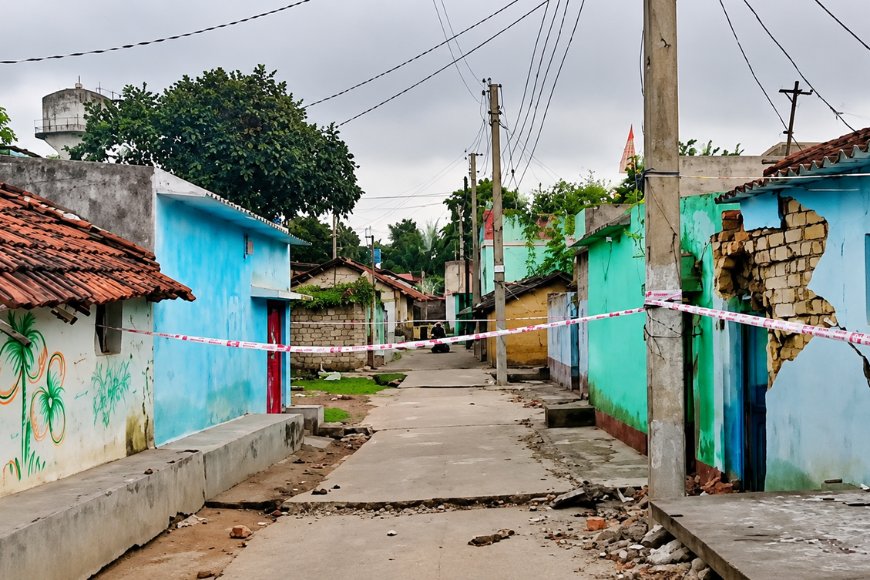
Panic continues to prevail in West Bengal's Andal area, near Asansol, more than 24 hours after a major land subsidence incident forced hundreds of residents to abandon their homes. As authorities continue monitoring the affected zone, displaced families remain anxious about their future, with many unable to return to their houses due to fears of further ground collapse.
The sudden subsidence left large cracks in the ground, damaged homes, and created an atmosphere of uncertainty among local residents. Families who fled during the emergency say they had only minutes to escape, leaving behind important belongings, identity documents, educational certificates, cash, jewellery, and household essentials.
Now sheltered in temporary accommodation or staying with relatives, the affected residents are demanding immediate rehabilitation, financial compensation, and long-term safety measures to prevent similar incidents in the future. Reports indicate that officials are assessing the extent of the damage while experts continue examining the stability of the affected area.
Residents Fled Without Their Belongings
According to residents, the land began showing visible signs of instability before sections of the ground eventually gave way. As panic spread through the neighbourhood, families rushed out of their homes with little time to collect personal belongings.
Many people said they left behind important government documents such as Aadhaar cards, ration cards, bank passbooks, educational certificates, land records, and medical documents.
Some residents also reported leaving household savings, jewellery, furniture, and essential daily-use items inside their homes because returning to retrieve them was considered unsafe.
The uncertainty surrounding the structural condition of the affected houses has made many families reluctant to enter the area again until engineers declare it safe.
Fear Continues Even After 24 Hours
Although the initial emergency has passed, fear remains widespread among residents.
Many displaced families spent the night in temporary shelters, community buildings, or with relatives, uncertain whether they would ever be able to return home.
Children, elderly residents, and women have been among the worst affected, with many struggling to cope with the emotional trauma of suddenly losing access to their homes.
Residents say the continuing possibility of further subsidence has created constant anxiety, particularly after reports of cracks appearing in nearby structures.
Authorities have advised people to remain away from the affected zone until technical assessments are completed.
Rehabilitation Emerges as the Biggest Demand
As the immediate emergency response continues, the focus has shifted towards long-term rehabilitation.
Affected families argue that temporary shelters alone cannot solve the crisis. They are demanding permanent housing, financial assistance, and comprehensive rehabilitation packages from the state government.
Many residents believe rebuilding in the same location may not be safe if the underlying geological conditions remain unstable.
Community representatives have appealed for rehabilitation at safer locations where families can rebuild their lives without living under the constant fear of another collapse.
Compensation Demands Grow Stronger
Alongside rehabilitation, compensation has become one of the central demands of the affected residents.
Families claim they have suffered extensive losses, including damaged homes, household goods, personal documents, electronic appliances, and livelihoods.
Local residents are urging the government to provide financial assistance that reflects the actual extent of their losses rather than only offering temporary relief.
Several community members have also requested compensation for income lost due to displacement, particularly among daily wage workers and small business owners whose economic activities have been disrupted.
Officials Assess the Situation
Government officials and disaster management teams have visited the affected locality to assess the extent of the damage.
Technical experts are examining the condition of buildings, roads, underground structures, and surrounding land before determining whether residents can safely return.
Authorities are also monitoring nearby areas to identify any signs of additional ground movement.
Safety inspections remain a priority, as engineers seek to understand whether the subsidence was an isolated incident or part of a larger geological problem.
Possible Causes Under Examination
Although the exact cause of the land subsidence has not yet been officially confirmed, experts are expected to examine multiple possible factors.
Land subsidence can occur due to underground mining activity, geological instability, groundwater changes, soil erosion, or natural weakening of underground formations. International experts note that subsidence often requires detailed geological investigations before the precise cause can be established.
Authorities are expected to conduct scientific surveys before announcing any final conclusions regarding the incident.
Residents have demanded complete transparency during the investigation and have requested that technical findings be shared publicly.
Daily Life Remains Disrupted
The subsidence has significantly affected normal life in the area.
Schools, local businesses, and transportation services have experienced disruptions as authorities restricted access to damaged zones.
Families displaced from their homes now face uncertainty regarding education, employment, healthcare, and other essential services.
Many residents say they do not know how long they will have to remain in temporary accommodation.
The disruption has also affected local markets, with several businesses reporting reduced customer activity due to safety concerns.
Emotional and Psychological Impact
Beyond physical damage, the incident has taken a heavy emotional toll.
Children have been separated from familiar surroundings, elderly residents face uncertainty about their future, and families remain worried about recovering important possessions left inside damaged houses.
Mental health experts often note that sudden displacement following disasters can result in stress, anxiety, and long-term psychological trauma, especially when communities face prolonged uncertainty.
Residents have appealed for counselling services and continued support alongside financial assistance.
Calls for Better Disaster Preparedness
The incident has also sparked discussions about disaster preparedness and urban planning in vulnerable regions.
Experts believe that areas with potential geological risks require continuous monitoring, scientific surveys, and early warning mechanisms to minimise future disasters.
Improved infrastructure planning, regular land stability assessments, and stronger emergency response systems could help reduce risks in areas susceptible to subsidence.
Residents have urged authorities to strengthen monitoring so that warning signs can be detected before major incidents occur.
Looking Ahead
As investigations continue, displaced families remain focused on three immediate priorities: safe rehabilitation, fair compensation, and assurance that similar incidents will not occur again.
Government agencies are expected to complete technical assessments before deciding whether damaged neighbourhoods can be repaired or require permanent relocation.
For the affected residents of Andal, however, the crisis extends beyond damaged buildings. It has disrupted livelihoods, separated families from their homes, and created deep uncertainty about the future.
The coming days will be crucial as authorities determine the cause of the subsidence, finalise rehabilitation plans, and announce compensation measures. Until then, hundreds of displaced residents continue waiting for clear answers, hoping that recovery efforts will provide not only immediate relief but also long-term security and a chance to rebuild their lives with confidence.
What's Your Reaction?
 Like
0
Like
0
 Dislike
0
Dislike
0
 Love
0
Love
0
 Funny
0
Funny
0
 Angry
0
Angry
0
 Sad
0
Sad
0
 Wow
0
Wow
0