


























Beyond Diplomacy: How the “Parallel Track” Keeps U.S.–India Ties Resilient and Forward-Looking
Explore how the U.S.–India bilateral relationship thrives on a “parallel track” of people-to-people ties, innovation, defense cooperation, trade, and institutional engagement, even during political or strategic headwinds.

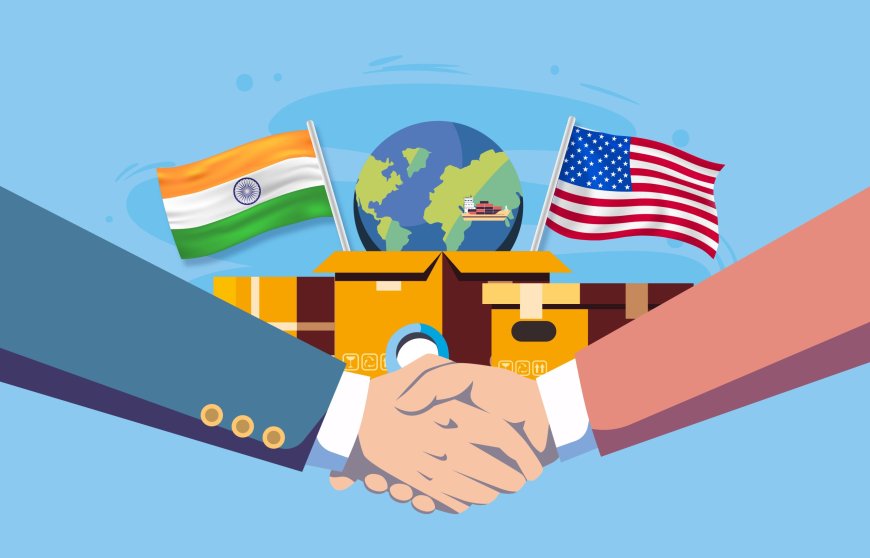
In the ever-evolving world of international relations, the bond between the United States and India stands out as one of the most consequential partnerships of the 21st century. Yet, even this dynamic relationship has faced moments of political friction, tariff disputes, and differing foreign policy approaches. But beneath the surface of high-level diplomacy runs a powerful undercurrent — a “parallel track” that sustains and deepens cooperation even when formal negotiations hit rough patches.
Unlike official state-to-state talks, the parallel track refers to all those people-centred, institutional, and sector-driven links that advance cooperation independently of political ups and downs. It includes social networks, business partnerships, academic alliances, strategic industrial cooperation, and shared values that continue to flourish regardless of diplomatic headwinds.
People-to-People Ties: The Heart of the Relationship
One of the most visible and potent elements of the parallel track is the Indian diaspora in the U.S. With over 5 million Indian Americans contributing significantly to technology, entrepreneurship, healthcare, science, and politics, these communities have become a continuous bridge between the two societies. Their economic success — particularly in sectors like Silicon Valley — amplifies cross-border collaboration and mutual understanding.
Educational exchanges also strengthen these bonds. Thousands of Indian students pursue higher education in the U.S., especially in STEM fields, enriching academic ecosystems on both sides. Joint programs, research collaborations, and institutional partnerships further fuse scientific and intellectual communities.
Technology and Innovation Drive Collaboration
Emerging technologies have become a cornerstone of Indo-U.S. cooperation. Frameworks like the United States–India Initiative on Critical and Emerging Technology (iCET) facilitate joint work in artificial intelligence, semiconductors, quantm computing, and next-generation communications. These efforts create durable links between universities, startups, and tech ecosystems in both countries.
Beyond government mandates, private ventures and research institutions are co-designing solutions that address global challenges — from climate tech to advanced manufacturing.
Economic and Trade Engagements: Shared Growth Through Connectivity
Trade and investment ties form another strong pillar of the parallel track. Even amid tariff disagreements and trade tensions, economic linkages continue to grow, supported by business councils, corporate partnerships, and market integration initiatives. U.S. officials have highlighted that trade discussions operate on a “completely separate and parallel track” from other strategic dialogues, underscoring sustained engagement despite political noise.
Overall, bilateral trade has expanded across goods and services, with both countries aiming to diversify supply chains and foster fair economic growth.
Defense and Strategic Collaboration: Deeper Than Diplomacy
Defense ties between the United States and India have matured remarkably, evolving into one of the most robust aspects of the partnership. Strategic frameworks like INDUS-X — the India–United States Defense Acceleration Ecosystem — and repeated foundational pacts facilitate joint innovation, industrial cooperation, and technology sharing in defense manufacturing.
The signing of a new 10-year Defense Framework Agreement further underscores the resilience of security cooperation despite other tensions. Joint exercises, intelligence sharing, and equipment co-development have cemented this arena as a key channel of bilateral engagement.
Shared Democratic Values Aid Sustained Engagement
While geopolitics and policy agendas evolve, shared values like democratic governance and pluralism contribute a stable foundation that continues to bind Washington and New Delhi. Academic and policy communities emphasize that such foundational similarities allow cooperation to weather strategic shifts and offer a wider base for people-to-people and institutional linkages.
Parallel Track Matters Today
As geopolitical competition reshapes the Indo-Pacific and major powers recalibrate alliances, the U.S.–India relationship remains a linchpin of regional stability. Even as debates ensue over tariffs, summit participation, and diplomatic nuances, the parallel track provides continuity that ensures collaboration does not stall.
It is this resilient network of shared interests and societal links — often working quietly behind the scenes — that keeps the U.S. and India moving forward together, offering a blueprint for durable partnership in a complex world.
What's Your Reaction?
 Like
0
Like
0
 Dislike
0
Dislike
0
 Love
0
Love
0
 Funny
0
Funny
0
 Angry
0
Angry
0
 Sad
0
Sad
0
 Wow
0
Wow
0