


































China’s Reusable Rocket Breakthrough: Space Race Heats Up as Beijing Takes Big Step to Challenge US
China has achieved a major milestone in reusable rocket technology by successfully testing a recoverable rocket booster. The breakthrough marks Beijing’s growing ambition to compete with the United States and SpaceX in the global space race, where reusable launch systems are becoming the future of low-cost space missions.

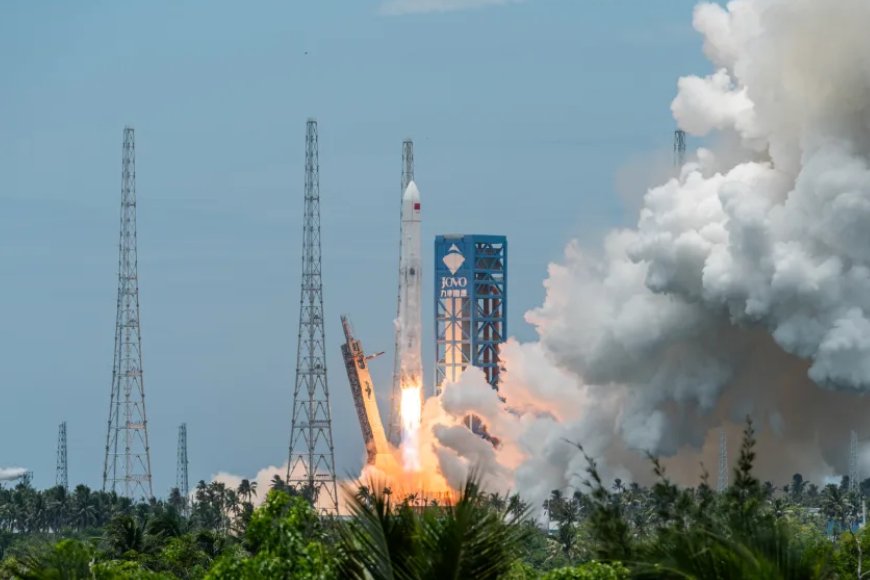
China has taken a significant step forward in its ambitious space program with a breakthrough in reusable rocket technology. The development highlights Beijing’s growing efforts to compete with the United States, especially private space companies like SpaceX, which have already transformed the global space industry through successful rocket recovery and reuse.
Reusable rockets are considered one of the most important innovations in modern space exploration. Traditional rockets are designed for a single launch, with expensive components falling back to Earth and being discarded after every mission. This makes space travel extremely costly. However, reusable rocket technology allows major parts of a launch vehicle, especially the first-stage booster, to be recovered, repaired, and used again for future missions.
China’s latest achievement demonstrates its determination to close the technology gap with the US. The country has been investing heavily in aerospace research, developing advanced launch vehicles, satellite systems, lunar missions, and commercial space capabilities. The successful recovery test of a reusable rocket booster is being seen as a major milestone in China’s journey toward creating a more cost-effective and efficient space transportation system.
For years, the United States has maintained a strong advantage in reusable rocket technology, largely because of the success of SpaceX. The company’s Falcon 9 rocket has revolutionized the launch industry by successfully landing and reusing boosters multiple times. This innovation has reduced launch costs and allowed more frequent satellite deployments. China’s latest progress shows that Beijing is now seriously competing in an area that has become central to the future of space exploration.
China’s reusable rocket development is part of a broader strategy to strengthen its position in the global space industry. Beijing aims to increase its launch capacity, support large satellite networks, and prepare for future deep-space missions. Reusable rockets could play a crucial role in achieving these goals by reducing operational costs and increasing launch frequency.
The technology could also support China’s plans for commercial space expansion. The country is working on building its own satellite internet network, similar to SpaceX’s Starlink project. A reliable fleet of reusable rockets would allow China to deploy thousands of satellites more efficiently, improving its competitiveness in the global communications market.
Beyond commercial applications, reusable launch systems are also important for scientific exploration and national space ambitions. China has already achieved major milestones, including successful lunar missions, the construction of its space station, and advanced robotic exploration projects. Reusable rockets could provide the foundation for future crewed missions, including ambitious plans related to lunar exploration.
The development also reflects the growing competition between the world’s two biggest space powers. The United States has dominated many areas of space technology through a combination of government programs and private companies. Meanwhile, China has rapidly expanded its capabilities through strong government investment and long-term planning.
Experts believe that while China’s breakthrough is significant, it still faces challenges before achieving the same level of operational success as SpaceX. Developing a reusable rocket is not only about recovering a booster once; the real challenge is creating a system that can be reused repeatedly with high reliability and low maintenance costs.
SpaceX has spent years refining its technology, conducting hundreds of successful booster recoveries and building a highly efficient launch system. China will need to continue testing, improving designs, and proving that its recovered rockets can complete multiple missions successfully.
One of the biggest advantages of reusable rockets is the possibility of dramatically lowering the cost of reaching space. Cheaper launches could benefit industries including telecommunications, weather monitoring, scientific research, navigation systems, and space tourism. Countries and private companies around the world are investing in space technology because affordable access to orbit is expected to drive the next generation of innovation.
China’s progress comes at a time when the global space industry is entering a new competitive era. Governments are no longer the only major players, as private companies are becoming increasingly influential. The combination of government-backed programs and commercial innovation is reshaping how countries approach space exploration.
The reusable rocket race between China and the United States is expected to intensify in the coming years. While the US currently holds a lead because of SpaceX’s experience and operational success, China’s rapid advancements show that it is determined to become a major force in the future space economy.
The latest breakthrough represents more than just a technological achievement. It reflects China’s larger ambition to establish itself as a leading space power. As reusable rockets become a key part of future missions, the competition between Beijing and Washington could shape the direction of global space exploration for decades.
With countries planning missions to the Moon, Mars, and beyond, reusable launch technology will likely determine who can send payloads into space faster, cheaper, and more efficiently. China’s latest achievement signals that the race for space dominance is entering a new and more competitive phase.
What's Your Reaction?
 Like
0
Like
0
 Dislike
0
Dislike
0
 Love
0
Love
0
 Funny
0
Funny
0
 Angry
0
Angry
0
 Sad
0
Sad
0
 Wow
0
Wow
0