




























Supreme Court’s New Aravalli Definition: A Warning Sign for Delhi’s Air and Water
The Supreme Court has accepted a 100‑meter elevation rule to classify the Aravalli Hills, potentially stripping protection from over 90% of the range. Experts warn this could worsen dust, pollution, groundwater loss, and ecological damage in Delhi‑NCR.

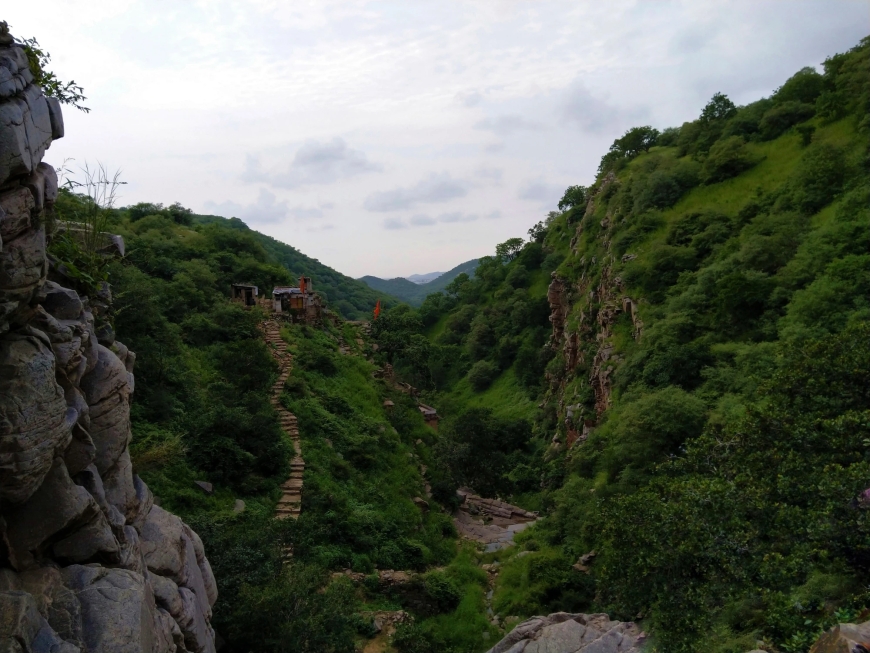
The Supreme Court of India accepted a new, uniform definition for the Aravalli Hills—one that will only classify as “protected Aravalli” those landforms rising 100 meters or more above the local surrounding terrain.
What the Order Says
-
The new definition stipulates that any hill‑slope or landform in the “Aravalli districts” is recognized as part of the Aravalli Hills only if its relative elevation (from base to peak) exceeds 100 meters.
-
Only hills meeting that threshold—along with their slopes and surrounding landforms—and clusters of such hills (within 500 meters of each other) will constitute the “Aravalli Range.”
-
Until a “Management Plan for Sustainable Mining” (MPSM) is prepared by the environment ministry, the court has barred issuance of new mining leases in the defined Aravalli Hills/Ranges.
On paper, the order aims to standardize regulations and curb illegal mining across the Aravalli stretch from Gujarat through Rajasthan and Haryana and up to the fringes of Delhi-NCR.
Why Many Experts and Citizens Are Alarmed
Vast Portions of Aravalli Lose Protection
Based on the latest available survey data, only about 8.7% of the hills that were earlier considered part of the Aravalli range meet the 100‑meter cutoff.
This implies that over 90% of the hills—including many low‑lying ridges, hillocks, slopes, and scrublands—may no longer be recognized under “Aravalli Hills,” and hence lose protective status.
Threat to Air Quality—More Dust, Less Shield
Those “lower hills,” though small in height, have historically acted as a natural barrier against dust and desert winds rising from the west (Thar desert). Their vegetation, ridges, and terrain help trap dust, reduce wind speed, and prevent large‑scale dust intrusion into the Indo‑Gangetic plains and Delhi-NCR, especially during dry months.
Removing legal protection on these hills makes it easier for mining, quarrying, or land‑use changes—which tend to generate dust, degrade vegetation cover, and open up the terrain—potentially harming air quality in Delhi‑NCR.
Groundwater Recharge, Biodiversity & Microclimate at Risk
Besides acting as a dust barrier, the Aravalli terrain—including the “lower hills”—supports groundwater recharge, preserves biodiversity, and helps regulate local microclimate (humidity, wind, and rainfall patterns).
Experts warn that losing these hills legally may lead to reduced forest cover, disrupted water tables, more heat stress, and increased vulnerability to desertification and drought—with serious consequences for ecology and communities across Haryana, Rajasthan, and Delhi‑NCR.
Risk of Renewed Mining/Land‑Use Change
Though the Court has directed suspension of new mining leases until a formal management plan is developed, activists and environmentalists fear the redefinition could later be used to reopen large areas—many previously off‑limits—for mining, construction, or real‑estate projects.
In regions such as Gurgaon and parts of Haryana—where many of the removed‑from‑protection hills lie—forest cover is already low, amplifying the risk of ecological degradation and air‑quality decline.
What It Could Mean for Delhi‑NCR’s Pollution & Public Health
Delhi and surrounding NCR cities have long struggled with air pollution. The natural Aravalli barrier has helped mitigate dust and desertification pressures on the region. With much of that barrier potentially “delisted,” the following risks become serious:
-
Higher dust intrusion from western arid zones, especially in winter and during pre‑monsoon/windy seasons.
-
Loss of green cover and vegetative “filters”—leading to more particulate matter (PM) and worsening smog conditions.
-
Depleted groundwater recharge—affecting urban water security in fast‑growing suburbs.
-
Greater ecological stress, heat‑island effect, and damage to biodiversity and wildlife corridors.
Environmental groups have described the new definition as potentially triggering “a dust‑storm of ecological and health crises” for millions living in Delhi‑NCR, Haryana, and adjacent regions.
In the words of one activist, the change risks turning “the green shield of North India” into a “desert‑exposed zone,” increasing air pollution, water stress, and environmental hardship for decades.
The Court has paused the grant of any new mining leases across the Aravalli region until a comprehensive “sustainable‑mining plan” is prepared by the relevant ministry and forestry experts. Mining and other activities in core/inviolate zones—protected forests, eco‑sensitive zones, wetlands, tiger reserves, and their surrounding buffers—remain prohibited or restricted. But unless the plan is robust and strictly enforced, the new definition could become a tool for large‑scale land‑use change—with long‑term risks to air, water, ecology and public health in Delhi‑NCR and beyond
What's Your Reaction?
 Like
0
Like
0
 Dislike
0
Dislike
0
 Love
0
Love
0
 Funny
0
Funny
0
 Angry
0
Angry
0
 Sad
0
Sad
0
 Wow
0
Wow
0