US Signs Landmark Nuclear Deal with Saudi Arabia, Opening New Chapter in Strategic Energy Partnership
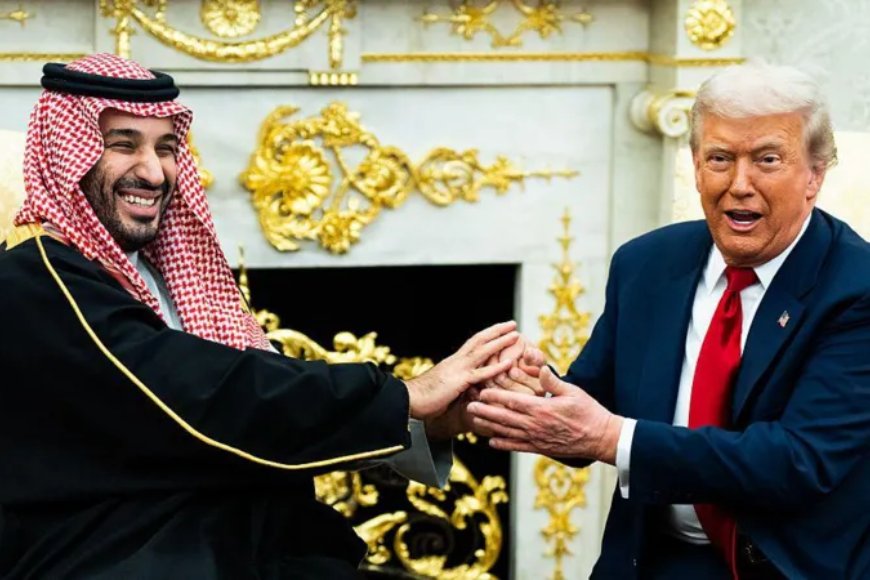
The United States and Saudi Arabia have signed a landmark civil nuclear cooperation agreement, marking one of the most significant developments in bilateral relations in recent years. The agreement, often referred to as a "123 Agreement" under the U.S. Atomic Energy Act, establishes the legal framework for American companies to help Saudi Arabia develop a civilian nuclear energy program. The move is expected to strengthen economic and strategic ties between Washington and Riyadh while reshaping the geopolitical landscape of the Middle East.
The agreement was formally signed by U.S. Energy Secretary Chris Wright and Saudi Energy Minister Prince Abdulaziz bin Salman. According to both governments, the partnership is designed to support Saudi Arabia's long-term energy diversification goals while creating new commercial opportunities for American nuclear technology companies. Officials have described the deal as a historic milestone that reinforces decades of cooperation between the two nations.
A major objective of the agreement is to help Saudi Arabia reduce its dependence on oil by developing a modern civilian nuclear energy sector. The Kingdom has been pursuing nuclear power as part of its Vision 2030 economic transformation strategy, which aims to diversify the country's economy and meet growing domestic electricity demand through cleaner and more sustainable energy sources. Nuclear power is expected to play an important role alongside renewable energy projects such as solar and wind power.
For the United States, the agreement represents both a strategic and economic opportunity. American companies are expected to receive priority access to Saudi Arabia's future nuclear infrastructure projects, including reactor construction, engineering services, nuclear fuel supply, and long-term technical support. The deal could generate billions of dollars in contracts while strengthening America's position in the global civilian nuclear market against competitors such as China and Russia.
One of the most closely watched aspects of the agreement is the possibility that Saudi Arabia could eventually enrich uranium domestically for civilian nuclear fuel. Although enrichment can be used for peaceful energy production, it is also considered a sensitive technology because it can potentially be adapted for military purposes if not properly monitored. Reports indicate that the agreement allows for future discussions on uranium enrichment under strict conditions and bilateral safeguards rather than providing immediate authorization.
The Trump administration has emphasized that the agreement contains safeguards intended to prevent the development of nuclear weapons. U.S. officials insist that any future cooperation will remain consistent with non-proliferation objectives and will include oversight mechanisms designed to ensure the peaceful use of nuclear technology. However, details of those safeguards have not been fully disclosed publicly, leading to intense scrutiny from lawmakers and nuclear experts.
Despite those assurances, the agreement has generated significant concern among non-proliferation experts. Critics argue that permitting domestic uranium enrichment, even under safeguards, could weaken long-standing international efforts to prevent the spread of sensitive nuclear technologies. Some analysts also point out that the agreement reportedly does not require the enhanced inspection regime associated with the International Atomic Energy Agency's Additional Protocol, raising questions about future transparency.
The timing of the agreement has further intensified the debate. It comes amid heightened tensions in the Middle East over Iran's nuclear program, with Washington continuing to pressure Tehran over uranium enrichment activities. Critics argue that allowing Saudi Arabia to pursue similar nuclear capabilities—even for civilian purposes—could complicate regional diplomacy and potentially encourage other countries to seek comparable arrangements.
Saudi Arabia has consistently maintained that its objective is to develop a peaceful civilian nuclear industry capable of supporting the country's future energy needs. Saudi officials argue that nuclear energy is essential for meeting rising electricity demand, reducing carbon emissions, and preserving more oil for export rather than domestic consumption. The Kingdom has repeatedly stated that its nuclear ambitions are focused on economic development and technological advancement.
The agreement also reflects broader geopolitical calculations. Washington has sought to maintain its strategic influence in the Gulf region by ensuring that Saudi Arabia relies on American technology instead of turning to alternative partners such as China or Russia for nuclear cooperation. By securing a leading role in Saudi Arabia's nuclear program, the United States strengthens its long-term influence over one of its closest regional allies while expanding economic opportunities for its domestic nuclear industry.
The proposed agreement will now undergo review by the U.S. Congress, where lawmakers are expected to closely examine its safeguards, commercial implications, and potential impact on global nuclear non-proliferation efforts. Although congressional approval could face political debate, supporters argue that the agreement offers stronger oversight than allowing Saudi Arabia to pursue nuclear partnerships elsewhere without American involvement.
The announcement has already drawn international attention because of its potential long-term consequences for regional security, energy markets, and diplomatic relations in the Middle East. Supporters believe the deal will strengthen U.S.-Saudi strategic cooperation, promote clean energy investment, and generate substantial economic benefits for both countries. Opponents, however, warn that it may set a new precedent for civilian nuclear cooperation involving uranium enrichment, potentially reshaping global non-proliferation norms.
As the agreement moves through the legislative review process, governments, security experts, and international organizations will closely monitor its implementation. Whether viewed as a breakthrough in strategic cooperation or a controversial shift in nuclear policy, the landmark U.S.-Saudi nuclear deal is expected to remain one of the most consequential international agreements of 2026, with implications extending far beyond the two countries involved.


































 Like
0
 Dislike
0
 Love
0
 Funny
0
 Angry
0
 Sad
0
 Wow
0